Follow Us on Google
From Olanrewaju Lawal ,Birnin Kebbi
The Sokoto State Government, in collaboration with UNICEF and the European Union, has intensified efforts to curb the high rate of out-of-school children in the state, with plans to enrol about 250,000 affected children.
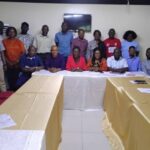
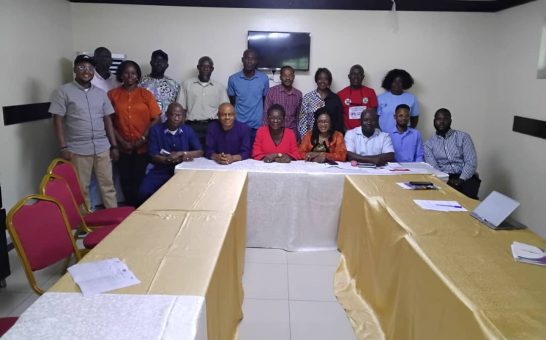
The initiative was highlighted during a two-day media dialogue on strengthening early childhood education and access to quality education in Sokoto, Kebbi and Zamfara states. The programme was organised by the Sokoto State Universal Basic Education Board (SUBEB) in partnership with UNICEF and the European Union. Speaking at the event, the wife of the Sokoto State Governor, Fatima Ahmed Aliyu, said the administration of Governor Ahmed Aliyu was committed to addressing the plight of the 250,000 identified out-of-school children. She disclosed that the state government was constructing three mega schools across the three senatorial districts to boost early childhood education.
Represented by the Commissioner for Basic and Secondary Education, Professor Ala Ahmed, she revealed that over N17 billion had been earmarked in the 2026 budget to improve the basic education sector.
“250,000 out-of-school children have been mapped out by Sokoto and UNICEF. We are going to ensure that these children have access to basic education. We are also in the digital world; once a child can read and write, they can learn on their own,” she said, calling on traditional rulers, civil society organisations and other stakeholders to support the drive.
Earlier, the Executive Chairman of the Sokoto State Universal Basic Education Board, Alhaji Umar Tambuwal, said the board, in collaboration with the Sultanate Council, had profiled and registered about 249,000 vulnerable children as part of reforms to the Almajiri system.
He said integrated schools have been established in Shuni, Gagi, Tambuwal and Wamako, combining Quranic education with modern literacy, numeracy and vocational training, alongside free accommodation and feeding.
Other News
Tambuwal described education as central to the state’s future, noting that 66.4 per cent of school-aged children in Sokoto are currently out of school. He added that the state has declared basic education free and compulsory, abolished school levies and prioritised teacher recruitment.
He disclosed that three mega model schools were being established across the senatorial zones – Aliyu Magatakarda Model Primary School in Wamakko (Sokoto Central), Muhammad Sambo Model Primary School in Goronyo (Sokoto East) and Government Day Junior Secondary School in Tambuwal (Sokoto South). Each facility sits on about 35,700 square metres and includes 60 classrooms, science laboratories and playgrounds.
According to him, a committee has screened 3,000 teachers to ensure qualified personnel are deployed to the new schools, SMART Schools and Second Chance Centres for girls, as well as vocational centres in Sifawa, Wurno and Wamakko.
Tambuwal added that the state’s out-of-school children dashboard captured 326,119 children between 2024 and 2025, describing it as a milestone for data-driven planning. He called on the Federal Government and the Universal Basic Education Commission to replicate the state’s model nationwide through technical and financial support.
In his remarks, Chief of Field Office, Sokoto Field Office of UNICEF, Dr Michael Juma, emphasised the role of the media in promoting early childhood education and encouraging enrolment.
Juma commended the state government for creating an enabling environment for educational development and urged journalists to promote positive narratives that would drive increased demand for enrolment across communities.