Follow Us on Google
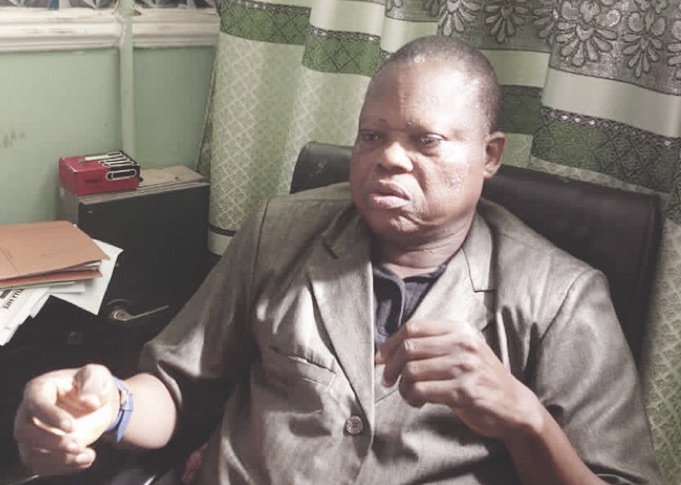
• Worried UI don, Fakeye, says digital social networks luring students from studies
By Gabriel Dike
Professor David Olugbade Fakeye is immediate past Head, Department of Arts and Social Sciences Education, University of Ibadan, Ibadan, Oyo State.
In this interview, Daily Sun explore Prof Fakeye’s remarkable journey, his insights into the challenges facing Nigerian universities and his vision for the future of education in Nigeria.
What have been your contributions to the university system?
I have served the university in various capacities, such as Deputy Coordinator of the Distance Learning Programme in my department. I have also served as Head of the Language Unit, Postgraduate Programme Coordinator and until recently, as Head of the Department of Arts and Social Sciences Education at the University of Ibadan.
I had the honour of serving as the Managing Editor of two departmental journals: the African Journal of Educational Research and the International Journal of Arts and Social Sciences Education.
At the faculty level, I served as Deputy Chairman, Editorial Board Faculty of Education. In addition, I have served the faculty as a member of the Business Committee for vetting Ph.D. abstracts. At the university level, I have served on the Central Appointment and Promotion Committee for junior staff.
Any landmark achievement?
I have conducted research and published extensively in both local and international outlets. To date, I have published over 80 scholarly articles, three books, and four monographs. I have also mentored several postgraduate students, many of whom are now distinguished academics in various universities in Nigeria and abroad.
Besides, I was appointed, member, 2023 Osun State Education Summit, which provided a blueprint for reviving education in the state. I belong to numerous academic associations.
How many Ph.D. and M.Sc. graduates have you produced?
So far, I have produced 30 Ph.D., seven M.Phil. and 136 M.Ed. graduates.
Why does it take so long to produce Ph.D. graduates in Nigeria?
This depends on several factors, notably students’ levels of commitment to and seriousness with the programme. In some cases, supervisors may be unable to give adequate attention to their students due to excessive workloads or mere laziness. Additionally, a lack of funding can hinder the programme.
Can you describe one unforgettable experience with a student?
Yes, I had a troubling experience with a student who stayed in the programme for an extended period due to a lack of commitment. I threatened to terminate his studentship, but instead of pleading for leniency, he accused me of not inquiring about him while he was absent. I found this accusation absurd because I believe it is the student’s responsibility to inform their supervisor if they cannot meet deadlines.
Despite low standards, Nigerian students abroad do very well; what is responsible for this?
The difference lies in the learning environment abroad. The learning environment in Nigerian universities is often not conducive to effective teaching and learning. Classrooms are overcrowded, and there are insufficient facilities and resources for effective lesson delivery. This has been a major grievance of the Academic Staff Union of Universities (ASUU) with the government.
Do you agree public universities are churning out “half-baked” graduates?
Not in all courses. While there is a significant infrastructural deficit in public universities, some maintain high standards in the quality of graduates produced annually. The webometric ranking of universities released periodically supports this claim. What public universities lack in facilities, they make up for with experienced lecturers and professors.
Why are universities struggling to produce research breakthroughs to solve societal problems?
Groundbreaking research cannot occur without grants and funding. Nigerian universities are grossly underfunded, which limits their capacity to produce solutions to societal problems. Moreover, the few research projects produced are often not utilized by the government to inform policies that address various issues facing society.
Do we need more universities in the country?
No. One of the challenges facing university education in Nigeria is the proliferation and indiscriminate establishment of universities. The existing institutions are not adequately funded, so creating more universities will exacerbate the problem of low-quality education.
How about yourself and your educational background?
My name is David Olugbade Fakeye, a Professor of Language and Literature Education in the Department of Arts and Social Sciences Education at the University of Ibadan. I was born just over six decades ago to my late parents, Pa Daniel Adeagbo Fakeye and Deaconess Felicia Mojisola Fakeye, both of blessed memory. I received my elementary education at St. Peter’s Anglican Primary School, Aremo, Ibadan. Coming from a humble background, my parents could not afford to send me to secondary school after my primary education. I stayed at home for one year before gaining admission to St. Michael’s Catholic Secondary Modern School, Yemetu, Ibadan. Thereafter, I attended Divisional Teachers’ College Eruwa, Oyo State, for my TC II certificate. Gained admission to the University of Ife, now Obafemi Awolowo University, Ile-Ife, where I studied English Education, graduated with First Class Honours, and was the overall best graduating student in the Faculty of Education in 1988. Obtained my M.Ed. and Ph.D. in Language Education at UI. After a stint with the Teaching Service Commission of Oyo State as a secondary school teacher, I was employed by the defunct Department of Teacher Education (now the Department of Arts and Social Sciences Education) at UI, where I rose through the ranks to become a Professor in 2017.
How can universities collaborate with industries to improve employability for graduates?
Universities should partner with industries by incorporating the skills required by various sectors into their undergraduate curricula, enabling graduates to meet job market demands and thereby improving their employability.
What strategies can be implemented to improve funding for research and development in universities?
The research and innovation units of universities should conduct regular workshops for lecturers on how to write grant proposals, while the research management offices should inform academic staff about available grant sources.
How do you see the future of higher education evolving over the next decade?
If the current trend and pace of funding continue, higher education will stagnate rather than progress by the turn of the next decade.
What measures can be taken to enhance academic integrity and reduce incidences of cheating in universities?
First, complete autonomy should be restored to universities to allow them to grow at their own pace without political interference. Universities should be permitted to conduct their own matriculation examinations to ensure that students are admitted based on merit. Student and staff disciplinary committees should actively address misconduct, while quality assurance measures should be implemented to mitigate instances of cheating.
What would you say about your era as a student compared to your students today?
There is a clear difference between my time as a student and today’s students regarding seriousness, diligence and maturity. We took pride in studying hard, but nowadays, illiteracy is prevalent, largely due to the negative influence of social media. During my time, there was no social media to distract us from our studies.
What would you like people to remember you for?
I would like to be remembered for being a passionate teacher and mentor.