Follow Us on Google

How displacement is exposing Benue’s children to sexual abuse
By Scholastica Hir, Makurdi
On a sweltering afternoon in June 2025, 14-year-old Doom Shagba arrived at an Internally Displaced Persons IDP Camp in Benue State, North-central Nigeria, with her family. They had fled their village after an attack that claimed her uncle, younger brother and over 200 others in her Yelewata community, in Guma Local Government Area of Benue State. She hoped the camp would offer succour and safety.
She was wrong
“Some boys threatened me. They told me they have powers that even if I refuse their advances and they want to sleep with me, they would do it even before my mother,” Doom told this reporter in a hushed voice, her eyes fixed on the ground.
“Anytime I saw boys approaching, my mind would skip because I thought they were coming after me.”
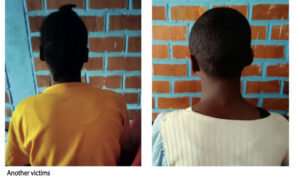
Doom’s experience is not isolated. Behind the barbed wires, tarpaulin and classroom shelters of Benue’s IDP camps lies a disturbing reality: children meant to be protected by humanitarian systems are being sexually abused, exploited, and silenced.
Over the past three years, JASPI Health and Gender Development Initiative, a Non-Governmental Organisation (NGO), operating in camps and conflict-affected communities in Benue, has documented over 7,000 cases of Sexual and Gender-Based Violence (SGBV) across 15 IDP camps and host communities in the state, involving an estimated 3,400 cases of child trafficking and over 1,300 cases of child marriage.
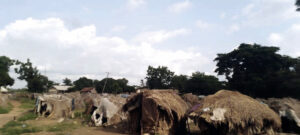
“The figures reflect only the cases that reached us,” a JASPI official told this reporter. “The actual numbers are likely much higher due to under-reporting,” he added.
According to the organization, child protection remains a critical challenge in IDP camps and conflict-affected communities across Benue State, while children face heightened risks of several forms of abuse, particularly due to the insecurity, poverty, and loss of livelihoods caused by ongoing conflict.
Survivors’ truth
Doom Shagba, formerly a primary three pupil at Aba Primary School who loved Mathematics, English, and Social Studies, now lives in constant fear in the camp. The harassment that began in her community followed her to the camp, where the same group of boys continued to target her.
She had reported the threats to her mother and elder brother, but the intimidation persisted. “They told me they have powers,” she repeated, her voice trembling. “I was always afraid.” Doom is not alone.
Sedoo Agber, a 17-year-old who arrived at the camp last year after her father was killed in an attack, has endured multiple assault attempts, both in her village and within the camp itself.
She narrated her ordeal, saying: “One afternoon, I was going to fetch water in the village. I didn’t know they were waiting and monitoring me. When I entered the river and bent to fetch water, these guys pounced on me, started pressing my breasts. I was shouting, Somebody help! But nobody was close.”
An elderly man later heard her screams and rescued her. The perpetrators were arrested and taken to court, but were eventually released after people from the same community pleaded on their behalf.
In the camp, Sedoo’s ordeal continued. “Being in the camp, we always go out looking for water and firewood. Sometimes there isn’t enough food and no money, so we go to people’s homes to look for work. But in those homes and communities, because we look desperate, people use it as an advantage to abuse us.”
On one occasion, she and her seven-year-old sister went searching for firewood and were followed by men who attempted to rape her. “They brought me down to the ground and tried to remove my clothes,” Sedoo said. “A woman rescued us and escorted us back to the camp. She was God-sent. At one time, I went to work for a woman who was selling food. She promised to pay me ₦800 every day, but she was not paying. After some time, when I complained and asked her to pay me, she drove me from her shop.”
Since those incidents, Sedoo said she has developed a deep fear of boys and men. “If I see boys gather or coming, I feel scared, as if they are after me.”
In Agagbe, Gwer West LGA of the state, Ngodoo Hembafan, a 17-year-old student, has big dreams. She was already in school when the attack drove her and her family from their ancestral home. “I would love to open and own a hair salon in the future,” but the insecurity and displacement dealt a great blow to her.
She recounted being attacked one night in her hut by an armed intruder who threatened to kill her with a knife if she did not comply and then sexually assaulted her. He also took her knife and torchlight before leaving.
“One night while I was sleeping, somebody came and opened the door forcefully and came in with a big, long knife, and said that somebody had sent him to come and kill me. But he said he would have mercy on me, that he is not going to kill me, but he is going to sleep with me. And if I refuse, he would kill me instead. So when I saw the knife, I was afraid and wanted to shout and cry. But the man said that if I tried such, he was going to stab me to death. So I was afraid of shouting. So after the rape, when the guy was going, he took my knife and torchlight,” she narrated.
The next day, she told her mother, who reported the case to JASPI and UNICEF. With their support, Ngodoo received medical care, drugs and Psychosocial Support (PSS), which helped her regain calm and confidence. The case was also reported to the police and is still under investigation.
Ngodoo says the most important lesson she learned was to speak up instead of staying silent, noting that silence could have led her to harm herself. She now advises other children to speak out so organizations like JASPI can help. She also hopes JASPI continues its work to make her community safer so people, especially girls, can move around without fear.
Family betrayal
In Agagbe IDP camp, a nine-year-old girl, whom we will call Mnena, endured repeated sexual abuse at the hands of her mother’s younger brother. The perpetrator would sneak to her sleeping mat at night while everyone else was asleep.
The little girl told her mother repeatedly, but was not believed until one day, the mother caught him in the act. When confronted, the man offered a chilling justification: he said the girl’s father had not paid his sister’s bride price, and “sleeping with the little girl was his way of collecting the bride price,” a social worker had narrated to this reporter.
The matter was swiftly buried. The mother was pressured to keep quiet to avoid bringing the family into disrepute. She was threatened with disownment if she continued to make trouble.
Another survivor, a 13-year-old girl we will call Dooter, lost both parents in an attack in Gwer West local government area. She was taken in by her maternal aunt in Makurdi. Soon after, the aunt’s husband began molesting her day and night.
When Dooter reported to her aunt, she was ignored. Neighbours who noticed the abuse confronted the aunt, who accused the girl of trying to ruin her marriage and threw her out of the house.
“In fact, the woman said it was Dooter who was was seducing her husband,” the official narrated.
When government officials intervened, the aunt refused to disclose any other relatives. Dooter is now being cared for by a family who adopted her.
Police data
At the Benue State Police Command, the Gender Desk Officer, DSP Helen Jande, confirmed that between November 2025 and May 2026, a total of 14 cases of sexual abuse were reported, with victims as young as seven and perpetrators aged between 25 and 57. Offences include rape, defilement, molestation, incest, procurement of minors, intimidation and abduction with rape.
Jande said many incidents occurred within IDP camps and surrounding communities in Guma LGA, Makurdi, North Bank, Otukpo, and Agagbe in Gwer West LGA. She said that despite many cases being charged to court, no convictions have been secured to date.
She explained that “most IDPs don’t like coming to report.” She cited several reasons, including the greed of some parents who want to extort money from perpetrators, intimidation of survivors and their families, stigma, shame, and cultural backgrounds. “Most times, the mother wants to report, but the husband refuses to protect the family name. At other times, camp officials prefer to settle cases among themselves or report to community leaders who also treat the matter as a family affair.”
Silence and stigma
Gladys Tile, Head of the Gender-Based Violence (GBV) Unit at the Ministry of Women Affairs, acknowledged that cases of minors being raped are significantly underreported.
“Cases of GBV mostly reported to me are normally adults,” Tile said. “Cases of minors being raped are under-reported due to fear of retaliation from the perpetrators’ families. Some families of the abused child do not want their child’s name to be exposed due to stigma.”
She identified perpetrators, especially among IDPs, as people from host communities, stating that a lot of sensitization is carried out in the camps concerning SGBV, saying IDPs are aware of who to report to and where.
According to her, the ministry has a referral pathway that includes the Sexual Assault Referral Centre (SARC) at the Benue State University Teaching Hospital (BSUTH), the police Gender unit, and the Ministry of Justice, which handles prosecution under the Benue State Violence Against Persons Prohibition (VAPP) Law.
Other News
However, challenges abound: lack of funds, lack of witnesses, and survivors refusing to give their consent to proceed with cases.
Cry for help
Linda Ene Dirisu, Coordinator of the Benue State Sexual Assault Referral Centre (SARC), described the situation as heartbreaking. When she spoke during a workshop organized by the UN Women on Male Engagement in SGBV prevention, ANC, PNC and PMTCT services recently, she noted that people who have not experienced SGBV usually live in self-denial or think it is a theory.
She, however, said: “It’s heartbreaking when you meet with children who are being violated, children being broken. For GBV, in Benue, we have a lot of adolescent cases. Personally, I have recorded more of the adolescent cases and kids. Our girls, our adolescent girls, are being abused every day. They depend on us, who are parents and guardians, to protect them, but when abuse happens, we let them down every day.
“I’ve had cases where a woman is very passionate and wants to pursue justice. She stands her ground and is determined to go through with the case against a perpetrator, but her husband threatens her that if you go ahead with this case, I will divorce you. At that point, the woman is left helpless.”
Dirisu recalled a case involving a 12-year-old girl who was molested by her aunt’s husband while her aunt was at the hospital caring for her sick baby. When the abuse was reported, the aunt accused the girl of trying to destroy her marriage.
“We kept the girl in the shelter for some time, but a shelter is not a home, so I had to take her in,” Dirisu said. “But I cannot take in all the children who are sexually abused.”
A medical officer working with a UN organisation at the Yelewata IDP camp, who spoke on condition of anonymity, disclosed that they have been attending to cases of abuse involving children and adolescent girls.
The medical officer said: “The last case we attended to was a case of a 13-year-old girl. She was referred from another camp to this place and was brought here for examination and treatment.”
“When survivors arrive, they are screened for HIV, Hepatitis B and C, STIs, and pregnancy. Emergency contraceptives and Post Exposure Prophylaxis (PEP) are provided for survivors where necessary,” he explained.
The medical officer lamented the rampant cases of unwanted pregnancies and abortions following the rampant abuse.
“Around August 2025, we saw a lot of fetuses in the trash. But we did a lot of health education and counselling involving families and young girls, especially to educate them on the dangers of SGBV and abortion, and we have not had such cases again. Others that we witnessed here in Yelewata IDP camp came from outside, the recent case was a 13-year-old.”
Lethal vulnerability
Simon Ayoosu, Chairperson of the Agagbe IDP camp, confirmed the prevalence of SGBV in the camp. He said: “Not one, not two, but many. Recently, we had a case of a young girl who left the camp to farm in the Naka area of Gwer West LGA. She was kidnapped and abused. In the recent past, we had four cases of children within the ages of seven and eight violated.”
Ayoosu highlighted the dire conditions that compound the vulnerability: “The camps are not safe for anyone at all. Right now, we have serious issues of snake bites in the camp. We don’t have light, not even solar lights, and we don’t have food, no water. We rely solely on the river, where the herders also take their cattle to drink. If cows drink, we also go there to fetch water, and every day children come down with various ailments.”
Hunger and desperation
The desperation for basic survival drives many to take risks that expose them to abuse. According to JASPI, caregivers, often struggling after losing breadwinners, properties, and means of survival, sometimes resort to child marriage as a coping mechanism, leading to a disturbing rise in families giving out their children to individuals they barely know.
Children are also highly vulnerable to trafficking. Desperate parents hand them over to strangers who pose as NGO workers or humanitarian helpers, promising a better life. At least one child is trafficked daily from Benue State to destinations, including Benin Republic, Libya, Mali, Burkina Faso, and Ghana.
The most devastating situation is faced by girls, who are often seen as an object to be exploited. Many girls are forced into survival sex in exchange for food or basic necessities, coerced into pregnancy, or even made to sell their babies.
According to information from the Executive Director, Community Links and Human Empowerment Initiative (CLHEI), Dr Helen Teghtegh, SGBV against children remains highly prevalent in Benue State’s IDP and conflict-affected communities. In the last two years, the organization recorded 12 child abuse cases in Mega, Abagena, and Daudu I IDP camps.
The cases involved sexual abuse, early marriage, physical abuse, and human trafficking, with victims ranging from 12 to 19 years old while perpetrators were identified as both host community members and fellow internally displaced persons.
She said CLHEI provided psychosocial support and referred survivors for further assistance. However, none of the reported cases has been prosecuted due to challenges in arresting suspects, which she attributed to inadequate logistics for security agencies.
The organization also noted that many victims and their families are reluctant to report cases because of shame and fear of the unknown.
She urged the public to report all cases of child abuse and SGBV, stressing that silence only protects perpetrators while exposing survivors to further harm. She also called on the government to provide security agencies with adequate logistics to facilitate the arrest and prosecution of offenders and strengthen protection for vulnerable children in displaced and conflict-affected communities.
The Public Relations Officer (PRO), at the State Emergency Management Agency (SEMA), Ager Tema, noted that cases of SGBV in IDP camps have significantly declined compared to the past, when incidents such as sexual assault, underage pregnancies, child abuse, trafficking, and child marriage were more common.
He attributed the improvement to the constant presence and monitoring efforts of SEMA staff and humanitarian partners, who work day and night across the camps.
He explained that while such cases have reduced, vigilance has continued because incidents can occur unexpectedly.
He also noted that cases of child trafficking were also rampant. He recalled that some individuals previously posed as NGO and caregivers seeking to adopt children for education, only to exploit them as domestic servants or slaves. He emphasized that children are no longer released to individuals in that manner.
He said: “In those days, SGBV was prevalent, but in collaboration with partners, most of the incidents have been reduced to a minimal level. Right now, I cannot give you the exact figure of the cases in the past; it was prevalent. We got reports of underage girls getting pregnant and giving birth in the camp, children being violated, sexual assault. We had trafficking and child marriage. Those days, somebody would pretend to want to adopt a child and train the child in school. But in the end, they would become their nannies at home, not only a nanny but slaves working for those families. Now we don’t give up children to anybody.”
He encouraged camp residents and the public to report any suspicious activities, abuse, or violations of camp rules through the available toll-free reporting lines and contact numbers, which can be accessed through the relevant agency’s website at any time.
Protection and impunity
A humanitarian source detailed the referral process followed when cases are reported: immediate medical attention at facilities like SARC, engagement of the police through the Gender Desk Officer, and involvement of focal persons from the Ministry of Women’s Affairs.
The source said a few cases have been successfully prosecuted, resulting in perpetrators being jailed, while others are resolved at the community level depending on survivors’ and their families’ wishes.
However, challenges are pervasive. Community leaders often interfere, pleading for perpetrators and discouraging prosecution. Some government agencies demand money for services that should be provided free. Many families prefer financial settlements over justice.
For Doom Shagba, who dreams of returning to school and reclaiming her education, the psychological scars remain fresh. She said she will advise young people “not to give in to abuse because it’s not good.”
Sedoo Agber no longer feels safe anywhere. “Since that incident, I hate boys. I suddenly feel afraid of seeing them. Sometimes I don’t even feel like greeting them. But I just manage to greet some because if you don’t, they will also say you are being snobbish and start targeting you.”
She had hoped to become a doctor someday. “Our condition currently cannot guarantee that, but I hope to accomplish my dreams someday.”
Humanitarian outcry
The European Union, in collaboration with UNICEF and the ILO, in 2025, launched the €13 million Supporting Sustainable Social Protection System in Nigeria (SUSI) project in Makurdi, aiming to strengthen social protection systems to better respond to shocks and protect vulnerable populations.
The then Minister of Humanitarian Affairs and Poverty Alleviation, Nantawe Yilwatda, who flagged off the distribution of blended enriched flour for malnourished children in the state, said: “We saw the sorrow in the eyes of mothers who had lost everything. We walked in the Teaching Hospital among children who are now without shelter, without certainty, and in some cases, without parents.”
But for thousands of children in Benue’s IDP camps, hunger, trauma, and abuse remain daily realities. The culture of silence and impunity continues to protect perpetrators and punish survivors.
Beyond the statistics
The statistics are staggering: over 7,000 documented cases in three years, 33,000 malnourished children across camps and host, 510,182 displaced persons in the state. But behind each number is a child whose childhood was stolen, whose dreams were shattered, whose trust in humanity was broken.
As Dirisu said: “GBV needs to stop or be brought to the barest minimum, and the men have to be champions.”
For now, in the crowded camps of Benue State, children continue to pay the highest price for a conflict that has displaced their families and shattered their futures.
“Honestly, I want to go home,” Doom Shagba said. “Here we are not having access to the things we used to have at home.”
Home, however, no longer exists. Her village was burned. Her uncle and younger brother were killed. The camp is all she has, a place that was supposed to be a refuge but has become another nightmare.
This report was commissioned with support from the Centre for Journalism Innovation and Development (CJID) under a journalism support initiative funded by the Open Society Foundations.
Photos.
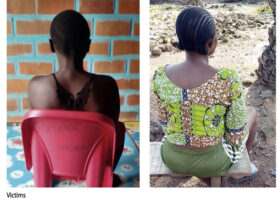
1-4. Some of the teenage survivors of SGBV
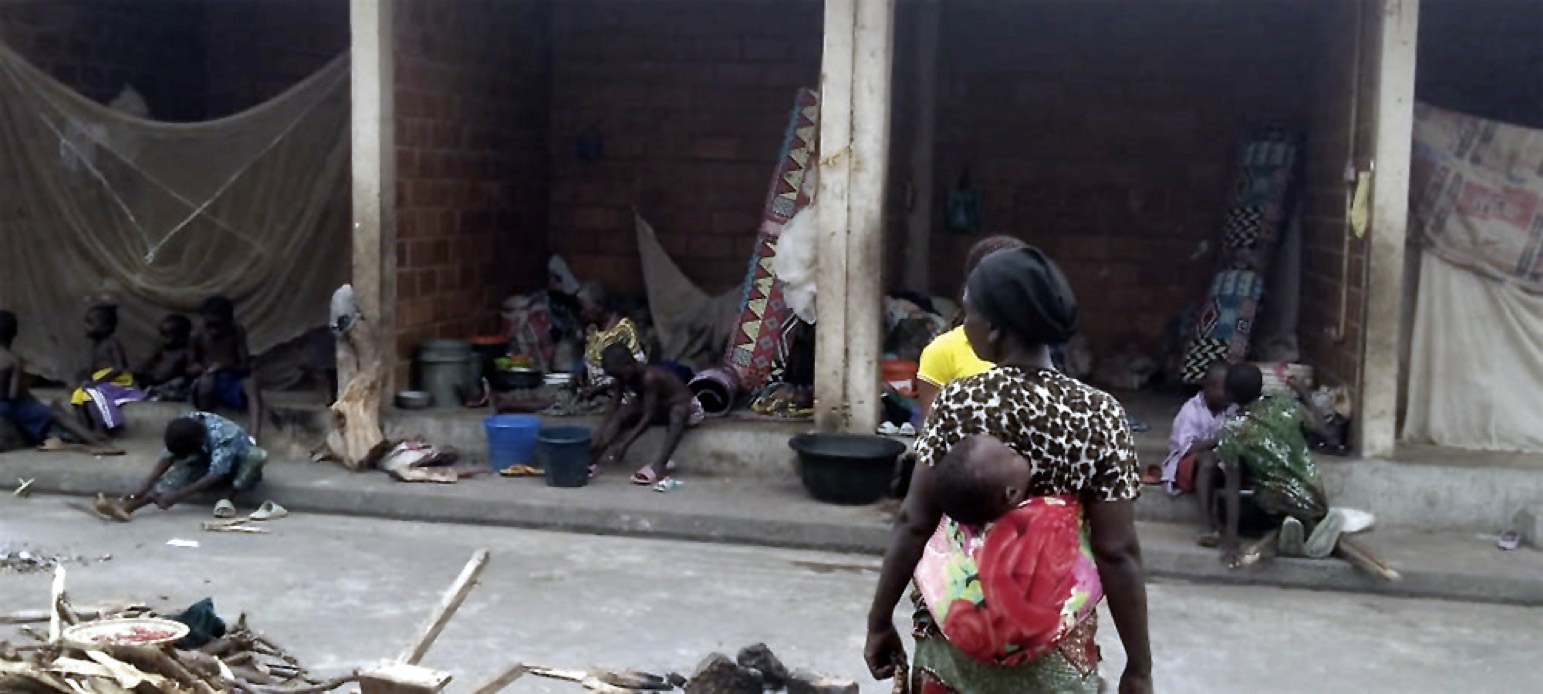
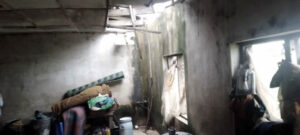
5. Some of the stores housing Yelewata IDPs at International Market camp have no doors, exposing occupants to various forms of abuse and trauma.