Follow Us on Google
From Femi Folaranmi, Yenagoa; Tony John, Port Harcourt; Isaac Job, Uyo; Tony Osazuo, Benin; and Aniekan Aniekan, Calabar
More than two year after the Supreme Court granted full autonomy to local government councils in Nigeria, the implementation of that landmark verdict remains mired in confusion across the South South geopolitical zone. State governors have offered defensive explanations for how councils now operate. Council chairmen, for their part, have been evasive about the true state of affairs. In many states, governors have kept a firm hold on the third tier of government, in part through elections widely seen as lacking credibility and conducted by State Independent Electoral Commissions loyal to the ruling party.
The Supreme Court’s judgment, delivered on 11 July 2024, was meant to end decades of state interference in local government finances. It ordered that allocations from the Federation Account be paid directly to councils, bypassing the state joint accounts that governors have long used to control local funds. Checks by Daily Sun across Edo, Rivers, Cross River, Akwa Ibom, Bayelsa and Delta states show that this direct payment model is, in practice, yet to take full effect in most of the zone. Instead, a patchwork of committees, laws and informal arrangements continues to give state governments significant influence over council finances.

Edo: Compliance claimed, full autonomy still elusive
In Edo State, local government councils are yet to enjoy full autonomy in the running of their affairs, despite the Supreme Court judgment handed down two years ago. Under that ruling, councils were expected to begin receiving their monthly allocations directly from the Federation Account. This has not happened. Councils in Edo continue to receive their funds through the State Local Government Joint Account, a structure controlled by the state government. Before any allocation reaches a council, the Joint Account Committee, made up of state and council representatives, must first meet to review and approve spending.
The State Commissioner for Local Government Affairs, Hon. Paul Ohonbamu, insists that the state has complied fully with the autonomy granted to councils. He said the governor has no interest in local government funds. According to Ohonbamu, the purpose of the Joint Account Committee meetings is not to control council spending, but to protect certain priority expenses. These include teachers’ salaries, pensions and security provisions, all of which he described as first line charges that must be set aside before councils can spend the rest of their allocation freely.
Ohonbamu explained that this arrangement grew out of past experience. He said some council chairmen had previously spent their allocations on other projects, leaving teachers and pensioners unpaid for long periods. When backlogs built up, he said, it was ordinary members of the public who turned to the state government to demand payment, even though the funds in question belonged to local councils. He was blunt in his assessment of some past officeholders.
Certain chairmen, he said, had spent public money recklessly, and the Joint Account Committee exists to guide them, particularly around protected spending categories such as pensions, security and teachers’ salaries. Despite this explanation, the state government continues to approve local government projects before they can be executed, a practice that critics say goes beyond the safeguarding role the commissioner described.
The Edo State Chairman of the Association of Local Governments of Nigeria, Hon. Sunny Ekpeson, who also chairs Etsako East Local Government Council, broadly supported the commissioner’s account. He said the state governor, Senator Monday Okpebholo, has never interfered with council finances and has never requested money from any local government. Ekpeson pointed instead to a joint initiative among council chairmen, describing how the eighteen local government areas in Edo have pooled resources under what is called the ALGON Projects scheme. Through this scheme, he said, councils have jointly built six blocks of classrooms, complete with teachers’ offices and toilet facilities, across sixteen of the eighteen local government areas. Work on the remaining two areas, Akoko Edo and Etsako East, is expected to begin soon. Councils are also said to be pooling resources to build and equip three hospitals in each local government area, which will eventually be handed over to the state government to run.
While defending the governor, Ekpeson was more critical of the State House of Assembly, which he accused of interfering directly in local government administration. He said members of the Assembly frequently make demands of councils, asking that certain items or resources be brought to them, in a manner he considers improper interference in local affairs.
The Speaker of the Edo State House of Assembly, Rt. Hon. Blessing Agbebaku, described local government autonomy as a great development for the state. He promised that the Assembly stands ready to give its concurrence to full autonomy for local governments as part of the ongoing constitutional amendment process at the national level.
Rivers: Court order observed in breach
The picture in Rivers State is, if anything, more complicated. The Supreme Court judgment of 11 July 2024 is being observed largely in breach there, according to checks carried out by Daily Sun. The structures needed to implement direct payment remain a work in progress, and the legal requirement for direct disbursement continues to sit awkwardly alongside Section 162, Subsection 6, of the 1999 Constitution, which itself created the State Joint Local Government Account, the very mechanism the Supreme Court sought to dismantle.
As of July 2026, no local government area in Rivers State receives its allocation directly and in full from the Federal Government through the Central Bank of Nigeria, without some form of state intermediation. Joint Account Committee meetings have continued much as before, and allegations of unauthorised deductions from council funds persist. Reliable sources within the leadership of the Rivers State chapter of the Association of Local Governments of Nigeria told Daily Sun that implementation of the autonomy ruling has effectively stalled, with the state still controlling or deducting from council funds. The association maintains that direct, full allocation is simply not happening in the state.
An official within the Rivers State Ministry of Local Government offered a different interpretation. He argued that what the Supreme Court granted was financial autonomy, not total autonomy, and that this distinction matters. Financial autonomy, he said, demands greater accountability from council chairmen, not less oversight from the state. He also praised some council chairmen for delivering people centred projects, a comment that itself suggests continued state oversight of how councils spend their money.
Separately, a government official on record had earlier pledged that the Rivers State Government would continue to remit the full federal allocation to local governments. Analysts who have studied the situation in Rivers say the state government has publicly supported the principle of financial autonomy, but interprets it in a way that preserves its oversight role. Under this interpretation, the state still remits funds to councils after the Joint Account Committee process, rather than allowing unconditional direct payment from the Federation Account. Critics argue that this defeats much of the purpose of the Supreme Court ruling, since the committee the court sought to abolish remains fully operational.
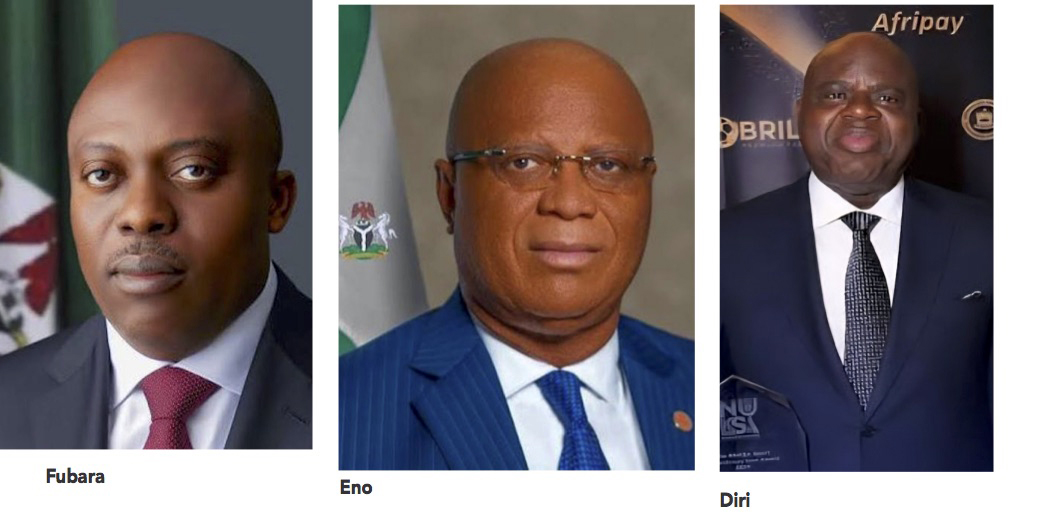
The political backdrop in Rivers adds another layer of complexity. On 3 March 2025, in the aftermath of the Supreme Court judgment in Suit Number SC or CV or 1174 of 2024, the State House of Assembly issued a resolution signed by the Speaker, Martin Amaewhule. The resolution stated that, pursuant to the Supreme Court’s order, statutory federal allocations to the Rivers State Government had been halted, and spending from the Consolidated Revenue Fund suspended, until the passage of an appropriation bill. It called on the then governor, Siminalayi Fubara, to present the 2025 budget.
Amid the wider debate over autonomy, the Assembly went on to pass the Rivers State Local Government Bill of 2025. This legislation repealed earlier local government laws dating back to 2018, 2023 and 2024, replacing them with provisions that re centralise oversight of local administrations under the state. Observers note the apparent contradiction in the Assembly’s position. Lawmakers have invoked the Supreme Court ruling to assert legislative control over state finances, even as their own local government bill works to retain state level control over council administration, a move critics say runs directly counter to full fiscal autonomy for local government.
Further investigation by this newspaper points to a pattern of indirect control that has persisted despite the court ruling. Financial experts point to several pieces of evidence. These include the continued convening of Joint Account Committee meetings, deductions made under the Sole Administrator arrangement in July and September 2025, and the state’s own Local Government Bill of 2025, which centralises oversight rather than dismantling it. Taken together, these developments suggest that indirect state control over council finances remains firmly in place, contrary to what the Supreme Court intended.
Cross River: Funds flow directly, accountability lags behind
The situation in Cross River State presents a somewhat different picture, though it is not without its own difficulties. Some council chairmen there have confirmed that they are indeed receiving allocations directly from the Federation Account, in line with the Supreme Court judgment. Even so, concerns are growing over how those funds are being scrutinised and accounted for.
Chairman of Odukpani Local Government Area, Hon. Etim Asido, confirmed in a recent interview that councils in the state, including his own, have been receiving their allocations. The State Chairman of the Association of Local Governments of Nigeria, Yibala Inyang, who also chairs Yakurr Local Government Area, offered a similar confirmation, saying that councils across Cross River are indeed getting their funds.
Yet the flow of money has itself raised new questions, particularly around transparency and value for money. Prince Odey Oyama, Executive Director of the Rainforest Resource and Development Centre, recently wrote to the Chairman of Ikom Local Government Area, Pastor Mercy Nsor, demanding the publication of the council’s development blueprint, its budget, and its receipts from the Federation Account Allocation Committee. Oyama alleged that Ikom may have received more than three billion naira from the Federation Account over the past year, yet verifiable projects on the ground may not exceed fifty million naira in value. Efforts by this newspaper to reach the council for a response to these allegations were unsuccessful.
The public affairs commentator and former presidential aide, Chief Obono Obla, delivered a scathing assessment of council performance across the state. He described the eighteen local government councils in Cross River as characterised by lawlessness, hopelessness, purposelessness, rudderlessness, and what he called governance of the worst and most unimaginable magnitude.
These tensions have spilled directly into local politics. Fourteen councillors in Yala Local Government Area have signed an impeachment notice against the Executive Chairman, Dr Fred Okem, citing gross misconduct, financial impropriety and administrative negligence. The allegations against him include misappropriation of funds, the execution of substandard projects, failure to submit financial reports, and sidelining the council’s legislative arm.
Dr Okem, speaking through his Chief Press Secretary, Emmanuel Unah, denied any knowledge of a formal impeachment notice. He said there was no cause for alarm, adding that he remained focused on his official duties and would respond appropriately if and when a formal notice was presented to him.
This is the second such crisis to hit a Cross River council within three months. A similar situation had earlier played out in Bekwarra Local Government Area, where the council chairman, Theresa Ishie, was successfully removed from office. A comparable episode also occurred in Ogoja Local Government Area, where the former deputy chairman, Idi Yakubu, was removed from his position, only for a court to later order his reinstatement.
In response to these recurring governance disputes, the Cross River State House of Assembly has amended the 2007 Local Government Law. The amendment bill, sponsored by Davies Etta, member representing Abi State Constituency, proposes that each council chairman may appoint as many as fifty political aides. This would include sixteen special advisers and a new category of ward relation officers. The bill also seeks to elevate the Head of Local Government Administration to the status of a permanent secretary, complete with pension rights.
The Speaker of the Cross River State House of Assembly, Rt. Hon. Elvert Ayambem, said the amendments were designed to strengthen local government administration. He described the changes as a way of fostering inclusivity and empowering grassroots leaders to govern more effectively. The bill has since been passed into law and assented to by the state governor, Senator Bassey Otu.
Separately, the Assembly enacted another law earlier this year, also assented to by Governor Otu, which mandates automatic deductions from the State and Local Government Joint Account before any funds reach the councils. Under this law, local government areas must contribute one per cent of their gross allocation to fund oversight functions carried out by the House of Assembly. A further half a per cent goes to the State Community and Social Development Agency, and another one per cent goes to the University of Cross River State.
Additional deductions include half a per cent to the Office of the State Auditor General, one million naira monthly to the Cross River State Reserve Fund, and four per cent to the Cross River State Road Maintenance Agency. Efforts to reach the Commissioner for Local Government Affairs, Chief Felix Idem, for comment were unsuccessful.
Akwa Ibom: Autonomy shrouded in secrecy, councils under pressure
In Akwa Ibom State, the financial autonomy granted to local government areas by the Supreme Court has been significantly impeded, with councils remaining closely tied to the state government. This has left the financial position of local councils shrouded in secrecy, as details of council funds are rarely made public.
The resulting opacity has triggered tension among stakeholders. Councillors in several areas say they are owed salaries, allowances and other entitlements by chairmen who, in some cases, have executed projects designed chiefly to impress the state governor and justify the release of funds to their councils, rather than to serve genuine local needs.
This tension came to a head recently in Ini Local Government Area, where councillors passed a vote of no confidence in the council chairman, Hon Inibehe Umah. The councillors accused him of failing to render income and expenditure accounts to the legislative arm of the council, as required under local government by laws.
Speaking to Daily Sun in Uyo, the Akwa Ibom State capital, eight of the council’s eleven councillors confirmed they had passed a unanimous vote of no confidence in the chairman, citing his refusal to render accounts and his alleged use of thugs to disrupt legislative proceedings.
The eight councillors, several of whom appeared visibly shaken, said thugs had invaded their plenary session and physically assaulted them, forcing them to scatter for safety. They went on to accuse the chairman of a broader lack of accountability and openness, and of abusing his office since taking power in October 2024. They alleged that he runs the council as though it were his personal estate, appearing active only on social media platforms such as Facebook and WhatsApp, while, in their words, nothing is actually happening on the ground in Ini.
The Leader of the Ini legislative council, Mr Donald Usoroh, described their ordeal to journalists in Uyo, saying the chairman had invaded the plenary session accompanied by more than one hundred thugs. Several key officials declined to comment on the broader question of financial autonomy in the state. These included the Chairman of the Association of Local Governments of Nigeria in Akwa Ibom, who is also Chairman of Uyo Local Government Area, Dr Uwemedimo Udo, as well as the Commissioner for Local Government and Chieftaincy Affairs, Hon Frank Archibong, and several council chairmen, all of whom did not respond to calls seeking comment.
The Executive Chairman of the Coalition for Militants Post Amnesty Reintegration, Saviour Akpan Esquire, offered a blunt assessment of the state of financial autonomy in Akwa Ibom, describing it as a total failure that cannot be properly quantified. Akpan alleged that council chairmen across the state have effectively compromised the financial autonomy granted to them by the Supreme Court, an autonomy he said was championed nationally through the initiative of the Secretary to the Government of the Federation, Senator George Akume. He argued that the chairmen have, in effect, undermined their own position.
According to Akpan, none of them can properly account for how their funds arrive, whether directly from the Federation Account or otherwise, largely because they were never truly in charge of their councils’ affairs in the first place. He said all of them had been handpicked by the government of the day, rather than elected through genuine competitive contests, and had simply found themselves in power as a result.
Bayelsa: Government insists on progress, critics remain unconvinced
The situation in Bayelsa State is, according to available accounts, no different in substance, with the implementation of local government autonomy similarly shrouded in secrecy. The state government has consistently maintained that it does not interfere with local government funds.
The late Deputy Governor of Bayelsa, Senator Lawrence Ewhrudjakpo, had insisted before his death that the administration of Governor Douye Diri had been practising local government autonomy long before the Supreme Court delivered its ruling on 11 July 2024. According to him, there was a general impression across the country that state governments were preying on and mismanaging local government funds, but he maintained that the situation in Bayelsa was markedly different.
He said that although the current administration inherited a nearly failed local government system in February 2020, it had managed to revive and reposition local councils for more effective administration and service delivery. In his words, the administration’s intention was, and remains, to ensure that local governments in Bayelsa function as genuine local governments, with nobody contesting or diluting their autonomy. He insisted that local government autonomy was already in full practice in the state.
Ewhrudjakpo pushed back specifically against the wider national narrative around mismanagement. He argued that the general impression that local government funds are being mismanaged by state governments did not reflect the reality in Bayelsa. He described a local government system that, in February 2020, had almost failed completely and could not even pay its workers without borrowing every month. Since then, he said, the administration had injected new life into the system and pulled it out of what he described as a vegetative, life support state. Today, he said, local governments in Bayelsa are capable of living up to their responsibilities as the tier of government closest to the people, tasked with addressing rudimentary but essential issues such as rural roads, markets, public toilets, motor parks, primary education and healthcare.
He also referenced the Supreme Court’s own reasoning on this point, noting that the court had stated that, once resources are allocated to a particular local government, the state government retains the right to use those resources to help manage other local governments within the state. In a related line of argument, the state government has maintained that its joint account arrangement with councils has allowed it to supervise its eight local government areas, ensuring the prudent use of funds for rural development projects. While insisting that it does not interfere with council funds, the state government has framed its role as one of support, helping councils meet their obligations at the grassroots level rather than controlling them.
According to the Commissioner for Local Government and Chieftaincy Affairs, Chief Thompson Amule, only four of Bayelsa’s councils were able to regularly pay salaries before the Diri administration took office. The remaining councils, he said, were effectively insolvent at the time.
Not everyone in Bayelsa accepts this account. The Chairman of the All Progressives Grand Alliance in the state, Comrade Brisibe Kpodoh, has dismissed claims that the eight local government councils enjoy genuine autonomy. He argued that the continued existence of the Joint Account Committee is itself evidence that the state government still controls council finances. In his assessment, local councils have no real control over their own money, and the state government remains firmly in charge, despite official claims to the contrary.
The Chairman of the Association of Local Governments of Nigeria in Bayelsa, who also chairs Kolokuma or Opokuma council, Mr Lelei Tariye, was notably evasive when asked directly about the implementation of local government autonomy in the state. He declined to answer questions on the matter, suggesting instead that any inquiries be directed to the national chairman of the association.
Delta: Full compliance on paper, questions over spending on ground
Delta State presents a markedly different picture from its neighbours, and one that officials there are keen to publicise. According to a bulletin distributed by the state government to mark the second anniversary of the Supreme Court ruling, Delta became the first state in the federation to fully comply with the judgment, releasing outstanding arrears and monthly allocations directly to its twenty-five local government councils. Separate reporting on the national implementation effort noted that Delta was the only state whose local government areas had, by early 2025, met the Central Bank’s requirement of opening dedicated accounts to receive allocations directly, a step most other states had yet to take.
Governor Sheriff Oborevwori has said the state government has no quarrel with the Supreme Court’s judgment. He has described the Joint Accounts Allocation Committee retained in Delta as a monitoring process intended to ensure transparency, rather than a mechanism for withholding funds, adding that the state had in the past cleared debts owed by local governments.
Despite the state’s compliance with direct payment, questions over accountability at the council level persist. A legal practitioner who assessed the second anniversary of the policy in Delta noted that, although the state met its obligations on disbursement, allegations of non-performance have followed the increased allocations. In Ukwuani Local Government Area, a councillor has publicly questioned how the council receives up to five hundred million naira a month yet has little to show for it. Warri North has faced accusations of neglecting the Egbema Kingdom in project execution, while communities in Oshimili North have protested over road projects left abandoned despite the funds now flowing directly to the council.
Taken together, the picture across Edo, Rivers, Cross River, Akwa Ibom, Bayelsa and Delta suggests that, more than two years after the Supreme Court’s landmark ruling, genuine financial autonomy for local governments in the South South remains mixed at best. Delta stands out as the state furthest along in complying with the letter of the ruling, yet even there, questions of accountability have simply replaced questions of access. Elsewhere in the zone, state governments continue to exercise significant influence over council finances, whether through joint accounts, legislative deductions, or informal oversight arrangements, even as officials insist publicly that the courts’ intentions are being respected.