Follow Us on Google

• Urges states to establish regulatory commissions, attract private investment
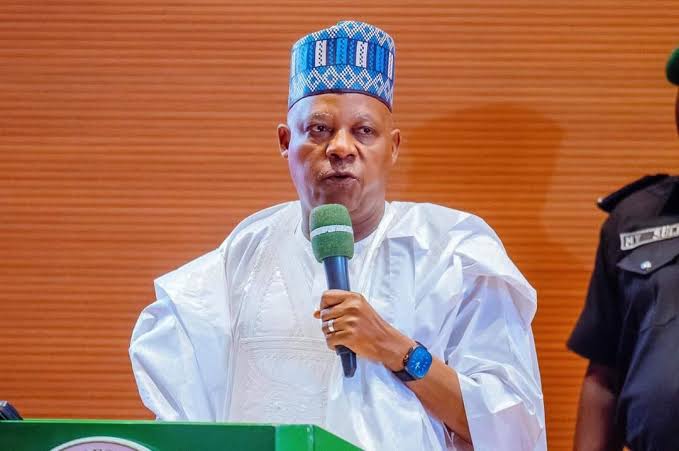
Vice-President Kashim Shettima has proposed an annual review of states’ electricity markets to track implementation of the Electricity Act 2023, identify bottlenecks and accelerate investment in the power sector.
Shettima, represented by the Deputy Chief of Staff to the President, Senator Ibrahim Hassan Hadejia, spoke at the opening of a National Stakeholders’ Workshop on the Electricity Act 2023 in Abuja, themed “Empowering the States: Reviewing the Electricity Act 2023.”
He proposed a National Electricity Reform Review and Implementation Framework involving the Nigerian Electricity Regulatory Commission (NERC), the Federal Ministry of Power, the Nigeria Governors’ Forum and state electricity regulatory institutions.
The proposed framework would allow participating states to assess progress, share best practices and identify challenges in developing electricity markets, attracting investment and protecting consumers. Participation would be voluntary and respect the constitutional and statutory powers of individual states.
Shettima urged states yet to establish electricity regulatory commissions to begin the necessary legislative and institutional processes without delay, stressing that effective implementation was critical to translating the law into improved power supply.
He called on states that had made progress to share their experience and technical expertise with others, warning against creating regulatory bodies that existed only on paper.
“The success of the reform should be measured not by the number of commissions established, but by the electricity generated, investments attracted, jobs created, reliability of supply and improvements in the lives of our citizens,” he said.
On investment, Shettima said government alone could not provide the capital, technology and expertise needed to transform the sector. He urged state governments to adopt transparent licensing procedures, predictable regulations and commercially viable market arrangements to attract private investors.
He also called on states to identify their energy resources and develop viable projects capable of expanding electricity access, creating jobs and stimulating economic growth.
Consumer protection, he said, must remain central, with regulators ensuring fair billing, reliable service, effective complaint-resolution mechanisms and accountability by electricity operators.
“The average Nigerian is not interested in the complexities of electricity regulation. He wants electricity that works,” he said.
Shettima urged the workshop to develop practical recommendations for implementing the proposed framework, strengthening state regulatory institutions and establishing clear timelines for monitoring progress.
He reaffirmed the Federal Government’s commitment to making electricity more accessible, reliable and affordable, describing dependable power as essential to building a productive and competitive economy.
Minister of Power, Joseph Tegbe, on his part said the success of the electricity reform would depend on states’ ability to build credible regulatory institutions, attract private capital and deliver improved services to consumers.
The minister who was represented by the ministry’s Permanent Secretary, identified institutional capacity, commercial viability, the transition from federal to state regulation, coordination with the national grid and consumer protection as critical issues requiring attention.
“A regulator on paper is not a functioning market,” he said, stressing that the reform should be measured by improvements in electricity supply, expanded access and investor confidence rather than the number of regulatory institutions established.
Tegbe said state regulators needed competent commissioners, technical and legal personnel, transparent licensing and tariff processes, adequate funding and sufficient independence to discharge their responsibilities effectively.
He added that investors required credible tariffs, enforceable contracts and predictable regulations, while states must develop transparent and sustainable arrangements to bridge the gap between electricity supply costs and what consumers could afford.
On the transition to state regulation, he warned that existing contracts and financial obligations would not disappear with the transfer of regulatory responsibilities, urging states to protect consumers, suppliers and investors throughout the process.
He also called for clear arrangements between state electricity markets and the national grid, noting that many states would continue to depend on grid electricity while developing independent generation and distributed energy solutions.
The minister urged states to work with development finance institutions and private investors to develop bankable projects, secure financing and manage investment risks, saying neither federal nor state governments could fund the required investments alone.
He said state-level planning offered opportunities to tailor electricity solutions to local needs, including mini-grids for underserved communities, renewable energy projects and reliable power for industrial clusters and agricultural enterprises.
Tegbe urged state governments, commissioners and regulators to establish credible institutions, develop investment-ready project pipelines and prioritise consumer protection.
He said the ultimate goal of the Electricity Act 2023 was to improve the lives of Nigerians by ensuring that businesses could operate reliably, farmers could power their activities, students could study at night and healthcare facilities could depend on electricity when needed.
He reaffirmed the Federal Ministry of Power’s readiness to work with state governments, regulators, development partners and the private sector to build a stronger electricity market, expand access to cleaner energy, create jobs and support industrialisation.
Chairman of the Nigeria Governors’ Forum (NGF), Abdulrahman AbdulRazaq, in his goodwill message, stressed that the proposed amendments to the Electricity Act 2023 must protect states’ regulatory powers and avoid creating uncertainty that could discourage investment in the electricity sector.
Represented by the Director-General of the NGF, Abdulateef Shittu, AbdulRazaq said the NGF had supported states in implementing the Act through technical workshops, legislative and regulatory templates, policy coordination and efforts to develop a standardised tariff methodology.
According to him, the forum has worked with partners, including the British High Commission and UK International Development, to assess states’ readiness, strengthen regulatory frameworks and identify investment opportunities.
He said the NGF had also undertaken a comparative review of proposed amendments to assess their implications for state electricity markets, regulatory autonomy and consumer protection.
AbdulRazaq urged stakeholders to ensure that the amendments strengthened, rather than undermined, the progress made in enabling states to exercise their responsibilities in electricity regulation.
He identified the protection of state authority over intrastate electricity operations, the licensing and regulation of mini-grids, and expanded technical oversight responsibilities proposed for the Nigerian Electricity Management Services Agency as areas requiring careful consideration.
“Uncertainty over regulatory authorities can increase compliance costs, delay project completion and weaken investors’ confidence,” he said, adding that clear rules and effective coordination between federal and state institutions would help attract private capital and accelerate rural electrification.
The NGF chairman said the next phase of electricity reform required regulatory clarity, institutional coordination and investment certainty, urging stakeholders to approach the legislative review with an open mind and a commitment to the national interest.
He added that states needed technical expertise, institutional capacity and investment partnerships to develop viable electricity projects, establish effective regulatory systems and protect consumers.
He reaffirmed the NGF’s commitment to promoting peer learning among states and strengthening collaboration with federal institutions and private-sector stakeholders.
AbdulRazaq urged participants at the two-day workshop to develop practical solutions that balanced national coordination with states’ legislative responsibilities, saying the ultimate goal was an efficient, inclusive and financially sustainable electricity sector capable of meeting Nigeria’s growing energy needs.
The Chairman of the Nigerian Electricity Regulatory Commission (NERC), Musiliu Oseni, said the commission had issued transfer orders to 17 states to enable them assume regulatory oversight of their electricity markets, following compliance with requirements under the Electricity Act 2023.
Represented by Hauwa Yakubu, the NERC Chairman said the commission had also supported emerging state regulators through training, capacity-building programmes and technical engagements.
He said the Electricity Act 2023, building on the 2023 constitutional amendment, ushered in a new era of multi-level electricity regulation by allowing states to legislate on and regulate electricity generation, transmission and distribution within their territories, while NERC retained responsibility for interstate and international electricity operations.
He added that the decentralised framework brought regulation closer to consumers, enabling regulators to respond more effectively to local needs and market conditions.
However, Osani cautioned that the transition presented challenges that required careful management to maintain a fair, stable and predictable regulatory environment and sustain investor confidence.
He described the workshop as timely, saying it provided an opportunity for stakeholders to assess progress, address implementation challenges and strengthen coordination between federal and state regulators.
He expressed hope that the deliberations would produce practical recommendations for developing Nigeria’s multi-tiered electricity market and consolidating the gains of the reforms.