Follow Us on Google

• raises alarm over fake content, social media attacks on politicians
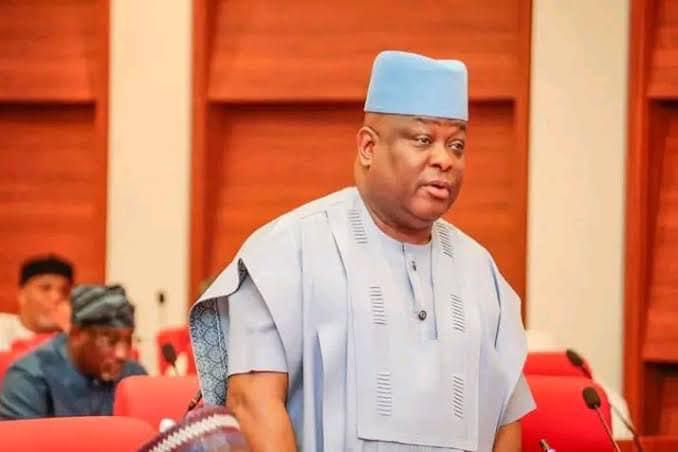
Senator Osita Izunaso has warned that artificial intelligence (AI) could become a global calamity if left unregulated, citing the growing use of the technology to generate fake content, manipulate public opinion and undermine trust in information.
Izunaso, Chairman of the Senate Committee on Capital Market, said AI-generated images and digital content had become so realistic that it was increasingly difficult to distinguish fabricated materials from genuine ones.
He also raised the alarm over the weaponisation of social media against politicians, alleging that some individuals resorted to online harassment, falsehoods and coordinated negative campaigns against public office holders when their personal demands were not met.
The senator spoke on Monday in Abuja at the World Public Relations Forum, themed, “Responsible Communication: The Voice of the World”.
He said urgent regulatory measures were needed to prevent the potential dangers of AI from overshadowing its benefits.
“AI is a medical issue right now. And globally, AI is not regulated in most countries.
“Just like when new media started, most politicians did not find it necessary to regulate the new media. We started late as parliamentarians and I am also of the opinion that AI must be regulated before AI will destroy the world,” he said.
Izunaso observed that the sophistication of AI-generated images had made it increasingly difficult for people to establish the authenticity of materials circulated online.
“Now, when you see AI images, they look so real that sometimes you might not be able to decipher which is AI and which is real. Don’t get me wrong. AI is good, but it has to be regulated before the goodness of AI will become the calamity of the world,” he said.
The lawmaker also decried what he described as the growing use of social media to intimidate and malign politicians, particularly by individuals unhappy with their inability to secure personal favours from public office holders.
He said some people who approached politicians with requests they could not fulfil subsequently resorted to publishing damaging comments about them online.
“When people ask you for something and you are unable to do that thing, they will say okay, don’t worry. Then, within one week, you will see what they post about you. All manner of negativity,” he said.
He cited the case of a political appointee who, instead of receiving congratulatory messages following his appointment to a campaign council of the ruling party, became the subject of negative online comments because of perceived personal or political differences.
Izunaso called for greater responsibility and accountability in digital communication, stressing that truth, empathy and accountability must guide interactions on social media.
Earlier, the Vice-Chancellor of Chukwuemeka Odumegwu Ojukwu University, Anambra State, Kate Omenugha, called for the integration of communication ethics into university curricula across disciplines.
She said the widespread use of social media and AI without adequate training and ethical guidelines had heightened the risks of misinformation and irresponsible communication.
Also speaking, the President and Chief Executive Officer of the Global Alliance for Public Relations and Communication Management, Justin Green, highlighted Africa’s growing representation in the organisation’s leadership.
He disclosed that Africa, which previously had no representative on its board, now had six members, the highest representation from any continent.
Green described the development as a significant achievement for the continent and invited the six African board members to the stage in recognition of their contributions to the global public relations community.
The Chief Executive Officer of the Chartered Institute of Public Relations (CIPR), United Kingdom, Alastair McCapra, said public relations professionals must address their own credibility challenges before assuming the responsibility of rebuilding public trust in institutions and society.