Follow Us on Google
From Juliana Taiwo-Obalonye, Abuja
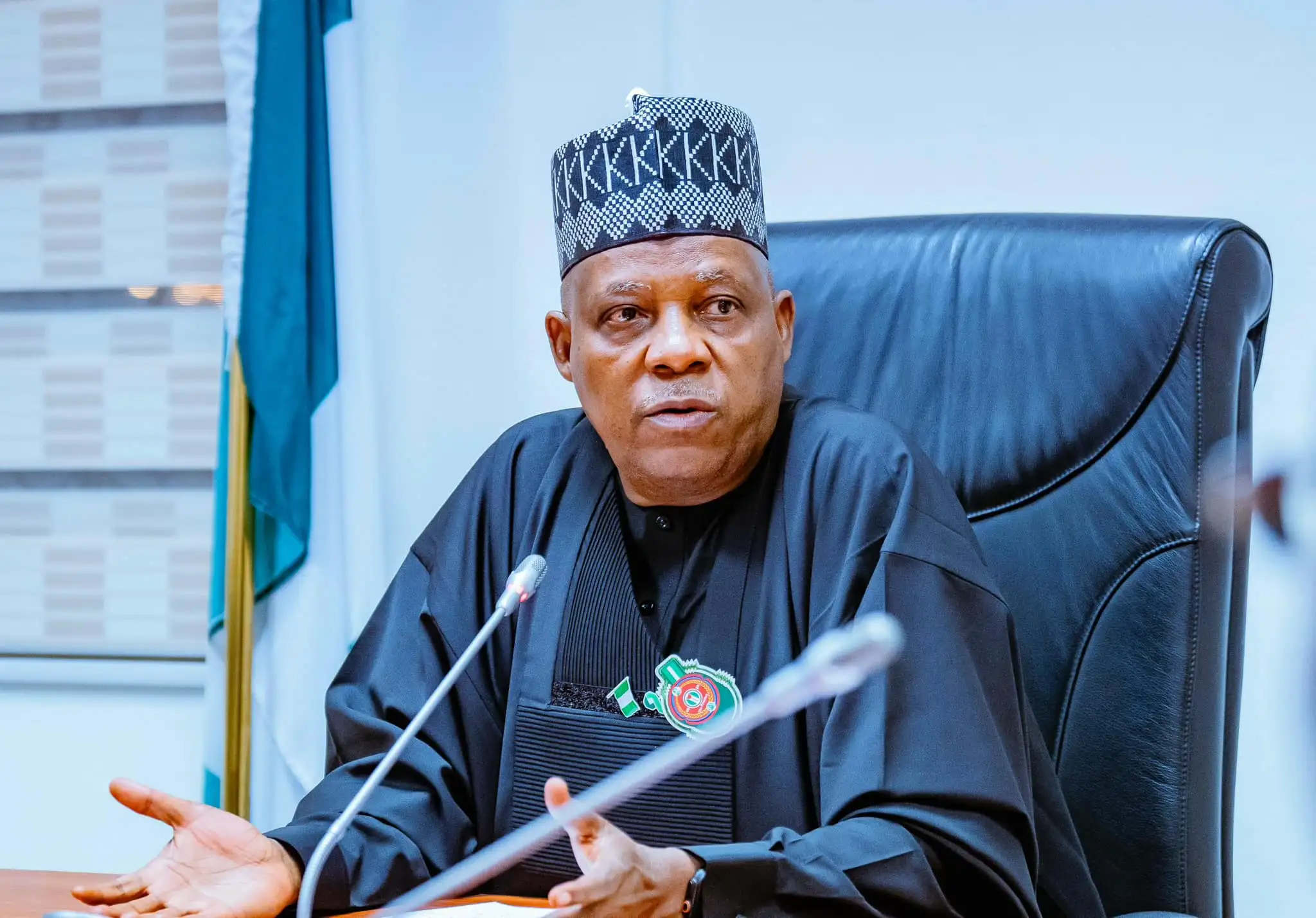
Vice President Senator Kashim Shettima has called for a deliberate, forward-looking framework to develop youth leadership, warning that Nigeria’s status as one of the world’s youngest nations means little without strategic institutional investment.
Speaking Monday at the Abuja Dialogue 2026, convened by the Office of the Vice President and Lagos State’s Lateef Jakande Leadership Academy, Shettima insisted the country’s demographic strength demands policy action beyond rhetoric. “We are one of the youngest nations on earth. That fact should not be treated as a line for conferences or a statistic for brochures. It is a national condition with profound consequences,” he declared.
The Vice President stressed that Nigeria’s future hinges on systems ensuring leadership continuity, not just resources or programmes. “Youth leadership must be understood with clarity. It is not a ceremonial handover waiting for age to perform its arithmetic. It is a structured process through which young men and women are prepared, trusted, integrated, and supported within the institutions that shape our future,” Shettima said. He urged reshaping education, public service, enterprise, and civic institutions to foster gradual responsibility: “Leadership grows when young people are given room to learn, to contribute, to make decisions, and to be held accountable for results. Responsibility is the workshop where capacity is refined.”
Addressing youths directly, he defined leadership by readiness, not age: “Leadership is not defined by age. It is defined by readiness to bear consequences, to choose the long view over easy applause, and to place the common good above private comfort.” Shettima commended the Academy and Lagos Governor Babajide Sanwo-Olu, urging discipline: “The country we aspire to will not be handed to us complete. It will be built by men and women who understand that excellence is a duty, not an ornament.”
Other News
Lagos Governor Sanwo-Olu praised federal hosting as a signal of youth priority, spotlighting the Lateef Jakande Leadership Academy (LJLA) as a talent incubator offering public sector immersion, mentorship, and capstone projects. He outlined Lagos’s ecosystem, including IBILE Youth Academy and employment funds, and called for policy frameworks and political will to turn intentions into institutions.
Deputy Chief of Staff, Senator Ibrahim Hassan Hadejia, emphasised preparation: “Youth leadership cannot be approached as a symbolic gesture but a deliberate idea that recognises leadership as infrastructure that determines the strength of institutions and shapes the trajectory of national development.”
Youth Minister Ayodele Olawande affirmed readiness saying “Nigerian youths are prepared, ready and committed to playing their roles… The administration of President Bola Ahmed Tinubu… remained committed to providing the necessary platforms and enabling environment for the youths to fulfil their destinies and take up leadership positions.”
Ayisat Agbaje-Okunade, LJLA Executive Secretary, hailed the federal-Lagos partnership: “The Abuja Dialogue underscores the need to scale the conversation about youth leadership development as a strategic pillar of governance… transforming policy pronouncements to actionable programmes and projects.”