Follow Us on Google

From Juliana Taiwo-Obalonye, Abuja
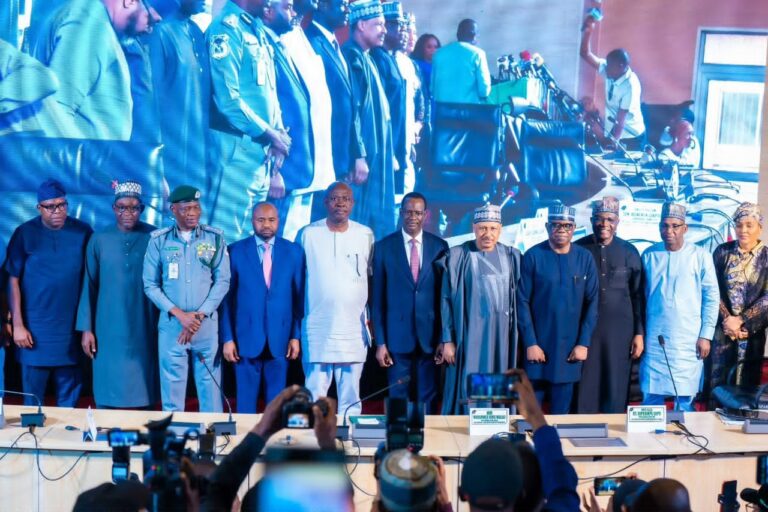
National Council on Nutrition (NCN), chaired by Vice President Kashim Shettima, has inaugurated a Nutrition Financing Subcommittee to craft a robust funding roadmap for Nigeria’s nutrition interventions, amid urgent calls to protect budgets and fast-track the National Nutrition Bill.
The subcommittee, constituted during yesterday’s virtual NCN meeting, will deliver its recommendations within 30 days for review by the NCN and National Economic Council (NEC), according to a statement by VP’s media aide, Stanley Nkwocha.
Chaired by Coordinating Minister of Health and Social Welfare, Ali Pate, it includes Ministers of Education, Water Resources, Women Affairs and Science and Technology, plus the Deputy Chief of Staff to the President and Senior Special Assistant on Public Health. The Ministry of Budget and Economic Planning serves as secretariat, with development partners and private investors like the Aliko Dangote Foundation involved.
Vice President Shettima stressed ring-fencing nutrition funds to close the divide between policy pledges and real-world impact. “Without ring-fencing nutrition financing, the gap between promises made and lives changed will continue to widen,” he declared, demanding stronger budget tagging, tracking and accountability. “Budgeting without release is not financing. Allocation without predictability is not reform. Every MDA must now account not just for figures on paper but for measurable changes in the lives of Nigerians.”
He urged former legislator-ministers to rally support for the National Nutrition Bill, stating, “Council, therefore, resolves that the National Nutrition Bill should be pursued with urgency.”
He also stressed subnational action, encouraging governors to accelerate the Accelerating Nutrition Results in Nigeria (ANRiN) 2.0 project in high-burden states. “If our efforts are to succeed, they must not stop at the federal level. This requires stronger subnational ownership and deeper grassroots engagement,” he said, placing women at the forefront. “Their voices, leadership and participation must be fully integrated into planning, decision-making and programme delivery.”
He framed financing as the core challenge, saying, “The central reform issue before us is financing, not as theory, but as execution. We must strengthen budget tagging, tracking and reforms so Nigerians can see real outcomes.”
The meeting reviewed progress on the Food and Nutrition Security Preparedness Plan, Nutrition 774 realities and national budgeting, which flagged funding gaps across ministries and states. Nine states, comprising Abia, Adamawa, Borno, Cross River, Jigawa, Plateau, Rivers, Yobe and Zamfara, have launched State Councils on Nutrition, with more pending.
Chairman of Governors’ Forum and Kwara State Governor, Abdulrahman AbdulRazaq, representing states, reaffirmed commitment, as did Nutrition Society of Nigeria Chairman, Muhammad Sanusi II and partners, including UNICEF and Aliko Dangote Foundation. Minister of Education, Tunji Alausa pushed for a sustainable funding model to bolster federal efforts.