Follow Us on Google

“We can easily forgive a child who is afraid of the dark; the real tragedy of life is when men are afraid of the light.”
—Plato
By Cosmas Omegoh
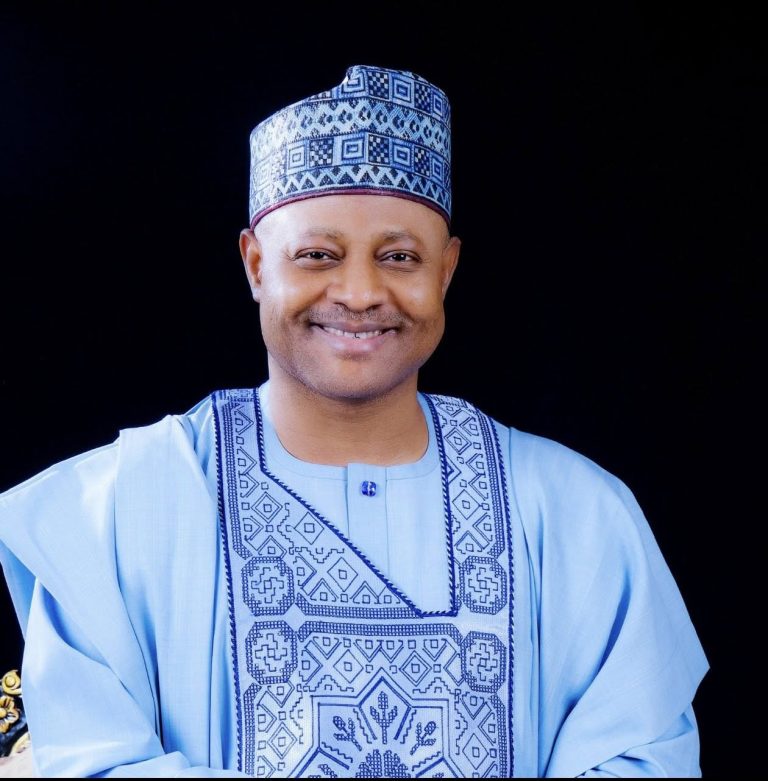
Retired army captain, Ahmad Abubakar Gumi, divides opinion with his rhetoric. Any day, he is enrobed in controversy and he seems to relish it.
Gumi, 65, was a former medical officer in the military. Now, he is an Islamic scholar and cleric. He goes with the appellation “Sheik,” whose words and ways often set men on fire and no less does his stance on burning national issues. On account of the latter, he comes across as a man of a different hue whose personality is appreciated differently, depending on the side of the divide one falls.
Even the government of the day doesn’t seem to understand Gumi and his ways. At best, Gumi is to it an irritant or a social commentator always seeking media attention. Or perhaps he is just a gadfly. Overall, the government pretends he does not exist and allows him the space to operate. Gumi acts more than he is perceived.
From time to time, Gumi by his body language, engages the government in frontal battles, setting it up rummaging through his acts for meaning – even when it is clear for it to see as a sovereign.
Some persons insinuate that the government’s “sidon look” attitude to Gumi’s ways all appears so because it craves to maintain its stability against the choppy, yet dangerous tide that the North sometimes conjures to rock the boat. So, each time Gumi gushes, the government pretends he isn’t there.
That said, some people see that for what it is: conspiracy theory. But those who believe to the contrary demand reasons Gumi’s comments are always allowed to slide without the government raising as much as a whimper, insisting that Gumi is never cautioned not even when the populace expresses emotions of disapproval.
Some citizens would recall how the Department of State Security (DSS) once invited and grilled Gumi following his comments and alleged romance with bandits in the jungle, yet nothing serious was heard about the engagement. Not a warning was issued, not a rebuke was handed and not a reprimand was given. Everything about Gumi’s encounter with the mighty DSS ended tepid. Did the treatment embolden Gumi? Maybe. Maybe not!
Now, ever since Gumi appeared on the firmament as a social commentator, he has always been vocal; he has always been firing on all cylinders, always weighs in on many weight national issues including those many might consider outside of his capacity. So he treads without let where other mortals dare not, doing so sometimes unhinged, unfettered – and unfazed. That leaves many who know Gumi each time re-sculpturing his image in their minds as untouchable.
But who is this Gumi, the uninitiated might want to ask? Give it to him, Gumi each time comes through as a man clear about what he says. He tells it each day that he is a man with a mind of his own. He gets away with his words and deeds. Perhaps, that is how lucky he is. He is who he is!
In the North, particularly in Kaduna, Gumi’s name echoes. He has this cult following. Perhaps his disciples are as legion, his words divine – if not law. To those his acolytes, he is a man with the moral compass; his words bear a certain moral and divine force which cannot be faulted. Now, begin to see why men flock to him with the haste butterflies besiege nectar.
Every Friday at the Sultan Bello Mosque or the Kaduna Central Mosque in the heart of the city, Gumi holds court, his stature bigger than those of the biggest of worshipers. As the Chief Imam, he stands in pole position. Week-in-week out, he delivers incisive, well-weighted sermons that leave his listeners enthralled, a role bequeathed to him by his late father, Sheikh Abubakar Gumi, the first Grand Khadi of the defunct Northern Region.
Now, having had a glimpse into Gumi’s person, it becomes clearer why his listeners might hardly wait to weigh his words on the scale before taking it to the bank. Asking them to do so might be misplaced.
So, Gumi’s words resonate. Even among those criminals who hold vice grip on the North-West without let, Gumi makes sense to some of them – but not often to those of them sucked in by the evil of spilling blood and the taste of filthy lucre that comes with it.
It is well documented that at various times, Gumi led missions to bandits’ and kidnappers’ camps, allegedly to either persuade them to drop their arms or to release their abductees unconditionally. Everyone is made to believe that he had always done that with the firm belief that they would listen to him; his message to them being that their actions are inimical to the way of Allah whom they purportedly profess. Gumi is believed to have always gone to the wilderness with the message of assurances of Allah’s mercy and forgiveness, if only his audience would listen to his voice and harden not their hearts.
He was reported to have gone on such missions to Zamfara, Katsina, Kaduna and Niger states, urging the bandits to cease their onslaught on innocent people and free those in their captivity.
He had equally acted as an intermediary between the government and the hoodlums, and obtained some sort of reprieve for the victims. Even in some instances, he had pushed for amnesty for the hoodlums, openly urging the state to grant them clemency in a clear sleight of hand.
To the watching world, the Gumi bouquet of gestures was such weird and wild rhetoric. People have kept wondering what sovereign on earth worth its name would accept such an offer – no matter how good it might seem. Perhaps only Nigeria does!
Days ago, Gumi expressed his reservation against the US bombing of bandits running riot along the Sokoto-Kebbi corridor. This came amid rejoicing that at last, the real fight against the criminals had begun yielding fruits. But Gumi had a separate view. In his characteristic self, he sharply criticised the US action, leaving many who listened to him wondering if there was more to his remarks than meets the eye.
Gumi was quoted as saying that: “As a principle, no nation should allow its land to be a theatre of war. And no nation should allow its neighbours to be their enemies.”
His position is clearly that: “If Nigeria wants military assistance, China, Turkey and Pakistan can do the job effectively.”
Then he contended that: “The US involvement in Nigeria will attract the real anti-US forces, making our land the theatre of war. The USA’s involvement in Nigeria, citing coming to ‘protect Christians,’ will ultimately polarise our nation and infringe on our sovereignty.”
As usual, Gumi has divided opinion based on his offering. Although everyone agrees that no nation allows its territory to be used as a “theatre of war,” what nation will fold its arms as bandits take its space and unleash mayhem?
Although Gumi preferred some other entities to render the help American is giving, his suggestion that “the US involvement in Nigeria will attract the real anti-US forces, making our land the theatre of war,” begs the question.
Or shouldn’t it be another Gumi rhetoric that ought to be tucked in its rightful place?