Follow Us on Google

June 12 has continued to resonate and symbolize the apogee of democratization in Nigeria. On the D-Day in 1993, Nigerians defied the major national fault-lines (ethnicity and religion) and voted for Chief M.K.O. Abiola. The announcement of state-by-state results of the election, with MKO coasting to victory with a clear lead, ended in a stalemate.
The election was annulled. Of course, the former head of state, Gen. Ibrahim Babangida (rtd), the arrowhead, took a harsh judgment of history. It was the waning days of the powerful ‘Kaduna Mafia’. The June 12 undertakers tried to salvage the political impasse by a Yoruba-led Interim National Government(ING) in the person of Chief Ernest Shonekan. Like a Trojan horse, the ING battled with legitimacy. It served for three months and relinquished power to the Military. Gen. Sani Abacha took charge and unleashed the highest form of brazen dictatorship in the country’s history. The civic space was guillotined. Pro-democracy activists were hounded. The uncompromising media houses were closed down. Some of the critics of government were forced into exile. Those who could not escape were handed down various prison sentences in what the media termed ‘Abacha’s gulag’. A number of persons died in surreptitious state-sponsored terrorism, including MKO and his dear wife, Kudirat. Professor Humphrey Nwosu, the electoral umpire that midwifed the June 12, 1993 election with the legendary Option-A4, published his own account, many years after. He did not say anything new, anyway.
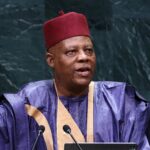
Senator Shehu Sani, a Kaduna-based civil rights activist, was among those that languished behind prison bars because of the struggle to revalidate June 12 mandate. Chief Olusegun Obasanjo, a former head of state would have also died in prison, if not for divine intervention. Obasanjo was granted state pardon by Gen. Abdusalami Abubakar’s military junta that hurriedly reeled out a transition-to-civil-rule programme. Out of the blues, Obasanjo was drafted into the presidential race. He clinched the PDP ticket, won the election and was sworn in as a democratically-elected President on May 29, 1999. Obasanjo who disdainfully noted that MKO was not the messiah, became the chief beneficiary of the struggle to enthrone democracy. He ignored popular sentiments and debates, especially from his South West kinsmen and declared May 29, instead of June 12, as the Democracy Day. However, in order to woo the South West for his second term election, former President Muhammadu Buhari reversed it in 2018. He officially recognized June 12 as the Democracy Day, and it joined the list of public holidays in Nigeria. The 2024 edition of June 12 commemoration had Senator Shehu Sani as a guest at presidential dinner after the ceremonial festivities at Eagle Square. As a renowned social critic and human rights advocate, he did not blow the opportunity. Analysts view Senator Sani’s invitation at the instance of Mr. President as a fence-mending overture. Sani was part of the elements that mobilized forces to snatch power from PDP at the centre in 2015. But he was pushed out of APC by former governor Nasir El-Rufai. Senator Sani had opposed El-Rufai’s request for Senate’s approval of external loan for Kaduna State. El-Rufai later had his way when he stopped Sani’s re-election to the Senate in 2019, and today, Kaduna State is bearing the brunt. In addressing the high-profile gathering, including the President and Commander-in-Chief, Asiwaju Bola Ahmed Tinubu, Senator Sani waxed nostalgic. He respectfully spoke truth to power and paid tributes to the fallen martyrs of the struggle. He recognized the commitments of some civil society groups such as ASUU, NANS, NUPENG led by Frank Kokori and the Nigeria media, and insisted that young people need to be brought to speed about this painful era in our chequered history. And in a rare show of maturity and sincerity, he noted that even though El-Rufai stopped his re-election to the Senate, he saluted him for standing by the detained pro-democracy activists and for keeping the touch of freedom alive when they languished in jail. Given the controversy that trailed the recent change of the national anthem, he spoke the minds of many people poetically: “The national anthem cannot unite a nation; the national pledge cannot unite a nation; a constitution cannot unite a nation; a nation is united by the ideals of freedom; a nation is united by equity and justice.”
The choice of words can really make or mar. With enough dose of courtesies and fine balance of protocol niceties, he made hard-hitting efforts to present matters that concern the hapless, voiceless, and defenceless citizenry, as well as those on the bottom rung of social ladder. He noted that it was reassuring that Mr. President acknowledged the untold hardships and sufferings in the land occasioned by his administration’s reforms, and prayed for him to succeed in turning the tide. He harped on democracy tenets of freedom and equity, and urged president Tinubu to uphold those values, as “this democracy was not a gift given to us by the military or a lottery that we won, but a product of struggle and sacrifice.” Sani reminded him to do something for the prisoners who hosted them during those dark days. Records from the Nigeria Correctional Service (NCoS) indicate that 70% of prison inmates in Nigeria are awaiting trial victims. On a final note, he urged him to extend state pardon to the remaining detained #EndSARS protesters. Having emerged from the trenches, Sani pointedly told him that he is the father and grandfather of protesters. In essence, he should not criminalize protest. And typical of Nigerian factor, the Police instantly denied continued detention of any #EndSARS protester. Trust the social media, a pro-democracy group, Take It Back Movement faulted the police and released the names of those still in prison cells on account of the foundation-shaking protest. Indeed, Sani’s power of persuasion had a soothing effect. The ability to say the ugliest thing in a nicest way is the strength of language power. The key take away from Sani’s bold intervention is that an opportunity to raise a voice for those on death row should not be allowed to slip away.