Follow Us on Google
From Noah Ebije, Kaduna
As the countdown to the 2027 general elections gradually begins, political activities within the All Progressives Congress (APC) in Kaduna State are gathering momentum, with emerging fault lines over endorsements, internal democracy, and the growing agitation among aspirants seeking a level playing field.
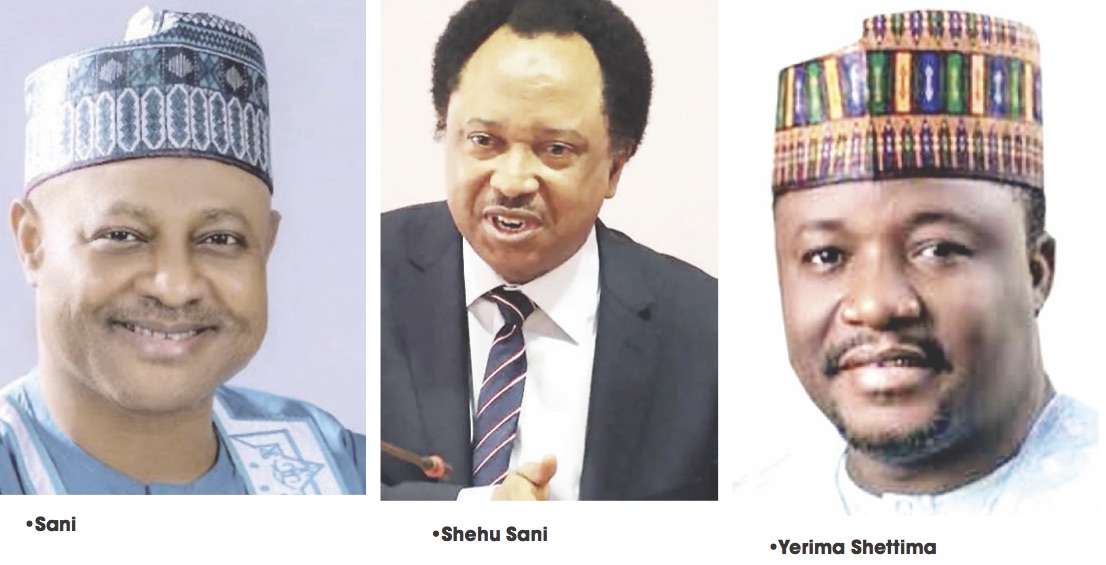
At the centre of the unfolding political drama are subtle but mounting pressures on President Bola Ahmed Tinubu and Kaduna State Governor, Uba Sani to either openly or tacitly endorse candidates, particularly in the keenly anticipated Kaduna Central senatorial race.
The recent visit of top Kaduna APC stakeholders to the Presidential Villa in Abuja was, on the surface, a routine show of loyalty. Daily Sun however gathered that beneath the optics, it signalled the party’s attempt to consolidate its hold on the state while quietly shaping the political permutations ahead of 2027.
Leading the delegation, Speaker of the House of Representatives, Tajudeen Abbas, painted a picture of a politically transformed Kaduna where the APC now enjoys widespread acceptance across its three senatorial districts. Abbas is believed to want to run for the Senatorial seat of Kaduna North in 2027.
“We are here to brief Mr. President on the progress of the APC in Kaduna and to assure him that the party has been accepted 100 per cent across the state,” Abbas said.
According to him, what used to be a party with limited reach has evolved into a dominant political force, thanks largely to strategic outreach and governance efforts.
The narrative of expansion was reinforced by references to political realignments, including the defection of Senator Sunday Marshall Katung from the Peoples Democratic Party (PDP) to the APC, a move widely interpreted as a significant boost to the ruling party’s influence in Southern Kaduna.
For decades, Kaduna’s political landscape has been shaped by a delicate North-South divide, often reflecting religious and ethnic cleavages. Historically, the Northern part of the state leaned towards progressives parties such as the APP, CPC and later APC, while the southern axis remained a stronghold of the PDP.
However, former senator, Kaduna Central district, Shehu Sani believes that the dynamic is changing. “This is the first time in the history of our state where the Muslim North and the Christian South are united under one political platform,” he said, attributing the shift to what he described as inclusive governance and tangible development projects.
From federal interventions in healthcare and education to infrastructure expansion, party leaders argue that governance is now serving as a unifying factor, eroding long-standing political divisions.
Yet, even as party leaders project unity, the issue of endorsements is stirring quiet tension within the APC ranks.
Governor Uba Sani has publicly distanced himself from any attempt to impose candidates, insisting that the party’s primaries will be free and fair.
“I have no anointed candidate,” the governor declared, emphasising that his priority remains governance, security, and development rather than early political manoeuvring.
He also cautioned party members against falling for divisive tactics, particularly from opposition elements seeking to exploit internal disagreements within the APC.
The Kaduna APC has similarly dismissed claims of pre-selected candidates as false and politically motivated. But on the ground, aspirants are not taking chances.
Among those openly rejecting the idea of political godfatherism is Kaduna Central senatorial aspirant, Yerima Shettima, who has emerged as a vocal advocate for internal democracy.
At a press conference in Kaduna, Shettima dismissed rumours that certain candidates had secured the backing of powerful figures in Abuja, describing such claims as both misleading and dangerous to democratic norms.
Other News
“I don’t want to use godfathers. Otherwise, Tinubu and Uba Sani are for me,” he said, in a pointed remark that underscores both his political connections and his refusal to rely on them.
For Shettima, the issue goes beyond personal ambition. Drawing from his background in pro-democracy activism during Nigeria’s military era, he frames the current debate as part of a broader struggle to protect democratic values.
“This is the genesis of the problems we have in our political system,” he argued. “When leaders emerge without a social contract with the people, they have no reason to serve them.”
A key flashpoint in the unfolding debate is the interpretation of “consensus candidacy,” a mechanism recognised within Nigeria’s electoral framework.
While party leaders often promote consensus as a tool for unity, critics argue that it is frequently abused to sideline popular aspirants.
But Shettima insists that true consensus must be inclusive and voluntary.
“It should involve all aspirants sitting together and agreeing. Nobody contacted me, and I am a leading aspirant,” he said, questioning the legitimacy of any process that excludes key stakeholders.
His stance reflects a broader concern among aspirants that the process could be manipulated to favour a select few, undermining confidence in the party’s internal democracy.
For the APC, the stakes in Kaduna are particularly high. As one of the most politically significant states in Northern Nigeria, Kaduna has the potential to influence broader electoral outcomes.
Party leaders are banking on recent gains, including defections, development projects, and improved inter-regional relations to secure a decisive victory for President Tinubu’s re-election bid.
Senator Katung highlighted federal government’s interventions in his district, including the establishment of key institutions, as evidence of the administration’s commitment to inclusiveness.
“These are things that never used to happen before,” he said, adding that such developments are driving grassroots support for the party.
Despite the optimism, analysts note that the APC must carefully manage internal ambitions to avoid fracturing its base ahead of the elections.
The growing number of aspirants, particularly in competitive districts like Kaduna Central, reflects both the party’s popularity and the high stakes involved.
Governor Uba Sani’s insistence on non-interference is seen by many as a strategic attempt to balance competing interests while preserving party unity.
But for aspirants like Shettima, assurances alone may not be enough.
“We are ready for the primaries,” he said. “Give us a level playing field, and we will deliver for the party, for the president, and for the people.”
As Kaduna APC navigates this delicate phase, the handling of its primaries may ultimately define not just its electoral prospects, but its commitment to democratic principles. Will the party uphold transparency and fairness, or will the lure of political control tilt the balance toward imposition? For now, the signals remain mixed, a public display of unity at the top, and a quiet but determined push for equity from below. What is clear, however, is that the road to 2027 in Kaduna has already begun, and it promises to be as competitive as it is consequential.