Follow Us on Google

When the government revealed plans to reintegrate 744 so-called repentant terrorists into the society a few months ago, there was national outrage. Many Nigerians said it would worsen the spate of insecurity across the country. Some said the ex-terrorists could leak intelligence to their active members and compromise our security.
The President of the Nigerian Bar Association (NBA), Afam Osigwe, said reintegrating terrorists without addressing the hurt of the victims amounted to compensating perpetrators and overlooking the victims. Amnesty International decried the lack of transparency of the programme and advised the government to be transparent about the process.
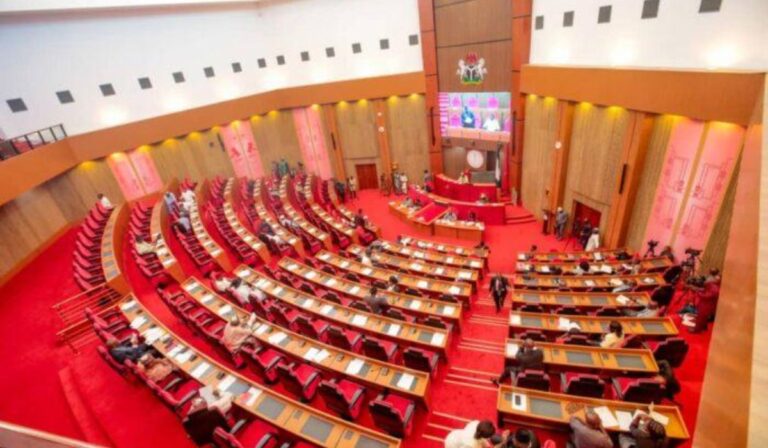
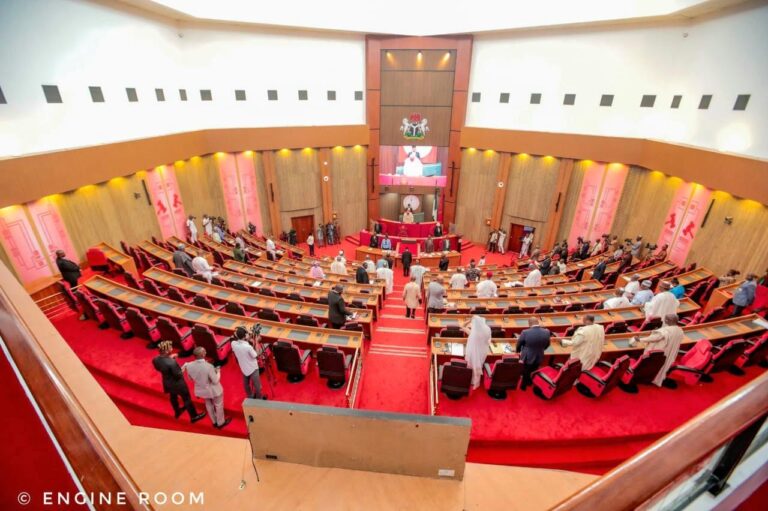
The recent Senate’s rejection of rehabilitation and reintegration of repentant terrorists and bandits in Nigeria, therefore, is not only salutary, but also falls in line with the views of many Nigerians on the issue. Also salutary is the demand by the Red Chamber for the prosecution of these terrorists and justice for their victims. The call was part of its resolution last week following a motion by Senator Abdulaziz Yar’Adua (Katsina Central) during plenary.
What prompted the motion and Senate’s resolution was the death of former Director of Defence Information, Major General Rabe Abubakar (retd), in the hands of bandits in Katsina State. In presenting the motion, Yar’Adua decried Nigeria’s worsening insecurity, noting that terrorist networks had become more sophisticated and emboldened such that they have extended their attacks from communities to abduction of military personnel.
The Senate bemoaned the attacks on military personnel and loss of officers, saying that these persistent attacks undermined troops’ morale and emboldened criminal groups challenging the authority of the state.
The Senate also resolved to send a delegation led by the Senate President, Godswill Akpabio, to meet with President Bola Tinubu to discuss national security problems. The upper chamber had condemned the worsening insecurity in the country, describing it as increasingly complex, persistent and alarming. It expressed worry that what started as insurgency in the North-East region had almost engulfed the entire country.
No doubt, the process in Nigeria is fraught with mistrust between the ex-terrorists and the communities they go back to. Some of the victims and affected communities have complained that they were not carried along in the rehabilitation process. They believe the ex-terrorists have not truly repented and are reluctant to accept them into their midst. Sadly, some of the ex-militants reportedly went back to their criminality after using the amnesty period to recover from hunger and military pressure.
Other News
The Muhammadu Buhari administration conceived the rehabilitation programme, called Operation Safe Corridor, in September 2015. It became operationalised in September 2016. That was after the failure of the attempt by the Goodluck Jonathan’s administration to rehabilitate ex-terrorists in 2013, code-named National Security Corridor. The programme supposedly takes ‘low-risk’ defectors through social and psychological rehabilitation, vocational training, basic education and religious re-education before reintegration into the society. Since 2015, thousands of ex-terrorists have passed through the programme.
Regrettably, some security chiefs who have some sympathy for the ex-terrorists had described them as “prodigal sons” and “our brothers.” Some others noted that the rehabilitation programme was in line with global counterinsurgency method. The Coordinator of Operation Safe Corridor, Yusuf Ali, added that many of the beneficiaries were forced into insurgency.
Granted that this may be true, it’s also possible that hardened terrorists may surrender and claim that they were forced so that they can exploit the rehabilitation window to gather more intelligence for their members. Many of them who went through this programme were actually reported to have gone back to their group in the forest. This is why there are doubts in many communities that the ex-terrorists have truly repented. In Bama, Borno State, for instance, community leaders have expressed concern about the arrival of ex-Boko Haram members in their community.
Government should halt this rehabilitation and reintegration programme. It will never deter others from being terrorists. The programme does not factor justice for the victims of insurgency. It does not do anything to reduce the pains of their relatives over the great loss. Instead of rehabilitation, terrorists should be arrested and prosecuted for their sundry crimes. There is also need for justice for their victims who were brutally murdered for no just cause.
Insecurity is increasing because the perpetrators are treated with kid gloves. It is good that the Senate called for the deployment of modern technologies, stronger intelligence capabilities, integrated command-and-control platforms, advanced communication systems, and immediate justice for the victims.
As Senator Adams Oshiomhole noted during plenary last week, “it does not make even common sense to grant pardon, rehabilitate and integrate criminals into society.” He insisted that they should face the full weight of the law. This has been our stand. The terrorists should be treated as enemies of the state and the society. Criminality should never be rewarded. They should be diligently prosecuted and those convicted punished adequately.