Follow Us on Google
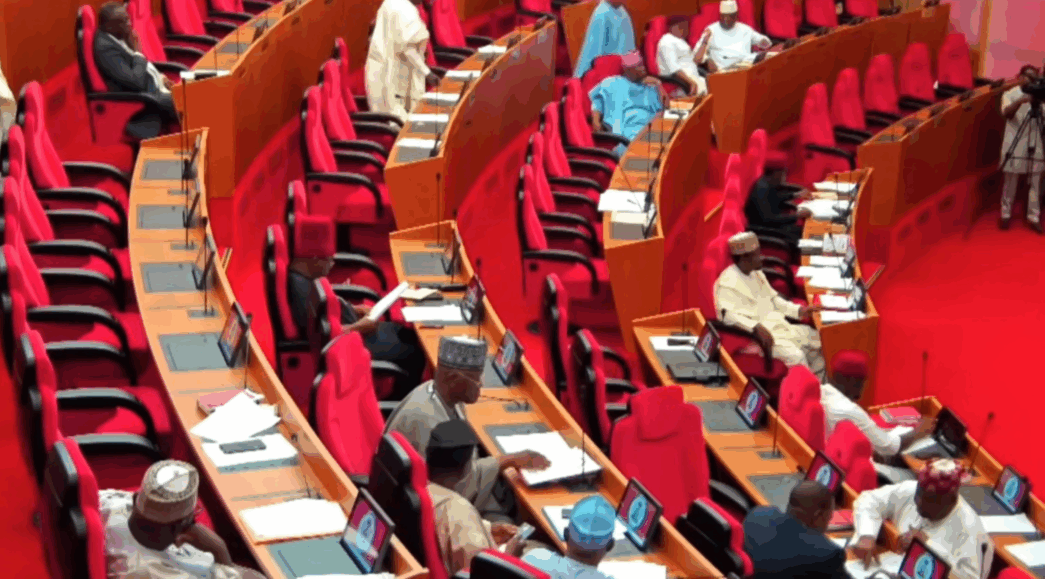
The Senate on Tuesday bowed to public pressure and endorsed electronic transmission of election results without adding “in real time.” It also made provision for manual transmission of results where technology fails in its passage of the Electoral Act (Amendment) Bill. Hitherto, the Senate had retained Section 60(3) of the 2022 Electoral Act which provides that the presiding officer shall transfer the results, including the total number of accredited voters and the results of the ballot, in a manner as prescribed by the Independent National Electoral Commission (INEC).
This led to protests by civil society organizations and members of the opposition before the Senate reversed itself on Tuesday. Even at that, it is not yet victory for electronic transmission of election results in real time, which the House of Representatives had approved. The approval of manual transmission of election results where technology fails by the red chamber could be used as an alibi to compromise the electoral process.
Expectedly, some Nigerians have expressed reservations over the ambiguous position of the Senate on the e-transmission of election results. We hope that the harmonization committee will listen to the voice of reason and give Nigerians a version of the Electoral Act that will meet their expectations.
We recall that the outcry and protests that trailed the Senate version of this bill stemmed from the sad experience of Nigerians with the collation of the 2023 presidential election results. INEC exploited the loophole in Section 60(3) of the 2022 Act to go against its promise to e-transmit real-time the results of the general election to its Result Viewing (IReV) portal.
In the nick of time when technology was needed to show the true picture of how the presidential election went, the electoral umpire claimed technical glitches on its servers. It failed to leverage on the e-transmission of results as promised. This cast serious doubts on the outcome of that presidential election. Unfortunately, the Supreme Court relied on the fact that the e-transmission of results was not compulsory to give its judgment in the 2023 presidential election petition.
Nigerians want to avoid this type of loophole in the next general election coming up in 2027. Free, fair, and credible election is the cornerstone of democracy. It gives the electorate the power to choose their leaders. It also gives them the power to change any government that is not measuring up. When the people lose that power, democracy loses its meaning and relevance.
Other News
Nigerians have gradually been losing faith in the country’s electoral system. This, perhaps, explains the steady decline in the turnout of voters to exercise their franchise. In 2007, about 57.5 per cent of voters turned out to vote in the presidential election. In 2011, the percentage of voters who turned out to vote declined to 53.7 per cent. In 2015, 2019, and 2023, it was 43.7 per cent, 34.7 per cent, and 27.1 per cent respectively. This is a serious indictment on the country’s electoral system.
Electronic transmission of election results, among other measures, will help in no small way to restore hope and confidence in Nigeria’s electoral system. It will reassure the citizens that their votes will count and will inevitably push them to come out en masse to vote for candidates of their choice.
Nigeria has no excuse not to conduct free, fair and credible elections. It is left for INEC to tell Nigerians the hindrances to its effective conduct of elections in the country, not the Senate. If INEC could assure Nigerians, as was done before the 2023 election, that it had the capacity to transmit results real-time from different parts of Nigeria, we do not see why the Senate should think otherwise.
It is even a shame to say that in this 21st century, some parts of Nigeria do not have access to network. Efforts should be made to bring network in those areas and if there is any particular reason for the absence of network, like insecurity, then it should be tackled. It is better we have a credible electoral process, which could be guaranteed by real-time e-transmission of results, than resorting to manual transfer of results that is prone to manipulation and erosion of public trust.
The hope of many Nigerians now is in the bipartisan Conference Committee of the two chambers of the National Assembly saddled with the responsibility of harmonizing the two versions presented by the Senate and the House of Representatives before it is finally passed and transmitted to the President for assent.
The House had passed a version that is at home with many Nigerians in December 2025. It unambiguously provides that the Presiding Officer shall electronically transmit the results from each polling unit to the IReV portal in real time. The National Assembly should justify the mandate given to them by their constituents by going with the version the majority of Nigerians want. Anything outside that will bring monumental disaster to the country’s political and electoral systems.