Follow Us on Google
From Kenneth Udeh, Abuja
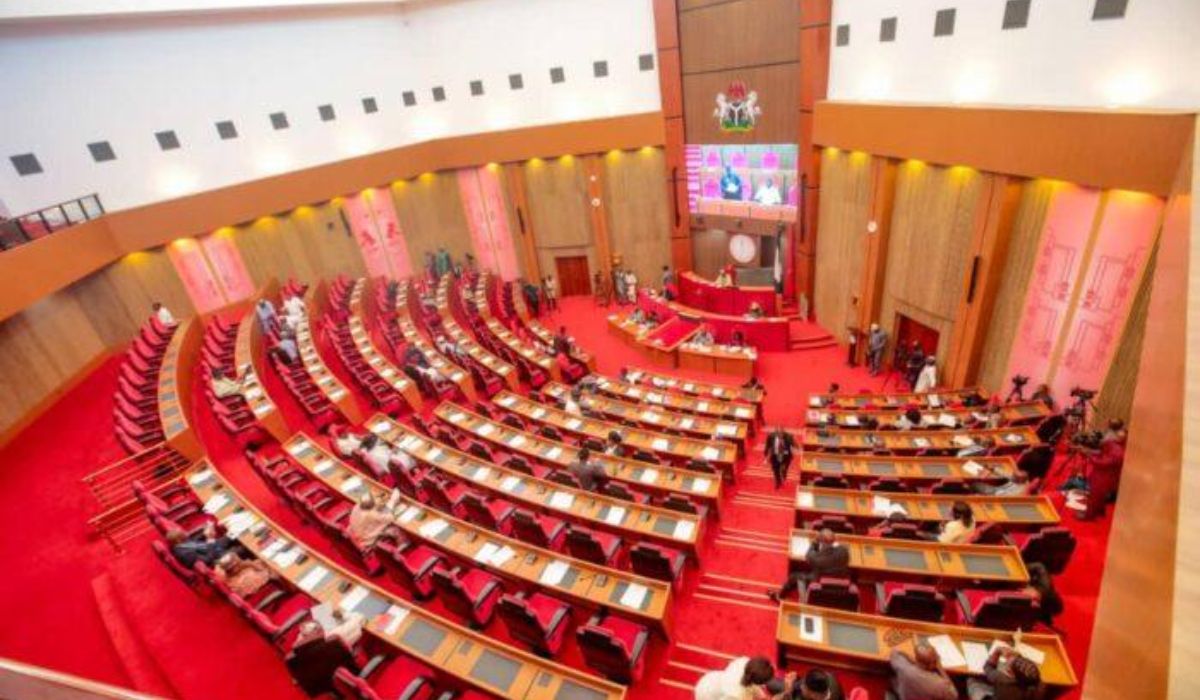
Nigeria’s Senate on Tuesday passed the Nigeria Police Trust Fund (Establishment) Bill, 2025 (SB.1031) for second reading, marking a significant step toward restructuring police funding, even as lawmakers expressed concerns over the proposed increase in statutory allocation from 0.5 percent to 1 percent of Federation Account revenue and its constitutional implications.
The bill, sponsored by Senate Leader Opeyemi Bamidele, seeks to repeal the 2019 Act and introduce a more comprehensive legal and institutional framework for funding, administering, and supporting the operations of the Nigeria Police Force.
Opening the debate, Bamidele described the bill as a strategic national security intervention aimed at addressing chronic underfunding, poor infrastructure, obsolete equipment, and welfare challenges within the police. He noted that evolving threats such as insurgency, banditry, kidnapping, and cybercrime demand a modern, well-funded policing system.
At the core of the proposal is a diversified funding model anchored on 1 percent of total revenue accruing to the Federation Account, alongside development levies, government interventions, international grants, and private sector contributions.
The bill also provides for a strengthened governance structure, including a multi-stakeholder board and a Project Implementation Committee to improve transparency, accountability, and execution.
Bamidele stressed the urgency of the reform, stating that security remains the foundation of governance and national stability. He observed that existing pressures have exposed deep structural weaknesses in the police, adding: “It is evident that the Police Force is constrained by inadequate funding, obsolete equipment, poor infrastructure, insufficient training, and welfare challenges affecting morale.” He described the bill as “a deliberate legislative intervention to address these systemic deficiencies in a sustainable and structured manner.”
Justifying the repeal of the current law, he acknowledged its intent but pointed to implementation gaps. “The existing Act… was a commendable initiative. However, practical experience over the years has exposed gaps in governance structure, funding sustainability, project execution mechanisms, and transparency and accountability frameworks,” he said, noting that the new bill seeks a comprehensive re-enactment aligned with current realities and global best practices.
He outlined key objectives, including establishing a transparent and accountable Trust Fund, ensuring predictable funding streams, and enhancing operational capacity, technology, and personnel welfare. According to him, the model would reduce reliance on annual budgetary allocations and support modern policing strategies.
Bamidele also detailed priority areas for fund deployment, including procurement of modern security equipment, digital surveillance and forensic technology, rehabilitation of police facilities, improved training institutions, and better welfare packages for personnel.
He emphasized that the bill goes beyond funding, describing it as “a strategic national security reform initiative” aimed at strengthening internal security, improving law enforcement response, boosting public confidence, and supporting economic stability.
Contributing to the debate, Senator Abba Moro strongly supported the bill, noting that inadequate funding has long weakened policing effectiveness. He warned that officers are often outmatched by criminals due to inferior equipment and called for a “foolproof” funding mechanism.
Senator Abdul Ningi, while backing the bill, raised concerns over the proposed increase to 1 percent, warning that cumulative statutory deductions could significantly erode the Federation Account.
He cautioned against a situation where multiple deductions could “take out 90 percent before the money is shared,” and also flagged accountability challenges associated with donor funding.
Senator Ibrahim Dankwambo questioned the coherence of the funding model in light of ongoing discussions around state policing, arguing that clearer alignment is needed. He also advocated stronger private sector participation, noting that businesses stand to benefit directly from improved security.
On his part, Senator Abdulfatai Buhari expressed reservations about fund management, citing past instances where increased allocations failed to translate into tangible improvements. He called for a performance-based disbursement framework, stressing that “we cannot just be throwing money at the problem” without measurable outcomes.
Chief Whip Senator Mohammed Tahir Monguno introduced a constitutional perspective, referencing Section 80(2) of the 1999 Constitution. He argued that the proposed funding mechanism remains valid if backed by an Act of the National Assembly, as provided in the bill.
Presiding over the session, Senate President Godswill Akpabio clarified that the legislation is not solely about funding but also about addressing structural inefficiencies in the Trust Fund’s administration.
He acknowledged concerns about accountability, insisting that the revised framework must ensure that “every naira is accounted for” with visible impact across police formations nationwide.
Akpabio described the proposed funding increase as necessary to create fiscal space for modernization, improved training, and enhanced welfare, while cautioning that strict oversight is essential to prevent the fund from becoming “a bottomless pit.”
Following extensive deliberations, the bill was adopted through a voice vote with overwhelming support and subsequently referred to the Senate Committee on Police Affairs, which is expected to report back within two weeks.