Follow Us on Google
From Kenneth Udeh, Abuja
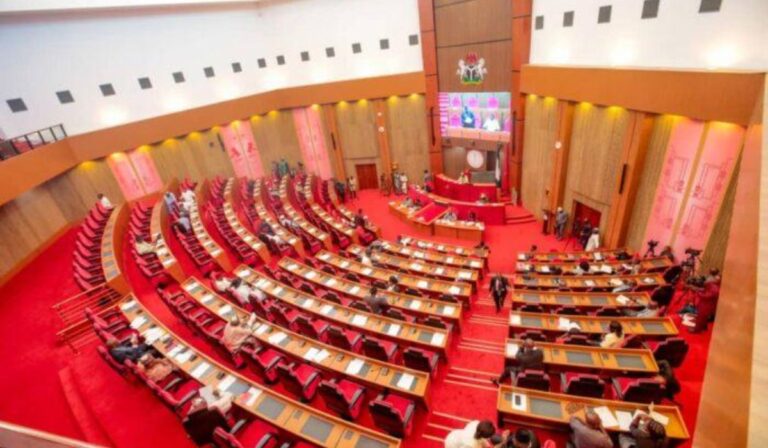
The Nigerian Senate, presided over by Deputy Senate President Barau Jibrin, on Tuesday, deliberated and passed a landmark bill aimed at improving public health financing through the strategic use of existing excise duties.
The lead debate on the Bill for an Act to Amend Section 21(3) of the Customs, Excise, Tariffs, etc. (Consolidation) Act was spearheaded by Senator Ipalibo Harry Banigo (Rivers West). Senator Banigo emphasised that the amendment is not a new tax but a restructuring of existing excise duties on non-alcoholic, carbonated, and sweetened beverages (SSBs) to support preventive health programmes and infrastructure development.
Addressing the Senate, Senator Banigo said:
“This amendment is not merely fiscal in nature; it is a public health investment strategy that aligns taxation policy with our national health priorities.
It proposes a restructuring of existing excise duty on sugar-sweetened beverages not to impose more burden on citizens, but to redirect part of the existing revenue to finance health-related programmes and infrastructure that will improve the wellbeing of Nigerians.”
Banigo further highlighted that non-communicable diseases (NCDs) such as diabetes, obesity, hypertension, and cardiovascular diseases, increasingly linked to excessive sugar consumption, now account for over 30% of annual deaths in Nigeria.
With public health funding still below the Abuja Declaration target of 15% of annual budgets, the bill provides a sustainable domestic financing mechanism to strengthen primary healthcare systems and improve overall health security.
The Senators made their contributions;
Senator Idiat Adebule: “I am in support of the Bill as long as it will not attract any taxes.”
Other News
Senator Tahir Monguno: “I am supporting this bill.”
Senator Isah Jinrin: “The products she’s talking about create a lot of waste, so she wants the excise duties used to address issues in the health sector.”
Senator Dakwambo: “It is only restructuring and not adding tax to Nigerians.”
Senator Adams Oshiomhole expressed caution: “Excise duty is not good now that we have to support local manufacturing. I don’t think we should support anything that will impact tax on goods produced in Nigeria.”
Deputy Senate President Jibrin noted:
“The bill ensures that only those items that do not enhance the health of Nigerians will be affected. Those that contribute positively to health will be supported.”
Following the second reading, the bill was passed and referred to the Senate Committee on Customs, Excise, and the Senate Committee on Health for further legislative scrutiny, with a reporting deadline of four weeks.
Senator Banigo’s amendment is expected to establish a dedicated fund for health, providing sustainable domestic financing for preventive programmes, early screening of NCDs, nutrition education, and strengthening primary healthcare delivery at the community level.
Evidence from countries such as South Africa, Mexico, and the United Kingdom indicates that linking excise revenue to health outcomes improves fiscal efficiency while promoting healthier consumer behaviour, a model Nigeria is set to adopt through this legislation.