Follow Us on Google
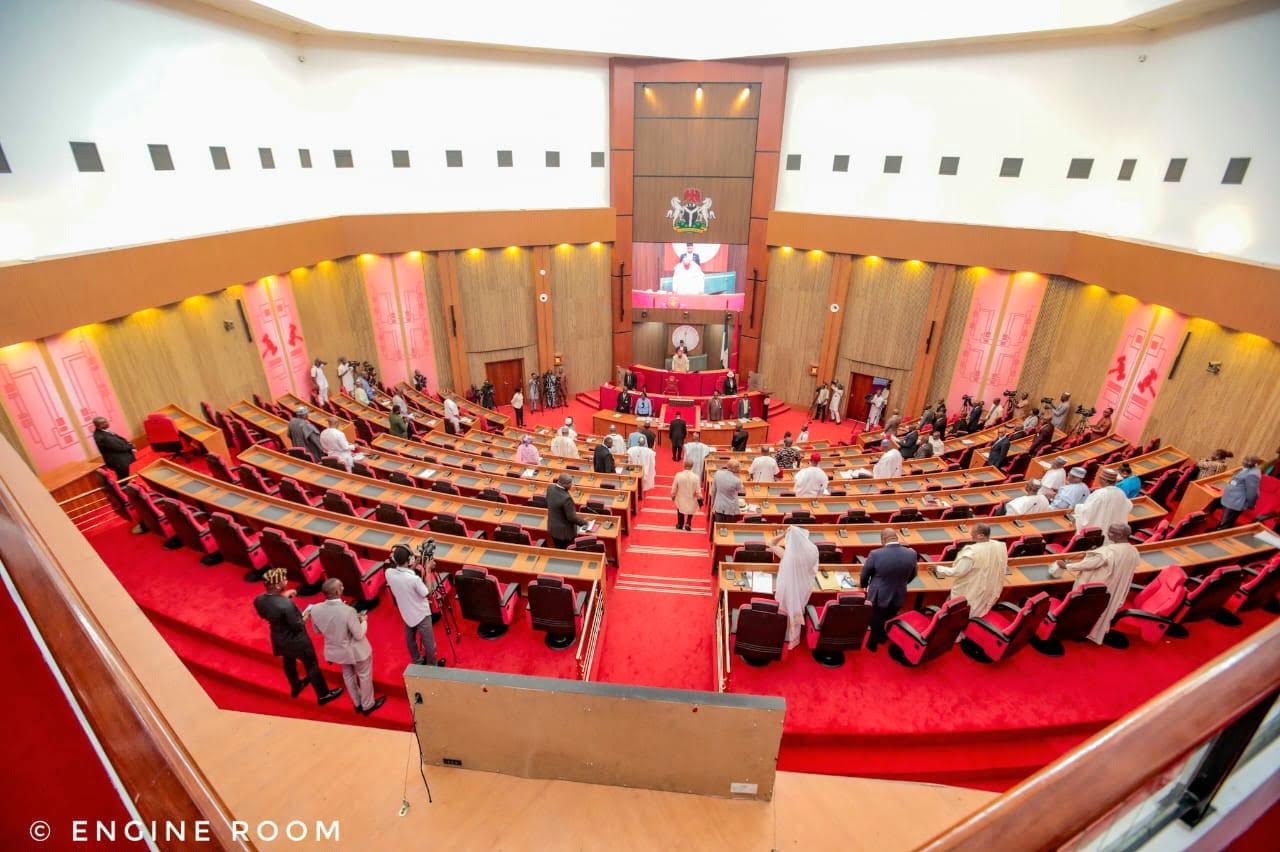
In a bid to ensure proper coordination, transparency and accountability for grants and assistance received by government agencies, non-governmental organisations (NGOs) and sub-national governments, the Senate on Wednesday took a major step towards tightening oversight of foreign aid and donor-funded activities in Nigeria with the establishment of a National Donor Coordination Framework.
The framework will mandate the registration of all foreign aid and donor-funded projects, create a national database, integrate donor interventions into government budgets, require public disclosure of funding and project implementation, and prescribe sanctions for non-registration, diversion and misuse of funds.
To achieve this, the lawmakers advanced a bill sponsored by Ibrahim Dankwambo to second reading.
Debating the intent of the bill for the “coordination, transparency, accountability, registration, disclosure and effective management of foreign assistance, grants, donations, humanitarian support and concessional financing in the Federal Republic of Nigeria and for related matters,” lawmakers expressed concerns that billions of naira in foreign aid flowing into the country, particularly through NGOs, currently escape adequate scrutiny, posing accountability and national security risks.
Leading the debate, Dankwambo said although Nigeria remains a major recipient of grants, technical assistance, humanitarian support and concessional financing from bilateral and multilateral partners, the country’s foreign aid management system remains fragmented, weakly coordinated and insufficiently transparent.
He noted that donor-funded projects are scattered across ministries, departments and agencies, with many implemented outside the national budget framework, resulting in duplication, poor coordination and weak accountability.
According to him, the bill seeks to ensure that all foreign aid received in Nigeria is subjected to constitutional oversight and integrated into national fiscal and development planning.
Contributing to the debate, Senate Chief Whip Tahir Monguno described the bill as timely and necessary, saying the current disbursement of foreign assistance is largely dictated by donor agencies without adequate domestic coordination.
In his remarks, Deputy Senate President Barau Jibrin noted that while some donor funds received by the Federal Government are reflected in the national budget, there is little or no visibility into funds channelled to NGOs and at the state level.
“We can’t tell what money goes into the coffers of NGOs. Fraudsters set up bogus, pseudo NGOs and collect money from there,” he alleged.
Barau further disclosed that concerns over unregulated donor funds had persisted for years without an effective legal framework, urging the Senate to ensure the bill becomes law.
On his part, Adamu Aliero expressed confidence that effective regulation would improve the utilisation of donor funds and encourage development partners to provide more assistance.
Other News
He recalled instances during oversight by the Senate Committee on Agriculture where funds had been received but their utilisation could not be properly accounted for.
Aliero urged lawmakers to extend the scope of the legislation beyond the Federal Government to include state governments and NGOs, noting that such a framework would strengthen the National Assembly’s oversight responsibilities.
In his submission, Chairman of the Senate Committee on Finance, Sani Musa, argued that the bill would align Nigeria with international best practices and boost donor confidence by guaranteeing transparency in the utilisation of foreign assistance.
He also raised national security concerns, alleging that some foreign aid channelled through certain NGOs had escaped scrutiny.
“Most of the aids coming to so-called NGOs are not subjected to scrutiny. We have seen instances where such arrangements create security concerns because we do not know who is benefitting from them.” He added that the recipients of the aide remain uncertain, arguing that it be the insurgents or victims of the attacks.
Musa added that the legislation would also distinguish between foreign investments and grant inflows, improving coordination and fiscal planning.
Adding to the debate, Adams Oshiomhole stressed that all donor funds entering the country should be fully disclosed, properly documented and subjected to legislative oversight. He warned that some funds are meant for destabilising the country, hence the need for mandatory disclosure of resources transferred to NGOs and civil society organisations, as well as appropriate sanctions for non-compliance.
President of the Senate, Godswill Akpabio, backed the proposal, warning that some foreign funds entering the country could be used to undermine national security.
He also expressed concern over the prolonged operations of some international aid agencies in insurgency-affected areas, suggesting that the activities of donor organisations deserved closer scrutiny under a robust legal framework.
In the same vein, Saliu Mustapha said poor accountability was not limited to NGOs, noting that donor funds received within government circles also often lacked proper documentation, while ownership disputes sometimes arose between state governments and donor agencies over projects.
Following the debate, the Senate referred the bill to its Committees on National Planning and Economic Development and Finance for further legislative work, with a report expected within four weeks.