Follow Us on Google
The Senate Committee on Industries has expressed support for the expansion of Dangote Peugeot Automobile Nigeria (DPAN) into mass production of vehicles, including mini-buses, light commercial vehicles and other locally assembled automobiles.
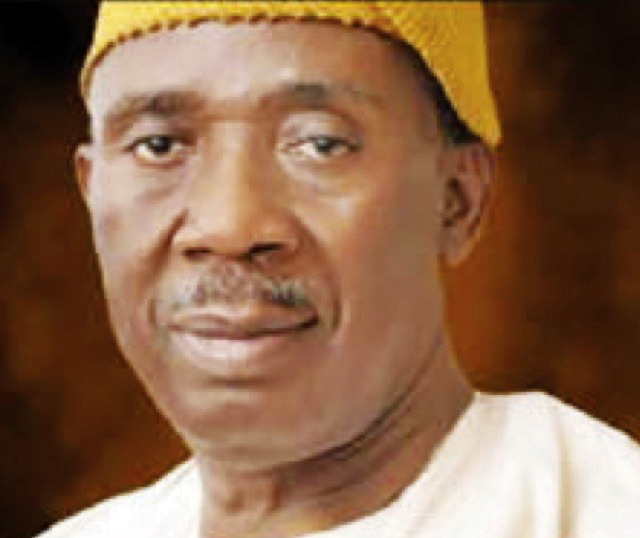
The committee chairman, Senator Francis Adenigba Fadahunsi, made the position known during an inspection visit to the DPAN assembly plant in Kaduna, where he called for government policies that would give locally manufactured vehicles a competitive advantage over imported and foreign-used automobiles.
Fadahunsi said the committee’s visit was aimed at seeing the facilities firsthand and understanding how the company’s investment could contribute to Nigeria’s transportation and industrial development.
“We are here today to see and to say there is a new investment in mass production, apart from trucks. I think it is to be encouraged,” the senator said.
He said the committee was particularly interested in vehicles designed for ordinary Nigerians, including mini-buses and other smaller vehicles that could facilitate transportation between rural communities, markets and urban centres.
According to him, locally manufactured vehicles could also serve civil servants and other public sector workers if government-backed policies create a viable market for them.
“The one that concerns the masses is the one we are looking at,” Fadahunsi said. “Small vehicles to move from the local facilities to rural areas, to link markets, and vehicles for civil servants.”
The senator urged the Federal Government to sustain policies aimed at encouraging local vehicle manufacturing, arguing that such measures would enable Nigerian manufacturers to compete more effectively with imported vehicles.
“If the government can stand on this policy, automatically, the market will be okay for the masses to buy,” he said.
Fadahunsi also called for stronger measures against smuggling, saying improved enforcement would support domestic manufacturers in sectors including automobiles, rice and fuel.
He further encouraged DPAN to consider expanding beyond vehicle assembly into full vehicle production and the manufacture of trucks, particularly tankers, noting that Nigerian welders and other local professionals could benefit from such an expansion.
“We even want it to be a truck producer, particularly tankers. Nigerian welders can control that and avoid local damages,” he said.
The lawmaker said the committee would continue to support efforts to strengthen Nigeria’s manufacturing base.
“All we need for him is to pray for him, so that he will have the energy and the wisdom to control this massive investment,” Fadahunsi said, referring to Dangote’s industrial investments.
DPAN traces journey from PAN to greenfield plant.
Earlier, DPAN Commercial Director, Umar Isa Kaita, took the committee through the history of the automobile company and its evolution from the former Peugeot Automobile Nigeria (PAN).
Kaita said attempts to privatise PAN in 2006 and again in 2014 were unsuccessful, after which the Asset Management Corporation of Nigeria (AMCON) took over the company.
He said Dangote Industries and the Kaduna State Government subsequently submitted a joint bid for PAN in 2016, but when the bid was unsuccessful, they opted to establish a new greenfield automobile plant.
According to him, DPAN’s journey was also affected by insecurity in Kaduna State.
Kaita recalled that the company produced 14 vehicles during its first trial production in 2018, but armed bandits subsequently attacked the facility.
“They came in here at night, killed the security men and shot all the cars. And then, we had no choice but to halt production,” he said.
He said the company subsequently operated from town before returning to the plant in 2021, adding that this was why the company considered 2022 as the effective beginning of its current operations.
Kaita explained that DPAN is a partnership involving Automobiles Peugeot of France, Kaduna State, Plateau State and Kebbi State, with the objective of retaining Peugeot vehicle production in Northern Nigeria while expanding into other areas of the automotive industry.
He said the company currently uses less than 20 per cent of its available land, leaving significant room for future expansion.
“We want to go into mass transit to move Nigerians from one place to another. They have been successful with the trucks, moving goods and services, and by the grace of God, we’ll be successful also in mass transit,” Kaita said.
He listed light commercial vehicles, ambulances and customised vehicles for the military and paramilitary among the areas DPAN can produce.
He also disclosed that the company plans to introduce electric vehicles as part of its future expansion.
According to Kaita, DPAN currently assembles the Peugeot 3008 and 5008 SUVs, as well as the Landtrek 4×2 and 4×4 pickup trucks.
The company also carries out ambulance conversions and produces customised vehicles based on clients’ specifications.
While highlighting the company’s expansion plans, Kaita identified inconsistent government policies, high cost of capital and competition from imported vehicles as major challenges facing local automobile manufacturers.
“The lack of consistent policy on locally assembled vehicles is a real challenge,” he said.
He specifically raised concerns over the impact of policies allowing certain completely built-up imported vehicles to enter the country at zero duty.
“Today, we’ve invested so much in a greenfield plant, and then, all of a sudden, there’s this policy that once you bring in an electric vehicle or CBU vehicle, it’s at zero duty. So, we’re left just scrambling for ideas to catch up,” Kaita said.
Kaita also disclosed that following Peugeot’s acquisition by Stellantis, DPAN is expected to expand its range of brands.
He said Stellantis, which has Peugeot, Citroën, Fiat, Jeep and DS among its brands, would enable DPAN to produce additional vehicles under its brand portfolio.
“By next year, we will be a Stellantis brand house,” he said.
He added that the company plans to produce Citroën and Fiat vehicles, as well as electric vehicles including the Deepal T03 and B10, among others.
Kaita said the expansion would enable DPAN to utilise more of its available land and deepen Nigeria’s participation in the automotive value chain.
The Senate committee subsequently toured the facility to inspect the vehicles and production facilities, with Fadahunsi saying the visit would enable lawmakers to better communicate the company’s activities and challenges to Nigerians and the wider industrial community.