Follow Us on Google
• Says increase crucial to protect Nigerians amid declining donor aid
From Adesuwa Tsan, Abuja
Senate has passed a bill seeking to amend the National Health Act, 2014 to increase the Basic Health Care Provision Fund (BHCPF) from one percent to two percent of the Consolidated Revenue Fund (CRF)
in a major step towards strengthening Nigeria’s health financing framework.
The Bill is expected to strengthen primary health systems and improve access to affordable, quality care, reduce catastrophic out-of-pocket health expenses, safeguard immunization and essential health services amid donor withdrawal, enhance epidemic preparedness and community resilience and boost productivity by protecting the health of the Nigerian workforce.
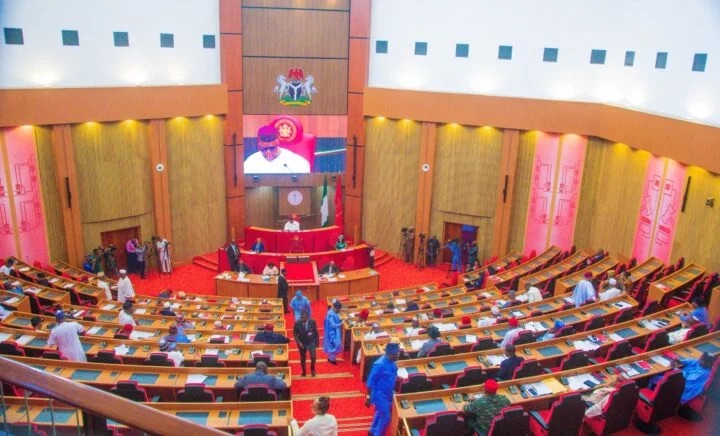
Leading debate on the bill, which was read for the first time on July 9, 2025, Chairperson of the Senate Committee on Health, Ipalibo Harry, said the proposed amendment was both a “legal and moral imperative” to ensure that government fulfills its constitutional responsibility to guarantee the welfare of citizens.
“Section 14(2)(b) of our Constitution makes the security and welfare of the people the primary purpose of government,” Harry said. “This bill gives practical meaning to that provision by ensuring sustainable funding for basic health services.”
Harry explained that the BHCPF, established under Section 11 of the National Health Act, 2014, was Nigeria’s first statutory mechanism for sustainable health financing. It was designed to guarantee a minimum package of health services for citizens, especially in underserved areas. The Rivers lawmaker noted that the current one percent allocation has become grossly inadequate in the face of rising health needs, stagnating donor aid and Nigeria’s transition away from key global health funding platforms.
According to the National Health Accounts (2022), out-of-pocket expenditure by Nigerians accounts for over 75 percent of total health spending, a figure Harry described as “unsustainable and inequitable.”
She warned that the withdrawal of the US government support for certain programmes and Nigeria’s gradual exit from Gavi, the Vaccine Alliance, would soon leave the country with the full financial burden of immunisation, maternal health, and disease control services.
“Without an increase in domestic financing, we risk reversing years of progress in child survival, epidemic preparedness, and access to essential care,” she said.
The senator recalled that the National Dialogue on Health Financing, held in September 2025 and convened by the National Health Insurance Authority (NHIA) in collaboration with the Federal Ministry of Health, Ministry of Finance, and the Nigeria Governors’ Forum, had endorsed the increase as vital to achieving Universal Health Coverage (UHC).
“This proposal has national consensus. It reflects our shared recognition that health is an investment, not a cost,” Harry stressed.
The Health Committee chairperson emphasised that Primary Health Care (PHC) remained the foundation of any resilient health system, yet many PHCs across Nigeria were crippled by dilapidated infrastructure, shortages of staff, and lack of essential medicines.
By raising the BHCPF to two percent, she said, available funding would be doubled, enabling the government to strengthen frontline facilities, recruit skilled health workers, and ensure access to essential services, particularly for women, children, and rural populations.
She added that the measure would also reduce the financial strain on households, align Nigeria with other African nations investing more heavily in domestic health systems, and help safeguard essential services in the face of declining donor support.
Harry assured her colleagues that the amendment would not alter existing transparency mechanisms. The Fund, she added, would continue to be jointly administered by the National Primary Health Care Development Agency (NPHCDA) and the National Health Insurance Authority (NHIA) in collaboration with states and local governments.
She stated that the annual performance reports and audited accounts would still be submitted to the National Assembly to ensure accountability and strict adherence to the purpose of the Fund.
Concluding the debate, Senator Harry described the proposed amendment as a “historic and patriotic investment” in Nigeria’s future.
“Health is both a right and a constitutional duty of the State,” she said. “By supporting this bill, we affirm our commitment to the welfare of our people and take a decisive step toward achieving Universal Health Coverage.”
Several senators who contributed to the debate spoke in strong support of the bill, commending its focus on expanding access to quality healthcare and improving Nigeria’s health system. They described the proposal as a timely response to the country’s growing health financing challenges and a vital step toward protecting vulnerable populations.
The bill was thereafter passed for second reading and referred to the Senate Committee on Health for further legislative action.