Follow Us on Google

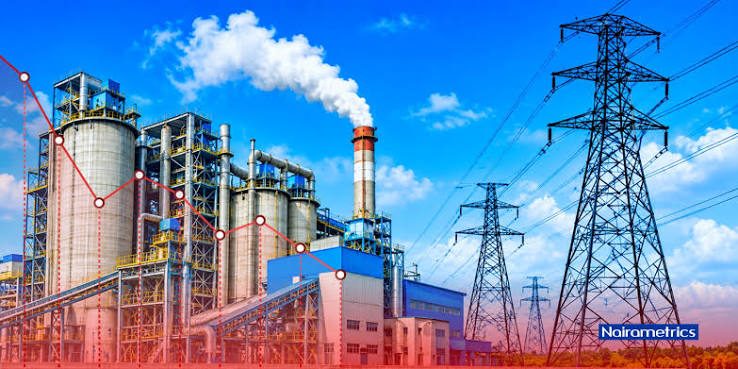
Industrial goods companies listed on the Nigerian Exchange Limited (NGX) spent a combined N820.7 billion on fuel and electricity in the first nine months of 2026, as rising energy costs continued to increase production expenses and squeeze profit margins.
The expenditure represents a 6.3 per cent increase from the N771.9 billion recorded by the companies in the corresponding period of 2025, according to figures from their unaudited financial statements for the nine months ended September 30, 2026. The development highlights the growing burden of energy costs on manufacturers, many of which depend on diesel, gas and other alternative power sources to keep their factories running amid unreliable public electricity supply.
The companies covered include Dangote Cement Plc, BUA Cement Plc, Beta Glass Plc, Berger Paints Nigeria Plc, Chemical and Allied Products (CAP) Plc, HBM Nigeria Plc and Austin LAZ and Co Plc.
Dangote Cement accounted for the largest share of the energy bill, spending N580.5 billion on fuel and power during the review period, representing a 2.0 per cent increase from N569 billion recorded in the corresponding period of 2025.
BUA Cement Plc recorded a sharper increase, with its energy expenditure rising by 21.5 per cent to N216.6 billion from N178.2 billion in the previous year.
Combined, the two cement manufacturers spent N797.1 billion on energy, representing a 6.7 per cent increase from N747.2 billion recorded in the first nine months of 2025.
However, some companies recorded reductions in their energy expenses. Beta Glass Plc reported a 5.3 per cent decline to N23.2 billion from N24.5 billion, while CAP Plc reduced its energy costs by 20.4 per cent to N30.3 billion from N38 billion.
Austin LAZ and Co Plc, which recorded energy costs of N50,000 in the corresponding period of 2025, reported expenditure of approximately N10.9 million in the first nine months of 2026.
Meanwhile, HBM Nigeria Plc, formerly Lafarge Africa, reported production variable costs of N226.3 billion but did not separately disclose its energy expenses.
Commenting on the development, Chief Executive Officer of the Centre for the Promotion of Private Enterprise (CPPE), Dr Muda Yusuf, said Nigeria’s power situation had deteriorated since February 2026.
He attributed part of the increase in energy expenses to the Middle East conflict involving the United States and Iran, which he said had pushed up the prices of diesel and gas.
According to him, energy-intensive industries are particularly vulnerable because of their heavy dependence on these fuels to power production and other operations.
Other News
“Energy costs continue to be a major challenge for the industrial sector and even possibly for most of the sectors. The sectors that are most vulnerable are those who use more energy,” he said.
Yusuf lamented the slow pace of improvement in electricity supply, noting that manufacturers continued to face difficulties relying on the national grid.
He cited cement manufacturers as examples of companies that have adopted independent power generation as part of their business models to avoid depending entirely on public electricity supply.
Also speaking, an investment strategist and Head of Research at GTI Securities Limited, Abiodun Ogunniyi, said rising energy expenditure increases production costs, reduces profit margins and weakens companies’ cash flow.
He explained that the development could limit manufacturers’ ability to invest in expanding production capacity and other growth initiatives.
However, Ogunniyi noted that higher energy costs do not automatically translate into lower profits, as companies could cushion the impact through improved efficiency, economies of scale and adjustments to product prices.
He warned, however, that manufacturers might struggle to transfer the additional costs to consumers because of weak purchasing power, subdued construction activity and stiff competition.
Beyond manufacturers, Ogunniyi said increased reliance on independent power generation could also affect electricity distribution companies (DisCos), as large industrial consumers account for a significant share of their high-value customers.
The rising energy burden is also reflected in the broader manufacturing sector.
A report by the Manufacturers Association of Nigeria (MAN) showed that manufacturers spent N1.34 trillion on alternative energy sources, including diesel, gas and other self-generation systems, in 2025.
This represented a 21 per cent increase from the N1.11 trillion recorded in 2024, reflecting the growing cost of keeping factories operational amid unreliable electricity supply.
Dangote Cement has at least 345 megawatts of independent power generation capacity across its four Nigerian plants, while BUA Cement operates an estimated 240MW to 280MW, mostly gas-fired.