Follow Us on Google

A man embarked on a life-long ambition of owning a car by saving money for 10 years to actualise his dream. It was expedient that he deployed every strategy humanly possible to ensure the safety of the car. It meant also that he would go the extra mile to acquire security gadgets and park the car in a safe environment, while keeping an eye on it every second, which would be worth the effort because he was security-conscious. Reason being that the expensive vehicle took him many years of deprivation and sacrifice to acquire.
The above narrative exemplifies how Nigerians worked very assiduously to secure their independence from colonial rule but, rather than ensuring its safety over the years, they have not taken the issue of security very seriously. Neither had the citizens involved themselves wholeheartedly in securing the country, like the man who wanted to own a car. Instead, they have forgotten the sacrifices they made before gaining independence.
However, since Independence 1960, the rate of criminality has continued to affect every facet of the country, from the government to security agencies and Nigerian citizens as a whole. The people have been very careless with their personal security and that of the country they worked hard to liberate.
Over the years, the country has been subjected to diverse attacks that had wearied its collective energy. The story has been the same with each passing year throwing up its own type of criminality. A time was when burglary was the in-thing. Houses and properties where burgled in a whisker and police stations recorded many cases across the country. As development increased and security was upgraded, criminals delved into car snatching and petty robbery.
This almost overwhelmed the security agencies, especially the police. Different squads were set up to combat the raging menace in major cities of the country. Fear gripped many members of the public. Then, the military were in charge of government and they reactively introduced summary execution of convicted armed robbers. Even at that, robberies became the story of the day.
In Lagos, “Operation Sweep” was set up under Lt. Col. Minimah to address the rise in armed robbery.
The robbers came from neighboring countries armed to the teeth and Lagos was their operational destination. Both the people and the police had sleepless nights, as police strategies were sharpened and the government drafted in the military to the streets and highways. Just as the spate of criminality seemed to abate, the criminals took to ritual killing, as human parts are severed for rituals, and cultism surged in various higher institutions across the country. All these gave the police hectic times and forced them to solicit the cooperation of members of the public by assuring them that the “police is their friend.”
Journalists were not left out in the new operational strategy. Despite all their efforts, the increase in population and unemployment opened other windows of crime as desperate politicians went haywire to recruit unemployed youths, arming them and transforming them into political thugs.
They killed, maimed and raped innocent women without any remorse. This changed the security narrative in the country. It became a veritable trade to illegally import arms into the country. Government in displayed handicapped muteness as the police was chasing the shadows of criminals without effecting any arrest. With time, concerned members of the public withdrew their support for the police and the military. Sequel to this scenario, just like the man who bought the new car and was ready to ensure its safety, the Nigerian government later realised its constitutional assignment by kitting the police and increasing its manpower and welfare. All through these years many innocent lives have been wasted and properties worth billions of naira lost.
Then emerged the Niger Delta militants whose firepower and strategies almost depleted the oil earning capacity of the country. In their hundreds they took refuge in the creeks, armed to the teeth, kidnapping and blowing up oil pipeline. Thus began the era of daylight kidnapping, as retired armed robbers took solace in the new crime. Again, the police and the military, like Siamese twins, went to the highways combating the vandals not forgetting the dastardly operations of the northern terrorists.
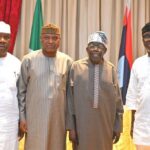
These terrorist increased the criminal terminology in the country. They abducted students, women and old folks while still engaging in conquest mode. Impressively, the army’s frontal combat paid off and they were decimated. Yet another invasion of the Middle Belt and some states by Fulani herdsmen began. This created a massive national uproar and President Muhammadu Buhari who summoned all the security chiefs as well as Inspector-General of Police Adamu Mohammed to a crucial emergency security meeting that last for three hours at the Presidential Villa, Abuja, penultimate Thursday. Buhari must have been inundated by the public outcry over the new grazing policy that was almost tampering with the security of the country. Buhari must have ruminated over his campaign promises, which included winning the war against Boko Haram terrorists, insecurity and corruption. At the end of the security meeting, Chief of Air Staff (CAS), Sadiq Abubakar, told reporters, “The meeting is all about the security of Nigerians and Nigeria.”
Such meetings should also be extended to other important institutions that are already breaking down in the country. Such as health, education and others. Extracting their commitment to ensure better security for Nigerians is gladdening. The reassuring answers by Sadiq Abubakar noticeably quelled the uproar around the country.
One important area of his statement was when he said, “What we are going to do is to ensure that all hands are on deck and every Nigerian equally has a role to play by passing relevant intelligence to us.”
The truth is that Nigerians have lost faith in their security agencies and only the agencies can repair the broken relationship. They have lost trust in the security agencies sequel to past sour experiences. It is going to be a herculean task before this cracked wall is be repaired. Yes, the security agencies need members of the public and the media to help restore confidence in their work and the need for them to provide necessary information on corrupt persons and criminals operating around their communities. It is such involvement of members of the public that the security agencies need to heighten their morale. It is the people’s participation that can change the ugly narratives of Nigerians’ seeming hatred for their security services. Nigerians should be educated that securing themselves and the country is their right; while securing the country is the constitutional duty of both the government and the security agencies. The time has come for a new mindset in Nigerians to see the country as their personal project that must be protected at all cost, with the assistance of the security agencies and government at every level. By so doing, it shall be recorded in history that there was a time when securing Nigeria was the duty of everybody.