Follow Us on Google
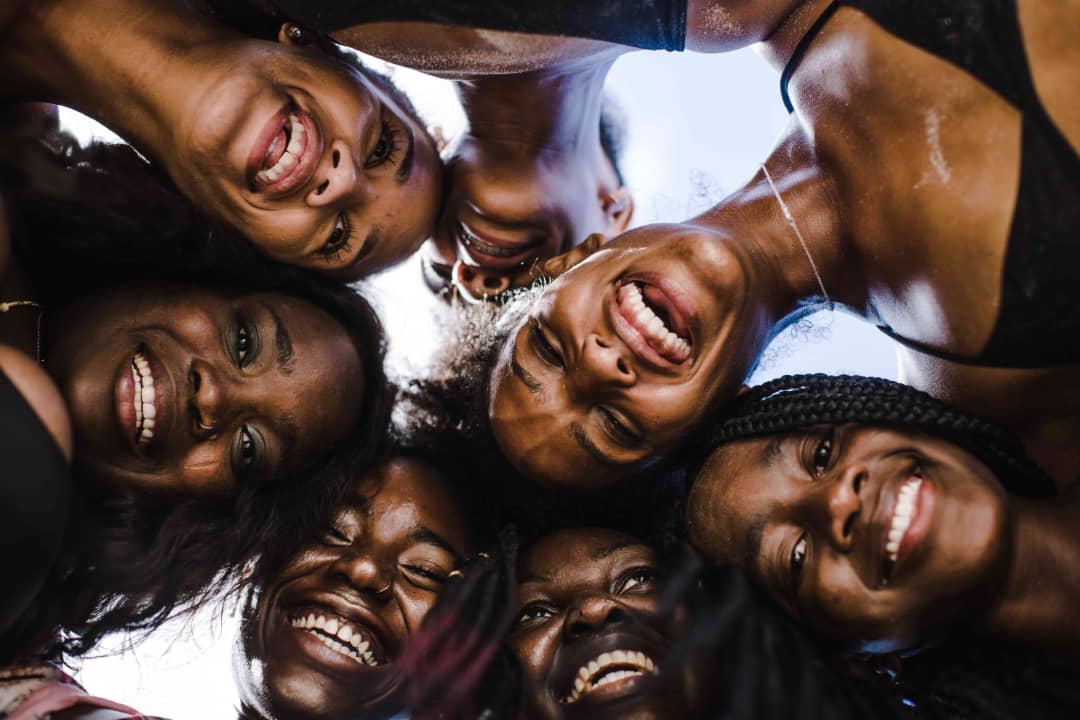
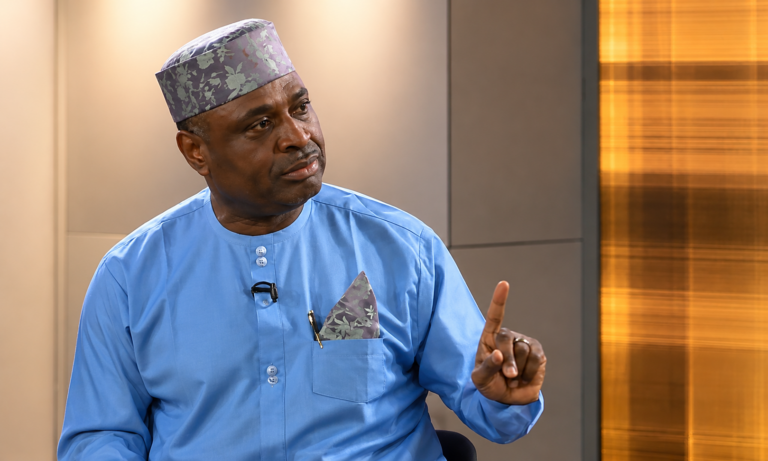
Global historians have revisited Africa’s slave history with a striking focus on women’s strength, endurance, and agency during the transatlantic slave trade. This powerful conversation took centre stage on The Toyin Falola Interviews aired on Sunday, under the theme “Global Africa, Women, and Slavery.”
Anchored by renowned historian Professor Toyin Falola, the discussion featured a constellation of international scholars: Hassoum Ceesay, Gambian historian and Director of the National Centre for Arts and Culture; Mariana Candido, Winship Distinguished Research Professor of History at Emory University; José Lingna Nafafé, Associate Professor at the University of Bristol; and Dr. Robin Chapdelaine, Associate Director of the Center for African Studies at Stanford University. The session, moderated by Professor Ana Lucia Araujo of Howard University, examined historian Toby Green’s new book, The Heretic of Cacheu: Struggles over Life in a 17th-Century West African Port.
While the transatlantic slave trade has long been narrated through the lens of male conquest and exploitation, the historians on the panel shifted the gaze to women—portraying them as cultural brokers, economic agents, and keepers of spiritual power in the Atlantic world.
Speaking from The Gambia, Hassoum Ceesay illuminated how African women occupied paradoxical positions in the slave trade—both as victims and as participants. “This region is well noted for its role in the transatlantic slave trade and also in the ways that women were part and parcel of this trade,” he said. He referenced the Signares—powerful Euro-African women in Senegal and Gambia who owned property, traded in goods and slaves, and married European merchants. “These were cultural brokers, women of substance, of economic might and social standing,” Ceesay noted. “They were rich enough to have slaves, they kept slaves, and they also traded in slaves. Their role in the trade remains deeply disputed.”
He highlighted the story of Fanda Lawrence, a Gambian widow of a British trader who continued slave trading in Georgia, describing her as “a figure whose life points to the conflicted role of women in the transatlantic slave trade.” Ceesay also cited Phillis Wheatley, an enslaved poet from the Senegambian region who became one of the earliest African literary voices. “Wheatley rose above persecution to become a poet of note who received attention even from Thomas Jefferson,” he said.
Drawing on Alex Haley’s Roots, Ceesay reflected on cultural preservation through female lineage. “The role of women, like Kunta Kinte’s mother, Binta, in naming ceremonies, remains a symbol of endurance and continuity amid historical trauma.”
Professor Mariana Candido extended the conversation to Central Africa—particularly Angola, Congo, and Gabon—“the region most affected by the transatlantic slave trade in terms of both duration and volume.” She remarked, “When talking about women in global slavery, it is inevitable to remind everyone that Central Africa lost the highest number of people to the trade. Roughly 36 percent of the 12.5 million Africans transported to the New World were women.”
Candido’s intervention underscored the gendered dimensions of enslavement. “While men were taken in greater numbers, women who remained behind filled crucial social and economic roles,” she said. “Gender influenced both the demand and supply of the slave trade and the kinds of labour enslaved men and women performed.”
Challenging the myth of women’s invisibility, she asserted: “I always heard that it was difficult to write about women, but in my research I found women everywhere—in travel reports, census data, church records, baptismal registers, and even trading accounts. Women are not invisible in the archives; historians simply haven’t always looked for them.”
Her forthcoming work, A History of Women in Angola (1500–1880), she revealed, builds on these insights and echoes Toby Green’s attempt “to recognise the centrality of women in economic, social, and political life in Atlantic ports, which became women’s spaces of power.”
Professor Toyin Falola, who conceptualised the global discussion, framed the event as part of a broader attempt to restore Africa’s missing historical voices. “If you go to the US, Brazil, or Cuba and find black populations there, it is tied to this history of slavery,” he said. “Millions were taken from Central and West Africa—from Cameroon, Nigeria, Angola, and beyond.”
Falola described Green’s book as a recovery of African women’s agency. “We are discussing this to emphasise the role of women. In classrooms, we call it agency—how people express themselves and find empowerment. Green shows us that African women were not simply victims; they were traders, political leaders, and brokers.”
He added: “The book also reveals that the Atlantic world was not shaped by a single religion. Alongside Catholicism, African spiritual systems—dreams, rituals, and ancestral beliefs—coexisted and shaped everyday life. It is a microhistory of one woman that illuminates the broader global history of Africa, slavery, and gender.”
Adding a transatlantic perspective, José Lingna Nafafé noted that women “carried Africa’s philosophy, religion, and culture across the Atlantic.” He observed that “the Atlantic was saturated by women and young people who were not part of wars but were captured and enslaved nonetheless.” For him, women turned domestic spaces into “sites of knowledge transmission and resistance.”
“They worked in the homes of slave owners, cooked, cared for children, and overheard conversations about the systems that oppressed them,” he said. “These women held the secret knowledge of the operation of enslavement and sometimes resisted from within that space.” Nafafé highlighted the Black Brotherhoods, Christian fraternities formed under colonial rule, where women raised money to liberate others. “They became liberators within an oppressive system, even though history rarely records them as such.”
He added poignantly: “Women bore the double pain of being mothers—uprooted from their families while also giving birth to children who were enslaved. They were the primary bearers of trauma and, at the same time, of resistance.”
Dr. Robin Chapdelaine of Stanford University connected the historical analysis to global modernity. “The history of African women in slavery is foundational to understanding the making of the modern world,” she said. “The term ‘Global Africa’ signals both geography and process—the ways Africa and Africans, especially women, shaped economic, spiritual, and intellectual worlds stretching from Senegambia to Bahia.”
She explained that “women’s participation in trade networks tied African interior economies to Atlantic markets. Their labour—domestic, reproductive, agricultural, and commercial—sustained the circulation of goods, people, and ideas that defined the Atlantic and Indian Ocean worlds.”
Yet, she noted, “their autonomy was often recast as deviance, their knowledge as sorcery, their mobility as a moral threat.” To study women in slavery, she concluded, “is to reimagine freedom not as a European invention but as a contested African practice.”
In his contribution, author Toby Green discussed the inspiration behind The Heretic of Cacheu, centred on Krispina Perez, “the most powerful trader in the settlement of Cacheu in today’s Guinea-Bissau.” He explained, “This was a rare Inquisition trial from 1665 involving a West African woman. Perez was part of the elite trading class, and her influence was so significant that it drew the attention of the Inquisition—something that almost never happened in Africa.”
Green emphasised that the trial revealed “the emotional world underlying commerce—envy, bitterness, love, fear, anxiety, and debt—all shaping historical experience.” The book, he added, “captures the 17th century—a transformative period that set the stage for the industrialisation of global slavery.”
Broadcast across television, radio, and social media platforms, the dialogue reminded audiences worldwide that the history of women in Africa’s slave era is also the history of endurance—a story of power reclaimed through memory, scholarship, and truth-telling.