Follow Us on Google
By Damiete Braide
In a vibrant celebration of culture, identity, and linguistic heritage, the Walnut Book Club, in collaboration with the National Library of Nigeria, Lagos State Branch, DDL Marketing & Consultancy Services Limited, and Everything Literature, marked the 2026 International Mother Language Day with an engaging programme held at the National Library of Nigeria, Herbert Macaulay Way, Alagomeji, Yaba, Lagos.
The event, held on Friday, March 6, brought together students, educators, literary enthusiasts, and cultural advocates who gathered to reaffirm the importance of preserving indigenous languages in an increasingly globalised and technology-driven world. The celebration aligned with the 2026 theme, “Youth Voices on Multilingual Education,” highlighting the critical role young people play in sustaining linguistic diversity.
Delivering the welcome address, the convener of the programme, Mrs. Ndidi Chiazor-Enenmor, expressed delight at the continued success of the annual celebration, which has grown steadily over the past five years. She noted that the event has become a significant platform for promoting indigenous languages and encouraging young people to take pride in their linguistic heritage.
According to her, the initiative was born out of a deep concern that many local languages are gradually disappearing as younger generations increasingly adopt dominant global languages.
“Another year has rolled by, and here we are celebrating our beautiful languages again. It is my utmost pleasure to welcome everyone to this auspicious gathering,” she said. “The International Mother Language Day event has become a very remarkable annual outing in our calendar and we are grateful to everyone who identifies with this important programme.”
She stressed that the mission of the initiative is to ensure that Nigeria’s indigenous languages continue to thrive rather than fade into extinction. For her, language is far more than a communication tool, it embodies the history, traditions, and identity of a people.
Chiazor-Enenmor, therefore, urged young people to deliberately embrace multilingualism and promote their native languages through creative expressions such as songs, dances, games, storytelling, and other artistic forms. She also encouraged families to begin language preservation at home by making conscious efforts to speak their mother tongues with their children.
“The home is where the foundation is laid,” she said, adding that what was being celebrated during the event should extend into everyday life.
Tracing the historical origins of International Mother Language Day, she recalled that the commemoration is linked to a protest that took place in East Pakistan, now Bangladesh, on February 21, 1952. During the protest, students of the University of Dhaka demonstrated against the Pakistani government’s decision to impose Urdu as the sole official language of the country. The protest turned tragic when several students lost their lives after police opened fire on them.
Many years later, on November 17, 1999, the General Assembly of UNESCO proclaimed February 21 as International Mother Language Day in honour of the fallen students and to promote linguistic and cultural diversity across the world. The first global celebration took place in the year 2000 and has continued annually since then.
Also speaking at the event, Mrs. Obianuju Onuorah, Deputy Director and Head of Branch, National Library of Nigeria, Lagos State Branch, emphasised the importance of protecting indigenous languages which, she said, are gradually going into extinction.
Other News
She explained that UNESCO introduced the global observance to create awareness about the need to safeguard mother tongues and to encourage families and institutions to nurture them.
According to her, the National Library of Nigeria considers the programme highly significant because it provides an opportunity to sensitise both parents and children on the value of speaking their local languages.
She observed that children easily learn English in school, but without deliberate efforts at home, many fail to acquire fluency in their indigenous languages. Encouraging parents to speak their mother tongues with their children, she said such practice would help preserve cultural heritage and identity.
Onuorah also called on publishers to produce more books in Nigerian languages and urged government authorities to reintroduce the teaching of local languages in schools. Teaching certain subjects in indigenous languages, she noted, could even enhance students’ comprehension and deepen their understanding of cultural roots.
“It will help us preserve our culture so that it does not go into extinction,” she said.
Adding a motivational tone to the programme, Unigbe Oifomeina, a passionate advocate for children’s education, encouraged students in attendance to remain focused on their studies. Addressing them directly, he reminded them that their education today forms the foundation of their future.
“Please, my child, pay attention to your books and your studies, because this is your future,” he said. “The books you are reading and the stage you are now is your tomorrow.”
The event was compered by renowned poet and cultural enthusiast Mr. Akeem Lasisi, who guided the audience through various segments of the programme while highlighting the richness and beauty of Nigerian languages.
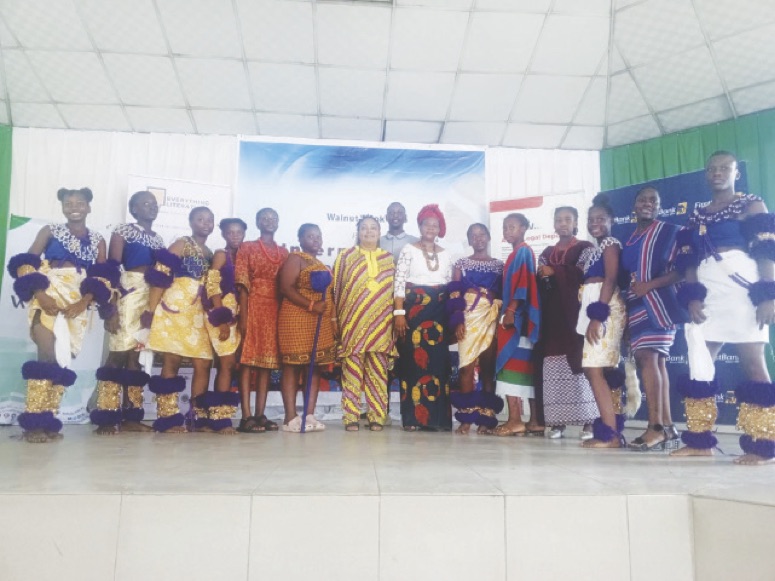
Students from several schools across Lagos participated enthusiastically in the celebration, demonstrating their linguistic skills and cultural pride. Participating schools included Aje Comprehensive Junior High School, All Nations Primary School, Yaba; Aunty May Primary School, Idimu; Divine Favour Secondary School, Alagomeji; El Shadai Primary School, Ejigbo; Evergreen Royal Private School, Onikan; Mobolaji Bank Anthony Junior High School, Oke Odo Junior High School, Ruby Gold School, Lekki; Som Debbis Intercontinental School, Egbeda; Sovereign Lord International Academy, Egbeda; Systems College Yaba; Wenbys College, Idimu; Wesley Girls Junior High School, and Word of Power School, Dopemu.
Through songs, performances, and presentations delivered in indigenous languages, the students demonstrated the power of youth engagement in sustaining linguistic heritage.
By the end of the programme, one message resonated clearly among participants: preserving mother tongues is not only a cultural responsibility but also a vital pathway to protecting identity, heritage, and the collective memory of communities