Follow Us on Google
By Sunday Ani
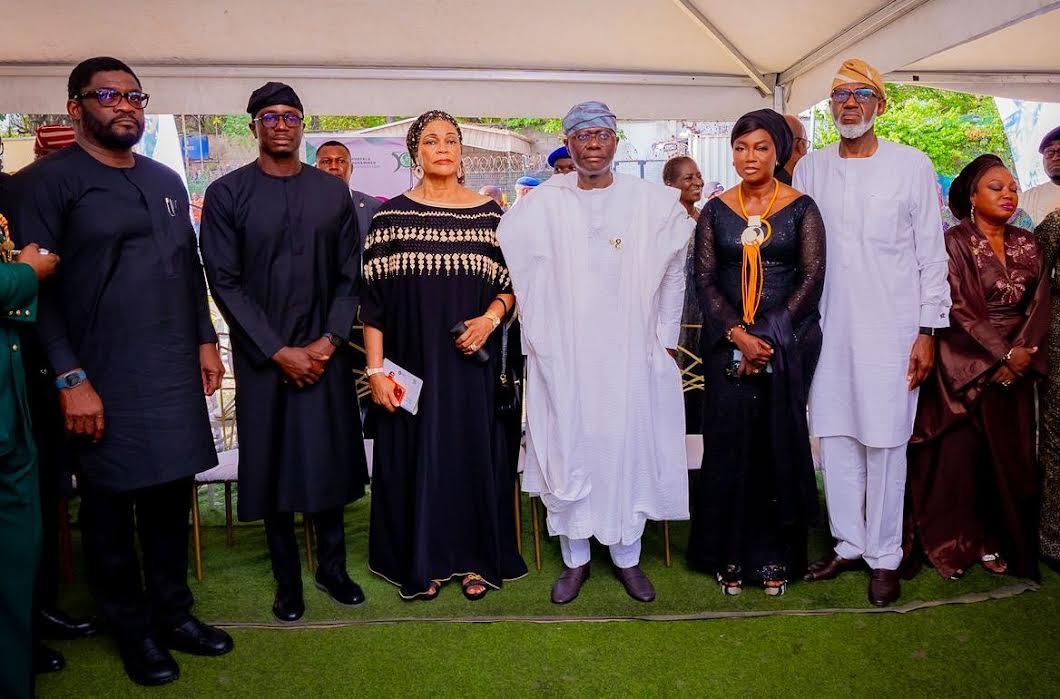
Lagos State Governor, Babajide Sanwo-Olu has described the death of the former Head of State, General Murtala Mohammed 50 years ago, as a big loss not only to Nigeria but to the African continent. He said the former military leader led with fear, compassion, dignity and sense of purpose.
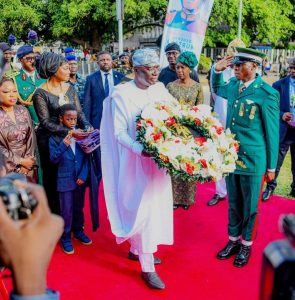
He made the statement over the weekend during the wreath laying ceremony to commemorate 50 years after Gen Mohammed’s brutal assassination in a coup led by Col Buka Suka Dimka in the Ikoyi area of Lagos.
The Governor remembered that as an 11 year-old pupil in primary school then, he noticed that the atmosphere was unusual on that fateful February 13, 1976, and parents were running helter-skelter as they came to their school to pick their children before the close of work.
He said Nigerians did not just lose a father but a general and most outstanding pan-African.
“We lost a leader, who within 200 days in office was quick to do so many things at such a short time. For the younger people that are here, let me just give you one simple example. Governors and states are celebrating their 50th anniversary now.
“Those states like Imo, Oyo, Ogun, Benue and others are all celebrating 50 years but you didn’t ask what happened 50 years ago? General Mohammed created states from 12 to 19 and he was killed 10 days after he created those states,” he said.
He commended his courage and determination, saying that what he did in six months is what Nigeria has not been able to do since 1999 when the fourth republic began. “It’s taken us several years to even create one state. He created seven states within six months in office and they killed him 10 days after.
“Yes, we’ve had several presidents and leaders, but he was a leader that led with fear, compassion, dignity and sense of purpose, with Nigeria first.”
The Governor said in those 200 days that Gen Mohammed ruled, the country was on a trajectory that would have been difficult to reverse if he was not killed. “He was just too fast and things were happening back to back. And he was changing lives,” he added.
He charged the young generation of Nigerians to find time to read about the story and the life of late General Mohammed. “Those days when he passed on, we used to sing his song about him in Lagos every morning; that was how passionate everybody felt the loss of a head of state, a leader and a real Nigerian that was bringing all of us together. Everybody at that time knew that something fell out of this country. But we’re here 50 years later. We’re thankful to the family. We’re thankful for the likes of Murtala. There has been a generational improvement.
“He was one of the products of the Nigerian army signal. And for us here, we in Lagos will continue to own him because at that time, Lagos was the capital of Nigeria.
“So it’s been part of our story. It’s been part of our history. And we feel truly proud that the family held on to all of that.
“And today, 50 years on, we can come out here in a very simple but very significant ceremony to celebrate this outstanding Nigerian. Several people have benefited from the policies he made and the decisions that he took 50 years ago. “I’m sure a lot of those states celebrating their 50th anniversary probably did not stand up to recognise that it was General Mohammed that created their states for them 50 years ago.
Other News
“And so you can see that he created several feats for us. He built bridges. He set Nigeria on a global map where countries like Angola can celebrate him. The entire world stood still for Nigeria at that time. And they joined Nigeria in a brief moment of grief. It was a time for positive reflection. It was a time for us to remember his memory positively.
“But also to pray for the family, the children and the grandchildren, that his name will not depart from the history of this country, and historians will be fair when they write the history and the story of Nigeria.
“As we leave this place today, when you get back home, remind your younger children and siblings that there was a time a General passed through our country. “There was a time that a man led for a very short while, from July 1975 to February 1976, less than one year and he made such great impacts. I’ve led for six and a half years as governor now. I don’t know what people will say tomorrow about me. I’m praying that they’ll be fair to me. But you see, this was a man that led Nigeria less than a year, and we’re still talking about the things he did, the lives he touched, the network that he created for us as a country, and the big nation that he was able to hand over to us.
“I feel proud that I can identify with the family. I feel even more proud that I was alive at that time. I can imagine if I was under 50, I’d have been wondering, what does he look like? We remember his cap.
“I want to thank Dr. Aisha Mohamed for keeping faith and for the foundation he has laid for him.
“This is what the family wanted; for us to honour this location. I’m sure a lot of people thought that maybe it was Gov Sanwo-Olu that was trying to clean up the traffic light. No, that was where it happened.
“And for some of us, those days we won’t pass here without slowing down because it became a sacred position. It became a sacred point in our life. We usually slow down and look again, as if he would resurrect. That was how passionate it was to everybody then.
“So on behalf of the people and the government of Lagos State, we continue to identify with the family and ask God Almighty to strengthen the family, be with the family and guide the family, and that the soul of our father, our leader, our benefactor, a true Nigerian, an African best at that time continues to live in good memory,” he stated.
In her remarks, Gen Mohammed’s first daughter and Chief Executive Officer (CEO) of Murtala Muhammed Foundation, Dr Aisha Mohammed Oyebode described the late head of state as a loving and caring father.
She noted that his late father was a patriotic leader who left a lot of legacies, stressing that the importance of the foundation is to be able to actualise those legacies. “General Murtala Mohammed believed in leadership. He believed in accountability. He believed in responsibility. But, more importantly, he believed in Africa coming of age. He believed in the fact that we have a right to self-determination and nobody, whether in the Western world or anywhere else, should be able to tell us who we are.
“And so it’s also about identity. One of the things that we’re trying to do now is inculcate in the young people a strong sense of identity, that it’s great to be a Nigerian and that Nigeria is already a great country,” she said.
On how she felt, seeing different people paying glory to her father, 50 years after his death, she said: “Honestly, I’ve always been humbled. It’s been an honour. I’m lucky to have had such a father that people acknowledge. He was also a great father; a fantastic father. I was a very lucky child, and my siblings were also lucky, and so was my mother. He was there; he was at home, he spent time with his children. He encouraged us. He was a very loving father. He was a very kind man. My father was a very generous man,” she said.
She lamented that most young Nigerians don’t know anything about Murtala Mohammed.
“And unfortunately, we’ve created a country where we don’t teach history; we don’t talk about the past, and as they say, if you don’t talk about the past, how are you going to gain from it? So, I think that those values that my father stood for, not just in Nigeria, but across the African continent, should be passed down to the younger generation.