Follow Us on Google
By Lukman Olabiyi and Bianca Iboma-Emefu
Nigeria’s top legal and government leaders have launched a bold push to transform Africa’s arbitration and alternative dispute resolution (ADR) landscape, positioning the continent as a global hub for credible, efficient dispute resolution.
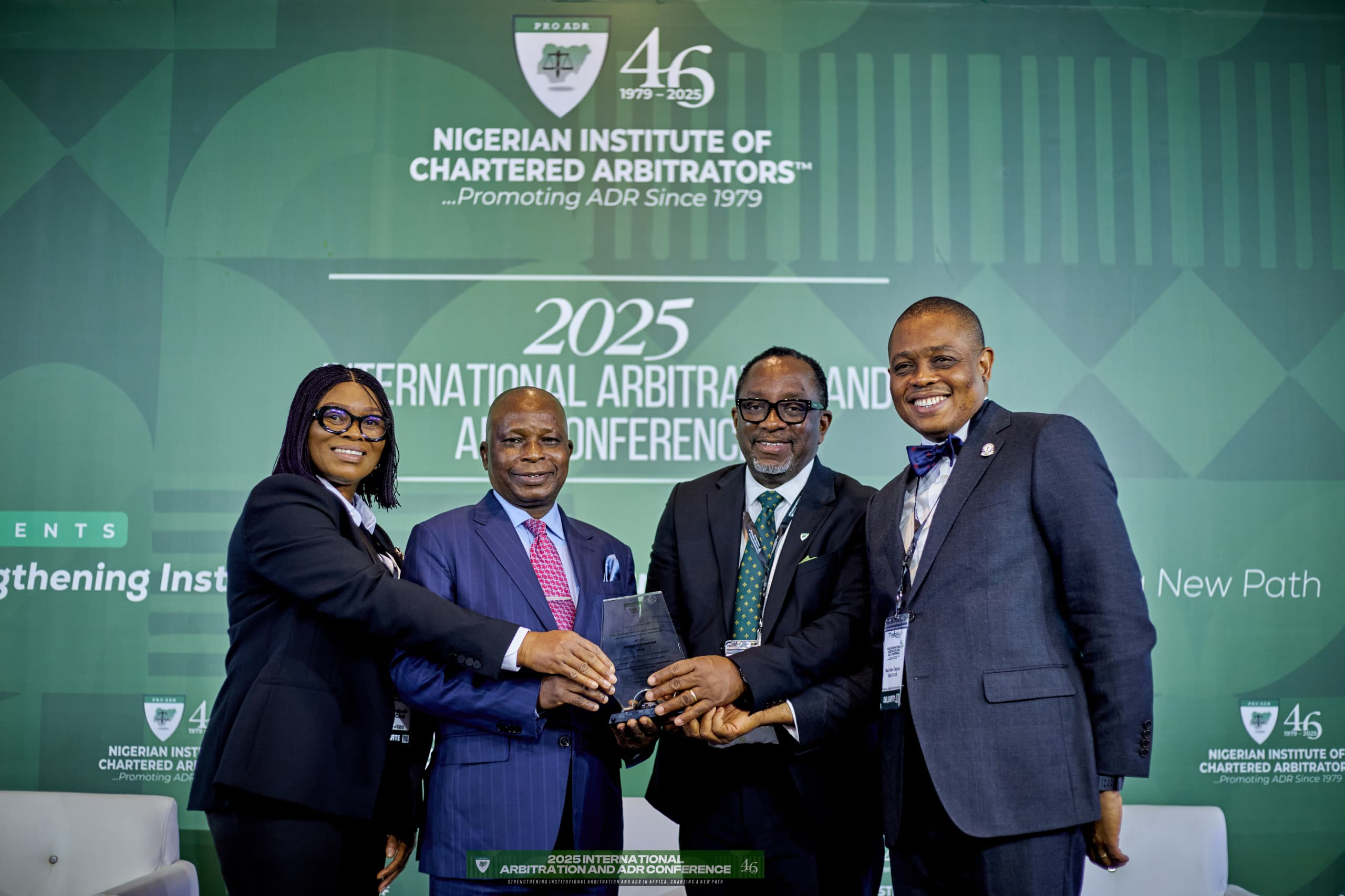
At the 46th International Arbitrators and ADR Conference of the Nigerian Institute of Chartered Arbitrators (NICArb) in Lagos, Chief Lateef Olasunkanmi Fagbemi (SAN), Attorney General of Nigeria, outlined sweeping reforms aimed at reclaiming African disputes from foreign courts and strengthening home-grown institutions.
Speaking to a gathering of jurists, arbitrators, policy experts, and business leaders, Fagbemi emphasized that Africa’s growing commercial landscape requires trusted, efficient dispute mechanisms.
“For too long, many African disputes have been exported abroad, undermining our confidence and capacity. It is time we chart a new path one rooted in strong institutions, local expertise, and continental leadership,” he declared.
The Attorney General announced Nigeria’s plans to develop a comprehensive National ADR Policy framework to standardize education, accreditation and integration of ADR into government processes.
He also highlighted legislative milestones, including the Arbitration and Mediation Act 2023, aimed at positioning Lagos and Abuja as preferred arbitration hubs to compete with established centers like Mauritius and South Africa.
Other News
Governor Babajide Sanwo-Olu who was represented at the event by the state’s Attorney General, Lawal Pedro (SAN), reinforced the state’s commitment to supporting robust arbitration institutions.
“Strong arbitral systems reduce costs, deepen investor trust, and expand Africa’s commercial potential. Lagos is ready to lead this transformation,” he said, highlighting support for institutions including NICArb, the Lagos Court of Arbitration, and the Regional Centre for International Commercial Arbitration.
Nasarawa State Chief Judge, Justice Aisha Mohammed, added her voice to calls for institutional renewal, emphasizing the judiciary’s crucial role in ensuring predictability and fairness in arbitration outcomes and aligning judicial culture with global best practices.