Follow Us on Google

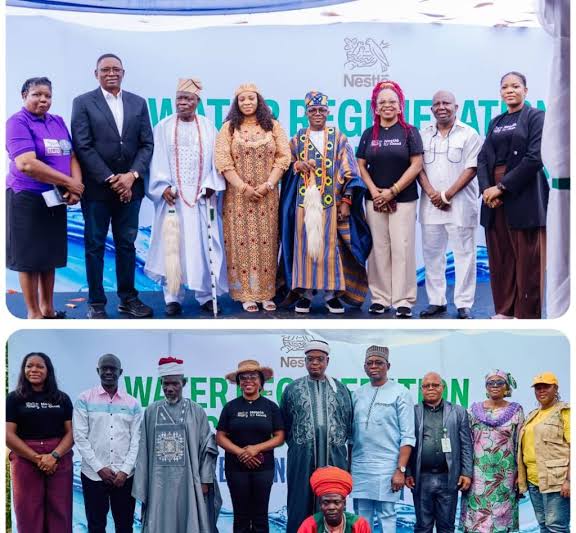
Access to safe drinking water, a critical defence against waterborne diseases, has received a boost in Ogun State, following the commissioning of eight climate-smart boreholes and water treatment plants by Nestlé Nigeria Plc in communities within the Agbara catchment.
The facilities are expected to improve access to treated water, helping communities reduce their exposure to unsafe water and the health risks associated with contaminated supplies.
The commissioning forms part of Nestlé’s wider Water Regeneration Project, which covers 24 climate-smart boreholes in Agbara, Ogun State, and Abaji, Federal Capital Territory, alongside water treatment, quality monitoring, rainwater harvesting and community-led management.
Beyond providing infrastructure, the initiative seeks to address a persistent public health challenge: ensuring that water available to households is not only accessible but also safe for consumption.
Poor water quality according to experts can expose communities to diarrhoea diseases and other infections, making treatment, regular monitoring and effective community oversight essential to protecting public health.
Business Executive Officer, Nestlé Waters and Premium Beverages, Nestlé Nigeria Plc, Olutayo Olatunji, said the project reflected the company’s commitment to regenerating local water cycles while delivering measurable benefits to host communities.
He said the combination of treated water infrastructure; local governance and performance monitoring would improve access, strengthen watershed resilience and support business continuity.
The Minister of Water Resources and Sanitation, Joseph Utsev, said the long-term success of water projects depended not merely on commissioning facilities but on ensuring that they continued to provide safe, reliable and sustainable services.
He welcomed the project’s emphasis on water governance and stewardship, including the development of a governance-training manual to guide sustainable water management.
While, Minister of Environment, Balarabe Abbas Lawal, described the initiative as an example of what public-private collaboration could achieve, noting its alignment with Sustainable Development Goal 6 on clean water and sanitation.
For the host community, the intervention comes with a responsibility to protect the facilities and ensure their continued operation. The Alagbara of Agbara Kingdom, Oba Lukman Jayeola Agunbiade, urged traditional leaders, community members and water, sanitation and hygiene committees to guard against misuse, report faults promptly and take ownership of the infrastructure.
He said access to safe water was fundamental to the health of children, household welfare and the future of the community.
Nestlé Nigeria’s Corporate Communications, Public Affairs and Sustainability Lead, Victoria Uwadoka, said the company was also promoting water safety awareness through the National Water Quality Advocacy Campaign and a handbook developed with the Federal Ministry of Water Resources and Sanitation and Organised Private Sector in Water, Sanitation and Hygiene (OPS-WASH).
She stressed that infrastructure alone was insufficient without the knowledge and community responsibility needed to keep water safe.
With the Agbara facilities commissioned and work continuing on the Abaji sites, the project’s public health value will ultimately depend on sustained water quality monitoring, effective maintenance and reliable access for the communities it is intended to serve.