Follow Us on Google
By Doris Obinna
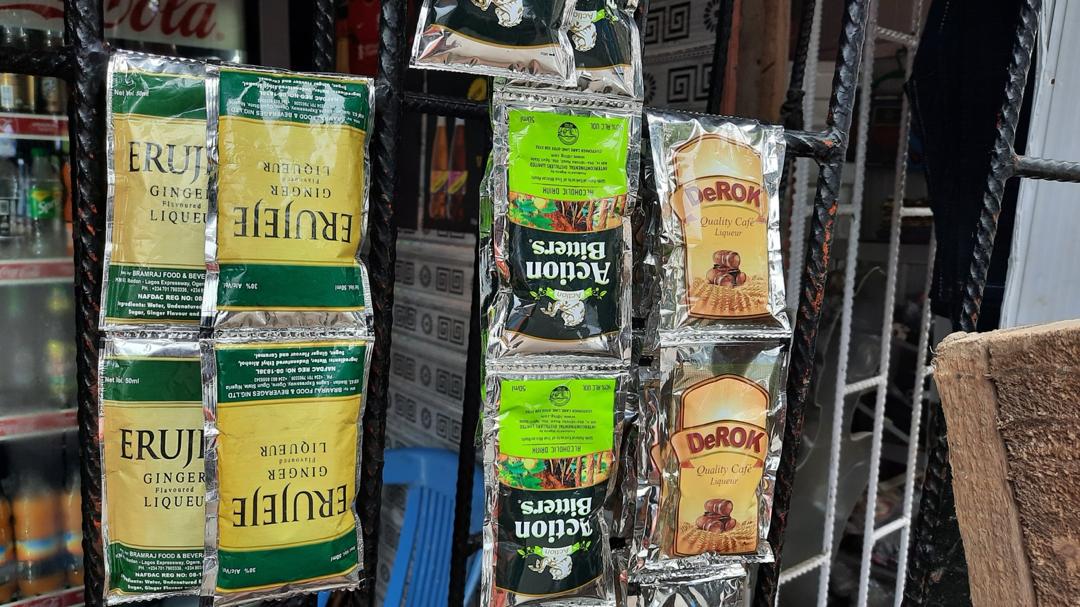
Nigeria’s alcohol market is facing a major shake-up as the National Agency for Food and Drug Administration and Control (NAFDAC) resumed enforcement of the ban on sachet and small-size alcoholic drinks, a move the agency says is necessary to curb rising alcohol abuse among children and young people, and not to close alcohol companies.
The Director General of NAFDAC, Prof. Mojisola Adeyeye, on Thursday, said the renewed enforcement follows a clear resolution of the Nigerian Senate and long-standing agreements with manufacturers, stressing that the action is strictly a public health measure aimed at protecting children and young people.
According to NAFDAC, the unchecked spread of high-alcohol-content drinks in sachets and mini bottles has fuelled alcohol abuse among minors, commercial drivers and other vulnerable groups, with grave social consequences. The agency linked sachet alcohol consumption to rising cases of road accidents, domestic violence, school dropouts and other social vices across the country.
Adeyeye explained that the small size, low cost and concealability of sachet alcohol make it especially dangerous in Nigerian communities, where children can easily hide the products from parents and teachers. She dismissed suggestions that warning labels could solve the problem, noting that such measures are impractical and unenforceable in the local context.
“Many parents do not even know their children consume alcohol because sachets are cheap and easy to conceal,” she said, citing reports from schools where students hide sachet alcohol in their belongings. In one case, a teacher reportedly recounted a student’s claim that he could not sit for an examination without first taking sachet alcohol.
NAFDAC emphasised that the enforcement is not sudden. In December 2018, the agency, alongside the Federal Ministry of Health (FMoH) and the Federal Competition and Consumer Protection Commission (FCCPC), entered into a five-year Memorandum of Understanding (MoU) with industry groups, including the Association of Food, Beverage and Tobacco Employers and the Distillers and Blenders Association of Nigeria, to phase out sachet and small-volume alcohol packaging by January 31, 2024. That deadline was later extended to December 2025 to allow manufacturers exhaust existing stock and reconfigure production lines.
The agency said the current Senate directive is fully aligned with that agreement and with Nigeria’s obligations under the World Health Assembly Global Strategy to reduce the harmful use of alcohol, to which the country has been a signatory since 2010.
Other News
Adeyeye was unequivocal that the ban targets only packaging, not production. Alcoholic beverages remain approved for sale in larger container sizes, she said, adding that the aim is to make alcohol less accessible to children and underage users.
“NAFDAC did not close any company that makes alcohol. What is banned is alcohol in sachets and small containers below 200ml.”
She described the policy as protective rather than punitive, arguing that economic interests must not override public health. “This decision is rooted in scientific evidence and public health considerations. We cannot continue to sacrifice the wellbeing of Nigerians for economic gain. The health of a nation is its true wealth,” the NAFDAC boss said.
The agency reiterated that only two categories are affected: spirit drinks packaged in sachets and those in PET or glass bottles below 200ml. It warned manufacturers, distributors and retailers that no further extensions will be granted beyond December 2025.
NAFDAC also announced plans to intensify nationwide sensitisation campaigns in collaboration with the Federal Ministry of Health and Social Welfare, the FCCPC and the National Orientation Agency (NOA), to educate Nigerians on the health and social dangers of alcohol misuse.
As enforcement resumes, the agency said it remains committed to its mandate of ensuring that only safe, wholesome and properly regulated products are available in the Nigerian market.