Follow Us on Google
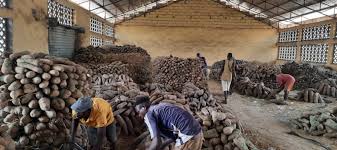
Some agriculture stakeholders in the South East have expressed satisfaction that the current agricultural harvest season recorded an increase in production and reduction in prices of foodstuffs in spite of numerous challenges.
They, however, decried low returns due to lack of storage and preservation facilities which left many farmers struggling to recover their investments.
The stakeholders in Anambra, Ebonyi and Enugu states, made their observations in separate interviews with the News Agency of Nigeria (NAN), on the 2025 harvest season.
They disclosed that the progress was made following government programmes, policies and other interventions.
Mr Linus Obeji, executive chairman, Abakaliki Rice Mill Industry in Ebonyi, evaluated the performance especially on rice production to government programmes and intervention.
He commended the federal and the state governments’ interventions, especially on the supply of inputs and financial support including loans and grants to farmers.
He said the International Fund for Agricultural Development (IFAD) and FADAMA, had been supportive, creating an enabling environment for the production of farm produce in the state and country.
He noted that the industry had made significant improvements, ranging from the processes of cultivation, harvesting, bagging, and distribution, among others.
“The industry is capable of a constant supply of rice to the general public in the state, Nigeria and even globally.
“The cost of rice has drastically reduced and it is now affordable by all classes of people in the country,” Obeji said.
Another agric expert, Mr Ezekiel Igboji, said the season saw higher output in major crops including rice, maize, sorghum, millet, cowpea, yam, cassava, and vegetables.
Igboji added that food prices witnessed a significant decrease, reflecting improved food availability.
He, however, noted that amidst increased good production and a significant drop in market prices of items, gaps on storage of produce, price regulation, facilities, more interventions needed to be tackled.
According to him, the current fall in the prices of commodities were as a result of the current harvest and policies of governments.
The expert called on governments to sustain its intervention programmes to ensure food security.
Igboji called for the introduction of a holistic irrigation system to improve farming, during and after rainy seasons.
Mr. Ndubuisi Elom, smallholder farmer, wants the government to sustain agricultural programmes and support farmers with equipment.
Mrs. Judith Ewah, a farmer, urged the government to assist farmers who were displaced by weather and conflicts.
“We have farmers who were affected by natural or artificial disasters and are yet to get back on their feet and empower them for food security.
“Attention, impact of weather events like flood, have frequently continued to impact farmlands across the country. Governments need to intervene more,” Ewah said.
Another farmer, Mrs. Nneka Nwibo, said pest attacks, poor soil fertility, inadequate government support among other difficulties are challenges observed during the current harvesting season.
In Anambra, stakeholders say the 2025 harvest season has brought a mixed reality with abundant harvest but low returns.
The farmers noted that although markets were flooded with freshly harvested rice, maize, cassava, vegetables and other farm produce, the surplus has caused a steep decline in prices, leaving many struggling to recover their investments.
Across farming communities in Ayamelum, Anambra East, Ogbaru and Nnewi, the farmers told NAN that they were caught between celebration and frustration.
Mrs. Ifeoma Nzelu, cassava farmer from Ogbaru, said increased food availability in local markets had eased prices for consumers, but the returns for farmers were discouraging.
“The same abundance has come at a cost to farmers. While consumers are happy to buy food at lower prices, many of us who toiled day and night to produce these crops are barely breaking even. It is discouraging to see our efforts yield so little profit,” she said.
Mr. Peter Okeke, a rice farmer in Anaku, Ayamelum, said this year’s bumper harvest was overshadowed by market challenges.
“We worked hard and produced more than last year, but prices have fallen so low that many of us are selling at a loss. There are no proper storage facilities and insecurity makes it risky to transport our produce to bigger markets.
“Some rural areas and farm-to-market routes in Anambra and neighboring states are plagued by kidnappings and multiple checkpoints that delay transportation,” he said.
Mrs. Ngozi Obiajuku, smallholder farmers in Ukpor, Nnewi, said poor storage facilities continued to force them to sell their produce at give-away prices, in spite of a bumper harvest recorded this season.
She said without proper preservation and processing infrastructure, they were left with no choice but to sell quickly before their perishable goods spoiled.
“We worked so hard to cultivate and harvest, but because we have nowhere to store our produce, buyers are dictating prices. We are practically giving them away just to avoid total loss,” she lamented.
A farmer at Anambra East, Mrs Uju Onyendilefu said: “After investing so much in fertilizers, labor and transportation, we end up selling at prices far below cost.
“Even buyers often dictate prices, taking advantage of farmers’ desperation to offload perishable produce before it spoils.
“The government should help us with storage centers and drying machines to preserve our crops.”
Agricultural experts say the situation reflects deeper structural and policy weaknesses.
Dr Nkechi Igwe, agricultural economist, noted that while the state’s agricultural output had risen in recent years, value addition and post-harvest management remained underdeveloped.
“Without investment in storage, processing and rural infrastructure, farmers will continue to face the abundant harvests but minimal profit.
“There is a need for the government and the private sector to intervene via long-term investments in drying, warehousing and processing facilities to prevent waste and add value to excess harvests,” she said.
Dr. Wisdom Orji, another agricultural expert, called for creation of commodity price stabilisation mechanisms to protect farmers’ earnings.
“Without such systems in place, farmers will continue to suffer losses whenever market prices crash despite abundant harvests,” he said.
Farmers in Enugu State have also continued to decry insecurity even as they have different reasons for the current bumper harvest and reduction in prices of foodstuffs.
They were of the view that apart from insecurity, the challenge of climate change, especially irregular rainfall comes second.
Chairman of the All Farmers Association of Nigeria (AFAN), Enugu Chapter, Mr Romanus Eze, said insecurity had limited farmers owing to vast farmlands running into hundreds of acres in forest areas.
According to Eze, you cannot practice commercial agriculture without having access to hundreds of acres of farmland, which a tractor will work on and with tenths of farm support staff.
“Yes, we are grateful to God for a bumper harvest this season and the reduction in prices of foodstuffs, which is occasioned by assistance from the Federal and state governments agricultural projects and programmes.
“Apart from insecurity, such as kidnapping and cattle attack on farmlands in the interior; we are currently contending with climate change, as everybody witnessed the change in rainfall pattern this year.”
Corroborating, Chairman of the Young Farmers Association of Enugu State, Mr Kenneth Eze, said some farmlands of his members had in recent times been devastated due to herds of cattle eating up maturing crops.
“As peace loving farmers, we have made complaints to various security agencies and the complaint is currently being handled by officers of the Department of State Security to bring succour to our members.
“Notwithstanding, the cattle attack on farmlands, it is clear that God blessed us with a relatively good harvest this season; resulting in food stuff abundance in the market and price reduction as well.
“I learnt that the state ministry of agriculture and some off-takers are planning on how to mop-up the excess food and ensure proper storage,” he said.
Mr Victor Ugwu, executive director, Initiative for the Eradication of Poverty, urged the government to further fortify Forest Guards and the Neighbourhood Watch security outfits to deal with the persistent insecurity in farmlands.
Ugwu, whose initiative, “Members are farmers in the Hinterlands”, attributed the current bumper harvest and reduction in food prices to government interventions and training of farmers on Good Agricultural Practices (GAP) and climate-smart agriculture.
Providing hindsight, the IFAD noted that its Value Chain Development Programme Additional Financing (VCDP-AF) had invested heavily in GAP, providing improved seedlings, agro-inputs, agro-machinery and access to farmland for about four years.
Enugu State Coordinator of IFAD, Dr Edward Isiwu, said: “All these monumental investment, training and direct support to over 10,000 farmers in various crop production and its value-chain in the state is currently yielding bumper harvest.
“The government is dealing with the issue of insecurity in farmlands with the recent reorganisation and retraining of Forest Guards and Agro-Rangers of the Nigeria Security and Civil Defense Corps (NSCDC) joining.
“There is ongoing construction of 260 smart farms in each of the 260 political wards; thus, guarantying more food and turning forest areas to potential farming areas and opening up forest areas; thus, checking kidnapping in the state.
“Farmers under IFAD programmes have been trained on proper storage and provided with simple agro-machinery within their cooperative societies to help them process and store their various crop produce to checkmate waste.”