Follow Us on Google
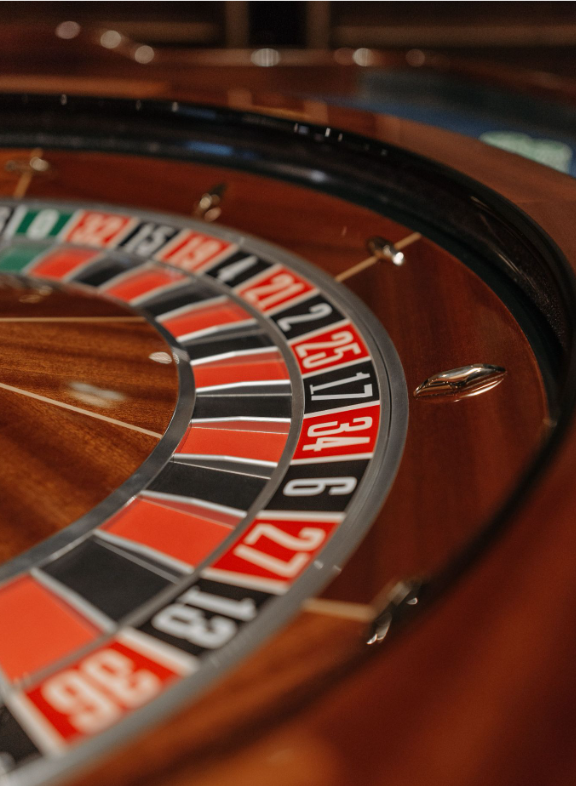
Roulette is a simple game with few rules and several strategies. It’s perfect for players who are just dipping their toes in online casinos and are looking for fun, fast table games. The initial walk up to the table might be overwhelming with numbers everywhere, and chips sitting on lines, corners and little intersections that seem to mean something. Someone has money on red, someone else has covered half the board, and another player has somehow placed a chip between 17 and 20. At first, it might not make sense.
Then the wheel spins and all of it comes down to one tiny ball landing in one pocket. That’s roulette.
You are not trying to beat a dealer’s hand; you’re betting on where the ball is going to land. Roulette gives you an enormous number of ways to make that bet. You can back one number. Two numbers. Three. Four. Six. An entire dozen. A column. Red. Black. Odd. Even. The lower half of the board. The upper half.
Fortunately, beginners don’t need to learn all of that at once. For starters, players need to be familiar with three things: what is on the wheel, what the main bets mean, and how a zero can affect the odds.
Roulette Starts with the Wheel
The betting layout gets most of the attention, but the wheel is where the game actually happens.
On a standard European roulette there are numbers 1 to 36 plus the green spot for 0. Eighteen numbers are red. Eighteen are black. The numbers around the wheel are mixed, so you won’t see 1, 2, 3, 4, etc.
The betting table is easier to read because it reorganizes those numbers into rows and columns. Once bets are closed, the dealer spins the wheel and launches the ball in the opposite direction. The ball slows, bounces around and eventually drops into one pocket. Whatever number catches it becomes the result. There are no additional spins, bets, or cards. One spin, one result.
Check the Number of Zeros
Roulette tables have different odds based on the type of wheel. European roulette has one green 0. American roulette usually has a 0 and 00. That second zero changes the math of every bet on the table. On Stake.com, players can usually see the type of roulette and wheel format before joining a game, making it easy to check the number of zeros before placing a bet.
A European wheel has 37 possible results. An American wheel has 38. Yet the normal payouts are basically the same. So, if you bet one number on European roulette, you have one winning pocket out of 37. On American roulette, you have one winning pocket out of 38. That might seem insignificant until you look at the house edge for each.
European roulette has a house edge of about 2.70%. Standard American roulette is about 5.26%. In other words, the double zero roughly doubles the casino’s advantage.
This is one of the simplest decisions you would have to make before even sitting down at the table. You don’t need strategies and spreadsheets, just count the zeros on the wheel.
There’s a Catch with Red and Black
Red or black is probably the first roulette bet most people understand. You put money on red. If a red number lands, you win. Simple.
And because there are 18 red numbers and 18 black numbers, it feels like a 50/50 bet. Except for zero. On a European wheel there are 18 red numbers, 18 black numbers, 1 green zero. If you bet red, you win on 18 results and lose on 19. Your chance of winning is around 48%, not 50%. That green zero is basically the entire reason ordinary roulette works as a casino game.
The same applies to odd and even, and to 1-18 versus 19-36. Zero doesn’t belong in either group, so whenever zero lands, those normal even money bets lose.
The Roulette Table
The betting table becomes much less intimidating once you stop looking at it as one giant thing. The numbers 1 to 36 sit in a grid. Around that grid are larger betting areas. The bets on or around the numbered grid are called inside bets, and the larger boxes outside the grid are called outside bets.
Inside bets generally cover fewer numbers and pay more. Outside bets generally cover more numbers and pay less. That is the basic trade off throughout roulette.
Want a 35:1 payout? You need to pick one exact number. Want to win much more often? You can cover 18 numbers by choosing red or black, but you only get paid 1:1. Just like with any other casino game, the payout gets bigger as your chances get smaller.
Straight Up Bets
Let’s say you put a bet on number 11, since it’s your lucky number or your birthday. You put one chip on number 11 on the roulette table. That’s it, that’s the straight up bet.
If it lands, the payout is 35:1, meaning for a $10 bet the payout would be $350 plus $10 the original bet. If the ball lands anywhere else, the bet is lost.
Single number wins are riskier, rarely landing. If the game were paying perfect odds, a one number bet on a 37 pocket wheel would pay 36:1. It pays 35 to 1 instead. That gap is the house edge.
Bets Between Numbers
At the roulette table a chip doesn’t always sit in the middle of a box, but on the line. When you place a chip on the line between two neighboring numbers, you are making a split bet. For example, if 17 and 20 touch on the betting layout, you can put a chip on the line separating the two numbers. Now either 17 or 20 can win for you. Because you are covering two numbers instead of one, the payout drops to 17:1.
A “street” covers three numbers in one horizontal row. So, for instance 13, 14 and 15 can be covered together. That normally pays 11 to 1.
A “corner” covers four numbers that meet at one dot. You place the chip right where the four boxes touch. That pays 8:1.
Then there’s the “six line bet”, which covers two neighboring rows, or six numbers in total. That pays 5 to 1.
No need to memorize all of this, but you get the gist of how the roulette table and bets work.
Outside Bets Are Much Easier to Follow
Most beginners start with the outside sections of the table, since it’s much easier to pick a whole category than one particular number.
Red or Black
There are 18 red numbers and 18 black numbers. Both bets pay 1:1. Bet $10, win $10 profit. Zeros are spoiling the perfect odds and should be taken into account.
Odd or Even
The numbers 1 through 36 contain 18 odd and 18 even numbers. Again, the payout is 1:1. Zero counts as neither.
1 to 18 or 19 to 36
Sometimes it’s called low and high. You are simply betting on which half of the range the ball is going to land. Both cover 18 numbers and normally pay 1:1.
Dozens
This one’s a bit different. The 36 regular numbers are divided into three groups: 1-12, 13-24, 25-36. Each group is called a dozen. A winning dozen bet pays 2:1.
If the ball lands on 8, 31 or 0, you lose.
Columns
The numbered grid also has three vertical columns. Each column has 12 numbers. Pick one column and you are covering 12 possible wins, with the usual payout of 2:1.
Online Roulette Can Be Much Quicker
At a physical table, there is natural downtime. Chips need to be placed. The dealer has to spin the wheel, pay winners and clear losing bets.
Play roulette online and the basic rules remain the same, but the experience can be completely different. Online roulette doesn’t need a dealer standing beside a wheel. A random number generator handles the outcome. The animation plays and the next round can begin very quickly, meaning that you can place many bets in minutes.
There are also live dealer roulette games where you watch a real wheel through a video stream. These feel closer to a casino floor. There’s a dealer, a betting countdown and a physical ball moving around a real wheel.
Then there are speed tables, automated wheels and modern roulette variations with multipliers and bonuses.
Those games can be fun once you understand ordinary roulette, but beginners usually do better with the basic version at first.
A Quiet European Roulette Table Is a Good Place to Start
There’s nothing wrong with picking the most visually spectacular roulette game you can find. But if your goal is actually to understand what you’re doing, start with a less exciting game.
A standard European roulette table gives you everything you need. One zero. Normal payouts. No giant multipliers flying onto the screen, and no tempting bonus round. No extra wheel. No game show host yelling over the result.
Spend a little time learning where the main bets go. Try red or black. Look at the dozens. See how a straight up bet differs from a split.
You will immediately notice the additional features and separate them from the basic roulette.
Do Not Cover the Whole Table
One beginner move is to start placing chips everywhere. A little on red. A little on the second dozen. Three favorite numbers. A corner bet, and maybe a street. Before long, there are chips covering half the screen.
This can create a comforting feeling that you have protected yourself from almost every result. But overlapping bets can make it surprisingly hard to know whether a winning number actually leaves you ahead.
Suppose several of your bets win on 17 but another pile of chips elsewhere loses. The fact that you had a winner doesn’t automatically mean the spin was profitable overall.
A better question to ask before every spin is: How much money do I have on the table in total? Then: What happens to that total if my number or section wins?
If you can’t answer those two questions without doing heavy math after the ball lands, you may have too many bets on the table.
Roulette Strategy Is Mostly About Avoiding Bad Ideas
In roulette, there’s not much to play once the bet has been placed. When the wheel starts, you cannot hit, fold, bluff or change your mind. That means a realistic roulette strategy is mostly about the decisions you make before the spin.
Choose a better wheel when possible.
Understand the odds.
Know the total amount you are staking.
Do not assume streaks predict the next result.
Do not chase losses with increasingly huge bets because a betting system tells you the next one has to win.
And do not confuse a bigger payout with better value.
None of this can help you with the result, but it can remove some of the mistakes beginners tend to make.
There Is No Secret Formula
Roulette has been around for centuries, yet people still approach the wheel as though there must be a hidden trick. Maybe the last five results reveal something. Maybe certain numbers are unusually hot. Maybe a clever staking sequence can make losses impossible. Maybe red is overdue.
The game is actually way simpler.
A European wheel has 37 possible pockets, while an American has 38. Your bet covers some of them. The payout depends on how many you cover. Zero or zeros give the casino its edge.
That’s the core of roulette. Everything else is mostly about how you want to experience those odds.
You can sit on red and black and watch small wins and losses go back and forth. You can pick a handful of numbers and wait for a bigger hit or play dozens, columns or combinations of inside bets. There’s no correct way to play roulette. But there’s a correct way to understand it.
Know what your chips cover. Know what the payout is and what zero does. And remember that the wheel has absolutely no interest in what happened on the previous spin. Nothing is “due” and the wheel doesn’t owe you anything. It’s a game of chance.
Once you have those basics down, roulette starts being what it always was one very simple game with a lot of different ways to place the same bet.