Follow Us on Google
By Bolaji Okunola
To mark the 2025 International Widows Day, the Rose of Sharon Foundation, in collaboration with the International Federation of Women Lawyers (FIDA), has reiterated its commitment to advocating a comprehensive socio-legal protection framework for widows across Nigeria.
The organisations jointly called for legislative action that would address the widespread violations of widows’ rights and provide a sustainable support structure for them and their children.
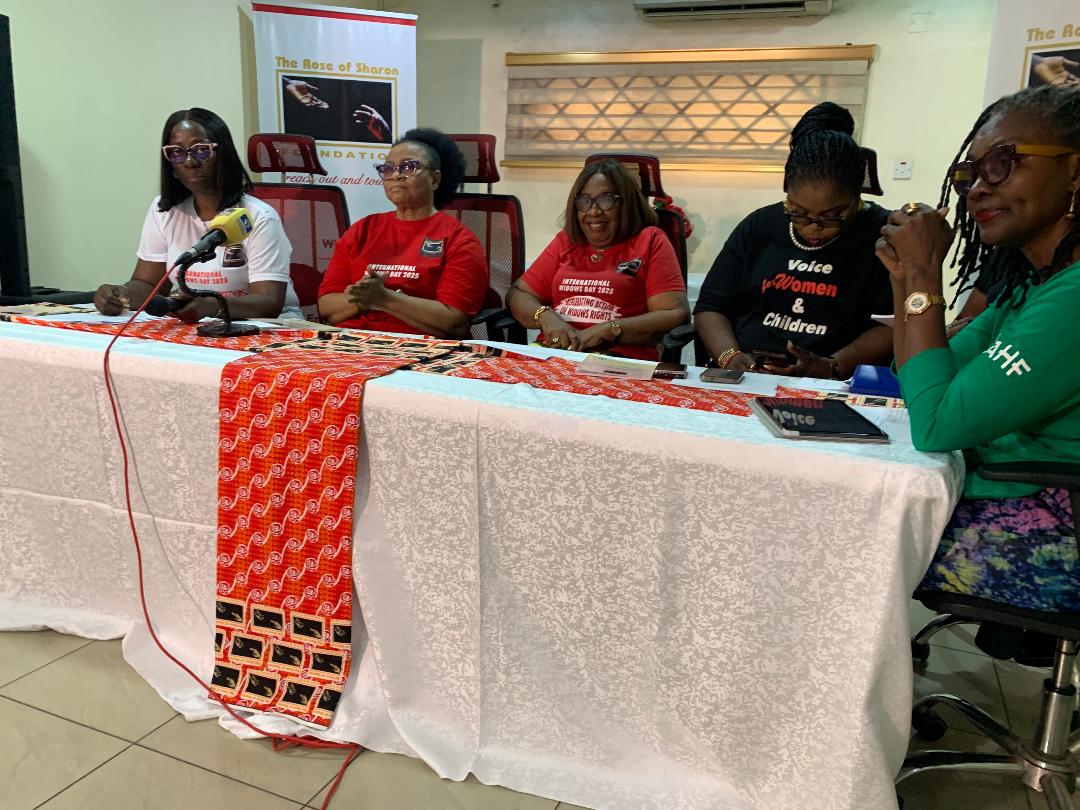
The declaration was made during a media briefing held in Lagos, led by Apostle Folorunso Alakija, founder of the Rose of Sharon Foundation. The event, which took place on June 23, the date globally observed as International Widows Day, was attended by prominent voices in the legal, advocacy, and humanitarian sectors.
Notable participants included the Country Manager of the Rose of Sharon Foundation, Dr. Ndudi Bowei; Chairperson of the Lagos chapter of FIDA, Abimbola Jack-Oladugba; FIDA Lead Researcher, Ifeyinwa Okpalaku; Executive Director of the Widows Advocacy Coalition in Nigeria, Hope Nwakwesi; and President of the Pan-African Widows Union, Almanah Hope. Together, they unveiled a research publication titled “Advocating for Specific Socio-Legal Protection Framework for Widows,” which outlines the current challenges widows face and provides a strategic roadmap for policy and legal reforms.
In her keynote remarks, Apostle Folorunso Alakija noted the sorrowful experiences of widows in Nigeria, especially those residing in rural communities. She expressed concern over harmful traditional practices, cultural biases, socioeconomic exclusion, and discriminatory laws that often leave widows vulnerable and destitute after the death of their spouses.
Other News
“Widowhood in Nigeria often comes with unimaginable hardship. These women are not only grieving the loss of their partners, but are also subjected to cruel traditional practices, forced evictions, loss of inheritance, and stigmatisation. This is further worsened by a lack of adequate legal protection and low media advocacy,” she said.
Alakija, whose foundation has worked tirelessly across Nigeria’s six geopolitical zones since its establishment in 2008, explained that many of the challenges widows face are systemic and require urgent government intervention.
“We’ve done everything possible as a foundation—supported widows through philanthropy, skills acquisition, and education—but the real change must come through legislation. There is a desperate need to pass a national bill that not only criminalises harmful widowhood practices, but also guarantees widows’ access to justice and rehabilitation,” she asserted.
She proposed the establishment of dedicated “Widows’ Help Desks” at the local government level, particularly in rural areas, to provide immediate support, legal guidance, and information dissemination whenever a widow’s rights are threatened. She said this would help shift the current trend from corrective to preventive action, offering widows dignity and protection from the outset of their ordeal.
“There must be a structure in place to prevent the emotional and psychological trauma many widows endure before any intervention arrives. We need a strong legal framework that provides clear recourse for rights violations and enforces stiff penalties against violators,” she added.
Supporting her stance, Abimbola Jack-Oladugba of FIDA Lagos emphasised the urgent need for comprehensive legislation tailored to the peculiar realities of widowhood in Nigeria. “Existing laws do not specifically address the plight of widows. We must push for a bill that recognises widowhood as a unique legal category, with enforceable rights, access to social services, and protections against cultural and familial abuse,” she said.
FIDA Lead Researcher, Ifeyinwa Okpalaku, also noted that the absence of disaggregated data and lack of public awareness campaigns has hindered progress.
“Widows are not a homogenous group. We need targeted interventions, including mindset reorientation and sensitisation programmes that challenge negative societal perceptions and normalise respect for widows,” she explained.
Meanwhile, Dr. Ndudi Bowei called for better collaboration between civil society and the government to ensure accountability in the implementation of laws. She also urged the media to take an active role in bringing the issue to the forefront of national discourse.
Hope Nwakwesi and Almanah Hope echoed the call for accountability, pointing out that the enforcement mechanisms must include accessible legal aid, protective shelters, and counseling services for traumatised widows.
As the conversation surrounding gender justice continues to gain momentum, the Rose of Sharon Foundation and its partners have positioned themselves as leading voices for widows’ rights in Nigeria. Their goal is not only to address the immediate needs of widows through aid and empowerment programmes, but to influence lasting policy change that will eliminate widowhood-related injustice in every community.
With this renewed call to action, stakeholders remain hopeful that the Nigerian government will respond with the urgency and commitment required to restore dignity, equity, and protection to widows nationwide.