Follow Us on Google
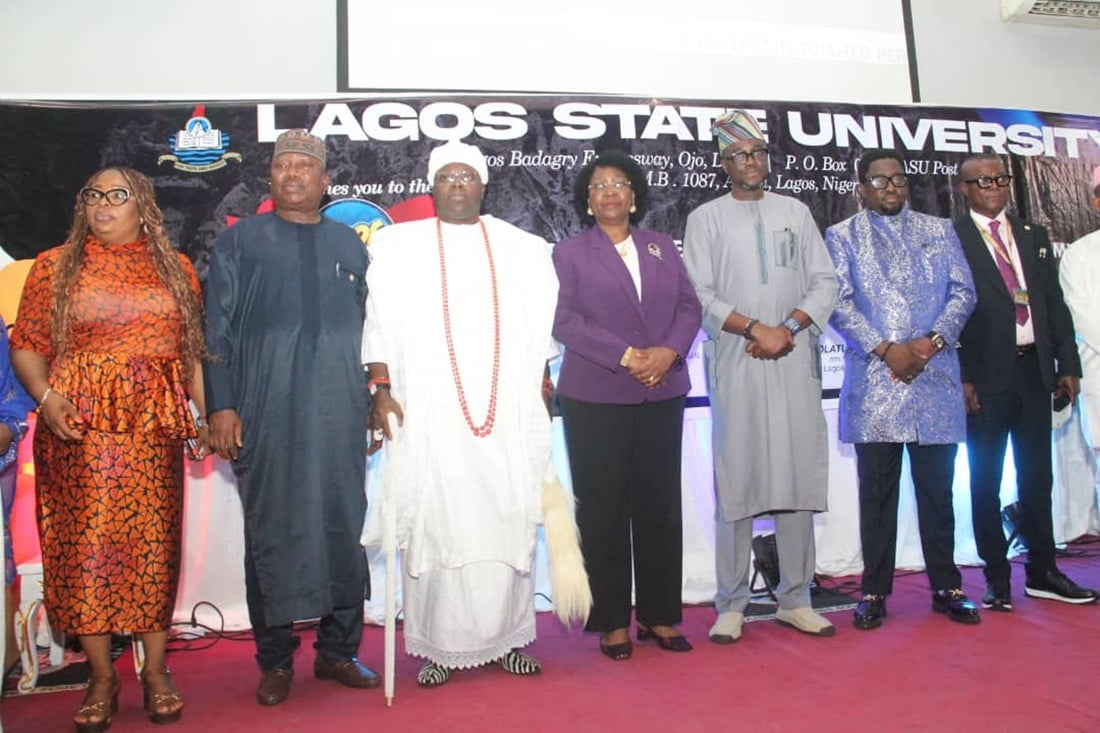
Oniru of Iru, Oba Abdulwasiu Omogbolahan Lawal, has called for robust investment in knowledge-driven institutions to enhance urban governance and economic resilience.
He made the appeal when he delivered the 2026 Distinguished Personality Lecture Series of Lagos State University (LASU) at the school on Lagos-Badagry Expressway, Ojo, Lagos.
At the lecture, titled: “Urban governance and the knowledge economy: Strengthening institutions for a 21st century Lagos” held at the university’s main campus in Ojo, Lagos, Oba Lawal explained that discussions on urban governance in Africa often focus on failure and institutional weakness, noting that Lagos presents a contrasting experience.
He noted that despite rapid population growth, overstretched infrastructure, congestion, and regulatory challenges, the city has continued to function by adapting its institutions rather than relying on rigid or static systems.
According to him, governing a megacity like Lagos in the 21st century is not about perfect systems or fixed models, but about the capacity of institutions to learn, reform, and respond continuously under pressure. He stressed that population growth, technological change, climate risks, public health shocks, and inequality make it impossible for policies to remain permanent.
The monarch described urban governance in the knowledge economy as an exercise in institutional learning, where governance structures must remain flexible enough to evolve while retaining public trust, legitimacy, and stability.
He said cities that fail are not those exposed to pressure, but those unable to adapt faster than pressure accumulates.
He stressed the importance of reform in Lagos’ development, stressing that progress in the state has often required dismantling systems that could no longer cope with growth and replacing them with institutions better suited to emerging realities.
He acknowledged that such reforms are often difficult and resisted, but said they have created space for innovation, coordination and long-term resilience.
Using revenue administration as a practical example of knowledge-led governance, the monarch recalled that Lagos’ internally generated revenue stood at about N600 million in 1999, constrained by weak records, fragmented systems, and limited compliance.
He explained that deliberate institutional reforms, including the consolidation of digital revenue platforms such as the Lagos Revenue Portal and automation within the Lagos State Internal Revenue Service (LIRS), transformed revenue collection into a core governance function.
He said by 2020, Lagos recorded about N418 billion in internally generated revenue, far exceeding that of any other state, while more recent figures show that the state generated over N1 trillion in 2024, accounting for more than a third of total sub-national revenue nationwide.
The growth, he said, was driven by systematic taxpayer registration, digital platforms, improved data integration, and consistent enforcement rather than coercion.
Other News
Oniru explained that the strengthened revenue base has had direct governance implications, expanding the state’s capacity to fund transportation systems, waste management, health services, and social programmes without excessive dependence on federal allocations.
He added that during periods of crisis, such as the COVID-19 pandemic, fiscal capacity translated directly into response capacity.
He said Lagos’ experience during the pandemic demonstrated how revenue, data, and institutional coordination converge under pressure, noting that the state relied on real-time epidemiological data, inter-agency collaboration, and continuous policy learning to balance public health priorities with economic survival in a densely populated city.
Using agencies such as the Lagos Metropolitan Area Transport Authority (LAMATA) and the Lagos Waste Management Authority (LAWMA) as case studies of knowledge-led urban governance, he explained that planning, data use, and institutional learning have improved service delivery in transportation and environmental management.
The monarch warned that cities that rely exclusively on technocratic solutions risk social alienation, while those that ignore data risk governance failure.
Speaking on the role of universities, Lawal said institutions of higher learning, particularly LASU, have a responsibility to strengthen the link between scholarship and practice.
He noted that research must engage real societal problems, while teaching should prepare students to think critically, act ethically, and navigate complexity in public life.
He advised policymakers and practitioners to view governance reform as a continuous process rather than a one-time event, stressing the need to protect, professionalise, and allow institutions to mature to manage disruption effectively.
The monarch urged youths to recognise their role in shaping cities, adding that urban development is influenced not only by grand policies but by everyday decisions taken within institutions.
Vice Chancellor of LASU, Prof. Ibiyemi Olatunji-Bello, described the lecture as timely and relevant, noting that it aligns with LASU’s commitment to scholarship, public policy engagement, and community development.
She said it provides a platform for thought leaders to contribute ideas that strengthen institutions, inform governance, and shape sustainable urban development.
The event was well attended by traditional rulers, members of the Lagos State House of Assembly, political stakeholders, academics, students, among others.