Follow Us on Google
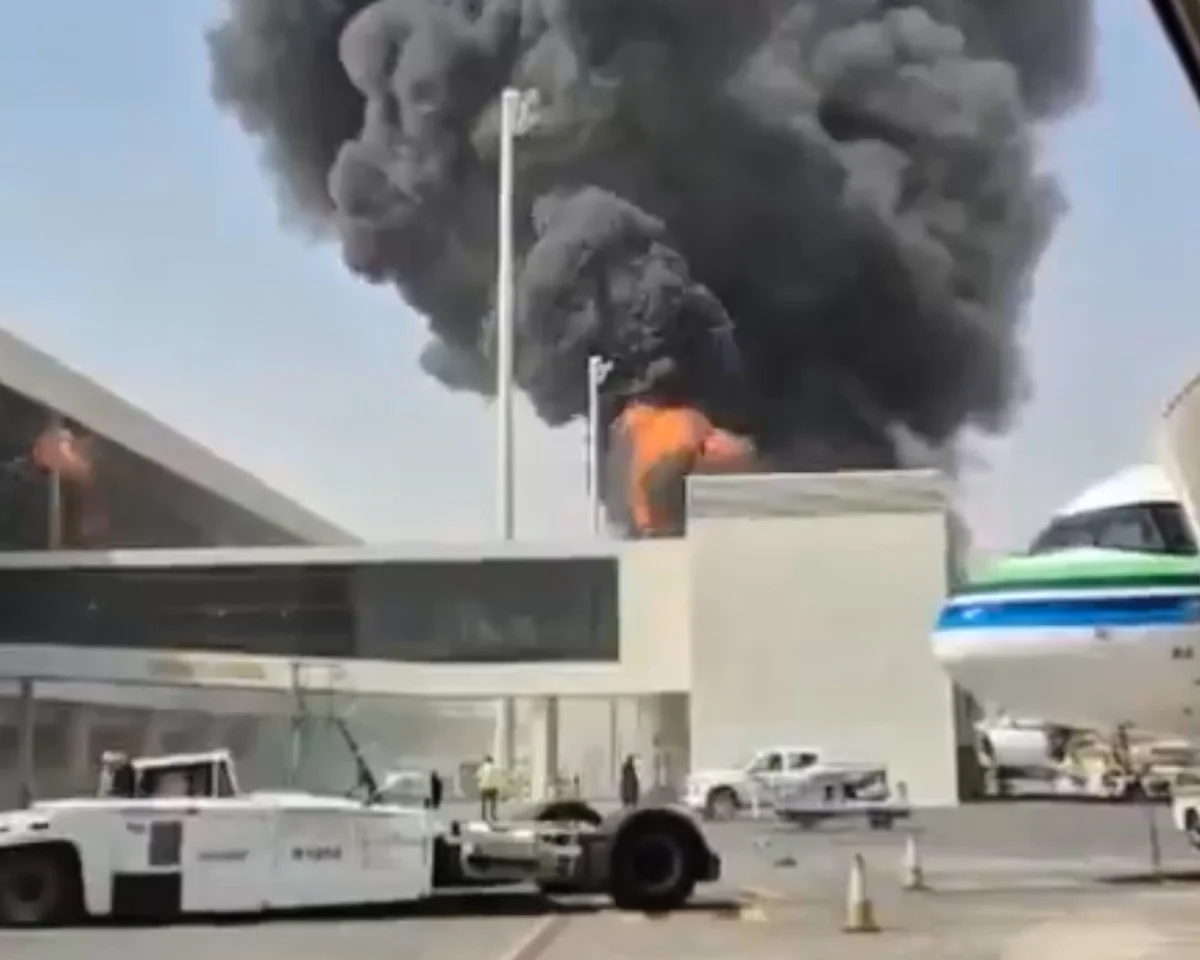
A fresh attack attributed to Yemen’s Houthi rebels has struck King Khalid International Airport in Riyadh, Saudi Arabia, killing one person and injuring 11 others, as tensions between the group and the Saudi-led coalition continue to escalate.
Saudi Arabia’s civil aviation authority confirmed the casualties on Sunday, identifying the deceased as a Pakistani resident. The latest strike came a day after another deadly attack forced authorities to suspend operations at the airport.
The Saudi-led coalition, which supports Yemen’s internationally recognised government against the Houthis, said a projectile hit the airport and triggered a fire. It added that air defence systems intercepted another missile in the vicinity.
Following the latest incident, the airport’s closure was extended for another 24 hours until 2100 GMT on Monday, according to flight-tracking platform Flightradar24.
Residents and AFP journalists reported hearing several explosions across the Saudi capital on Sunday.
One resident of Al-Aarid, a neighbourhood in northern Riyadh, described the impact of the blasts, saying the sound caused birds to scatter and shook the house.
The Houthi movement, which is backed by Iran, claimed responsibility for several attacks over the preceding 24 hours, including strikes targeting the airport. The group also threatened further attacks on Saudi Arabia’s transport hubs, describing them as “a theatre of operations for our forces”.
Saudi authorities reported another attack involving Dammam airport in the eastern part of the country. The Houthis also claimed to have targeted the facility.
The development came a day after the Saudi-led coalition reported that a projectile had landed near the airport. The coalition later announced that it had intercepted a drone in the eastern region.
In a further statement early Monday, the coalition said it had intercepted and destroyed a Houthi ballistic missile heading towards Khamis Mushait, a southern Saudi city that hosts a major military base.
The latest attacks followed a deadly strike on Saturday that killed 12 people and injured 309 others, according to figures cited by Saudi authorities. The victims included Saudi nationals and foreign residents.
The incidents represent a significant escalation in the conflict between the Houthis and Saudi Arabia, which has supported the Yemeni government militarily since 2015.
Despite substantial Saudi investment in its military, the Houthi movement has continued to launch attacks targeting the kingdom, including its airports, oil infrastructure and vessels operating in the Red Sea.
Thomas Juneau, a security analyst at the University of Ottawa, said Saudi Arabia’s size made it difficult to intercept every incoming missile or drone, even though its air defence systems had successfully stopped some attacks.
Iranian Foreign Minister Abbas Araghchi has called for a political approach to prevent further escalation.
During a telephone conversation with his Saudi counterpart, Araghchi warned that continued reliance on military action while disregarding diplomatic options could worsen the crisis, according to Iranian state media.
He also expressed Tehran’s readiness to help facilitate dialogue between Saudi Arabia and Yemen in pursuit of a political settlement.
Meanwhile, the Saudi-led coalition condemned Saturday’s attack as a “full-fledged war crime” and vowed to respond decisively.
The United Nations and several international leaders also condemned the violence. US President Donald Trump said he was considering whether to join Saudi strikes against the Houthis, while Israeli Prime Minister Benjamin Netanyahu described the attack as a “horrific terrorist attack”.
Several foreign missions, including those of the United States, Canada, Germany and Spain, advised their citizens to avoid Riyadh airport. Australia also condemned the Houthi attacks and had earlier urged its citizens in Saudi Arabia to remain indoors and shelter in place.
The conflict has also continued on the ground in Yemen, where Saudi-backed government forces were reportedly advancing against Houthi fighters around the Bab al-Mandab Strait, a strategic passage for international shipping.
The Houthis, however, claimed to have repelled the offensive.
Independent verification of claims made by both sides remains difficult because of the rapidly changing security situation and limited access for journalists.
Saudi Arabia has led an international coalition supporting Yemen’s government since 2015, while the Houthis continue to control significant territory, including the capital, Sanaa.
The latest attacks have heightened concerns over regional security, the safety of civilian infrastructure and the potential impact on transport and shipping routes across the Middle East.