Follow Us on Google

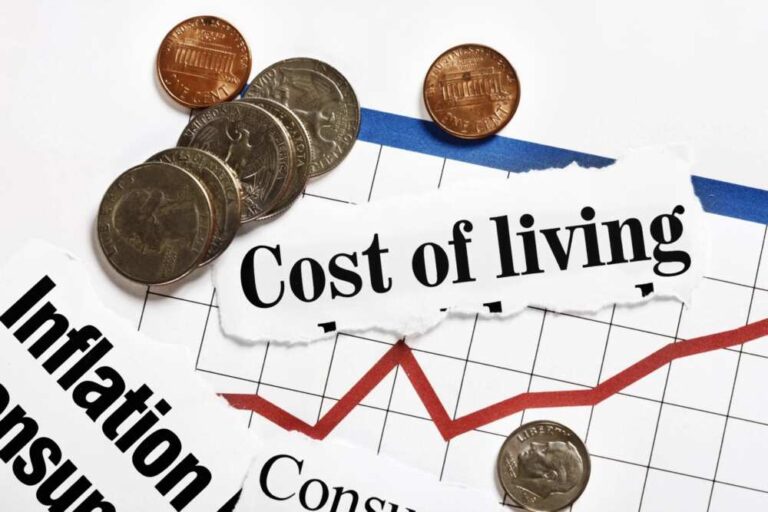
Amid rising unemployment, a new report by a British firm, Utility Bidder, has revealed that Nigerians spend so much of their monthly income on key utilities. According to the report, Nigerian households spend over two- thirds or 67.7 per cent of their monthly income on utilities. The affected items include water and gas, broadband and internet data, electricity tariffs, transportation fares and others. When other basic items like food and house rents are added, little or nothing is left as savings for an average household in the country.
Data from the National Bureau of Statistics (NBS) corroborated the UK-based firm survey which is reputed for offering well-researched advice on utility rates for consumers. About 51 countries were covered by the survey, in which Nigeria ranked second, followed by Pakistan and Philippines in first and third positions with 62.9 per cent and 61.5 per cent, respectively as monthly expenditure on utilities.
The survey also showed that Nigerians pay one of the highest prices for internet access. This is also true, as internet mobile providers often increase charges on data, especially in reaction to government’s recent increase of the Value Added Tax. Altogether, the report can hardly be faulted, it represents a near- accurate account of the current harrowing experiences many Nigerians are passing through. With a national minimum wage of N30,000 per month, which is yet to be implemented by many state governments, the harsh economic situation has taken a great toll on many Nigerians.
Rather than fault the report as some government officials would tend to do, the report should serve as a timely advice for government to initiate policies that will improve the disposal income of Nigerians and reduce the cost of key utilities.
The National Bureau of Statistics (NBS) had, in its last year’s report on Expenditure and Income Gross Domestic Product(GDP), revealed that Nigerians spent a hefty N54.84trillion on household consumption in nominal terms in the first half (H1) of 2021. The figure was higher than N48.22trillion recorded in the first half of 2020. It stood at N49trillion and N44trillion in the first half of 2019 and 2018, respectively.
Household expenditure is the amount of final consumption expenditure made by households to meet their daily needs, such as food, clothing, house rent, energy, transport costs, durable goods (notably cars), health cost, leisure, and miscellaneous services. The expenditure for household’s consumption had increased by 8.90 per cent in the first quarter (Q1) and 19.08 per cent in Q2 of 2021.
This shows that Nigerians are spending more on utilities and the development has reduced the disposal income available for savings and investment necessary for economic growth. The rise in household spending is also a clear signal that Nigerians are spending more as a result of an increase in prices of goods and services. There are some takeaways in the report that government’s policymakers should work with. Though inflation has been declining in recent months, it is still far below the CBN inflation target of nine per cent. For example, the cost of 12.5kg cooking gas which sold at N3,800 in October, 2020, now sells between N7,500 and N8, 000 in many states. Also, prices of major food items such as rice, beans, egg, bread, are on the increase.
In the last one month, prices of essential food items had increased by between 30 per cent and 50 per cent. For example, a bag of sachet water has gone up to N200, from N150. Electricity tariff has been increased by over 50 per cent per kilo watt. Across the states, the Consumer Price Index (CPI), which measures inflation, shows that food inflation has increased beyond the reach of many Nigerians.
NBS recent report showed that most Nigerians are groaning under the strain of high cost of food items. There is urgent need for policy measures that will reduce down food inflation and make food available and affordable. The general insecurity across the country has worsened household consumption spending. Farmers need to be given adequate security.
According to the misery index, which helps to determine the economic wellbeing of an average citizen, Nigeria may be the largest economy in Africa, but an average Nigerian is more miserable than his peers in other African countries. Nigeria’s misery index is 50.6 per cent higher than nine other economies in Africa. South Africa recordd 35.7 per cent, Angola, 32.7 per cent; Ghana, 14.8 per cent and Kenya,13 per cent. With increasing unemployment rate and high inflation, many Nigerians are not faring well despite our seemingly positive GDP outlook.
According to the International Monetary Fund (IMF), Nigeria has one of the lowest savings rates globally. In 2019, the gross savings rate in Nigeria stood at 13.9 per cent. This is far below China at 45 per cent, and much more below South Africa (15.8 per cent), Tanzania (24.8 per cent) and Togo (21.2 per cent). Higher savings will boost investment, productivity and economic growth. Let the government evolve workable plans to encourage savings, private investment and other things that will increase our GDP.