Follow Us on Google
From Okwe Obi, Abuja
The federal government’s push for industrial farming is drawing heightened scrutiny, as farmers, environmentalists and industry stakeholders amplify their opposition.
At the heart of the debate are concerns over animal rights, environmental sustainability, fears of land dispossession and the long-term safety of meat consumption, all of which have moved to the front burner of national discourse.
Already, several states including Benue, Kaduna, Niger, Nasarawa and Ogun have allocated vast hectares of farmland to foreign firms for large-scale animal farming ventures, with investments valued at over $2.5 billion. While officials present this as a pathway to agricultural transformation and foreign capital inflows, critics argue that the implications for local communities, food systems, and ecological balance remain deeply troubling.
For clarity, industrial animal farming is different from ranching. While the former has to do with highly controlled, intensive, indoor facilities with automated systems for high-volume production and lower costs, the latter involves raising cattle on large outdoor areas of land for grazing.
However, the Director of Programmes, Health of Mother Earth Foundation, Joyce Brown, argued that antibiotic-driven industrial methods of animal rearing for milk and meat production should be investigated thoroughly to ensure that Nigeria does not fall into the antics of international firms wanting to exploit the country.
Brown pointed out that when such an investment is allowed and enabled by state governments, smallholder farmers would be handicapped in terms of meeting food supply.
“One major challenge is with regard to land grabs. Already, many states are offering large expanses of land. Niger State has offered 1.2 million hectares for this project.
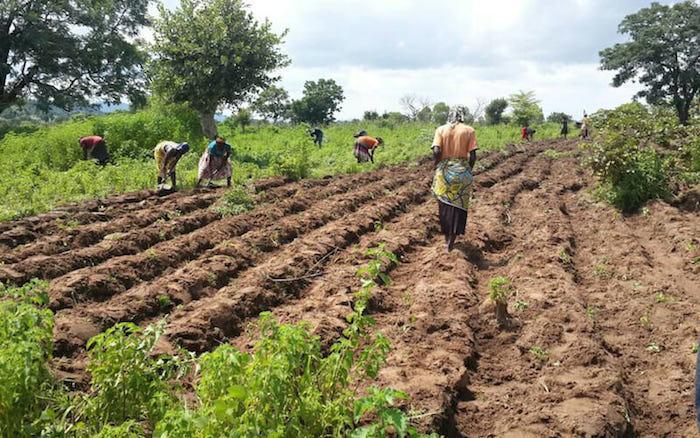
“And this can bring about displacement of local communities, loss of grazing land and farming land for community people, for local farmers who are actually producing and feeding the nation.
“Another major concern is that most of this industrial meat that will be produced will be for export and not really to meet the local needs.
“And there are a lot of other concerns with regard to environmental sustainability coming from the threats of the intensive use of chemicals, which can contaminate drinking water and other food sources,” she added.
In the study carried out by HIDA Resource Center on how some of these foreign large-scale investments affect communities, she observed that rural dwellers, especially farmers, are not employed in major roles as these companies promise most of the time.
According to her, they were given menial jobs and there was no security, claiming that major roles were given to people outside those communities.
“And some of them have lamented that their grazing land and their farmlands have been taken up for this project. There are other complaints with regard to pollution, contamination of water sources, and even farmland from the chemicals that are used by these foreign companies in their farms.
“And we know that the smallholder farmers, the smallholder livestock producers, have been the ones feeding the nation.
“They produce over 70% of the food that the nation needs. So we are calling for more support for these smallholder farmers. We need to support our own people as opposed to giving control of our food system, of our meat production, to foreign countries whose number one interest is profit.”
Furthermore, Deputy Executive Director for Environmental Rights Action, Friends of the Earth Nigeria, Mariann Bassey Olsson, contested that factory animal farming would lead to the extinction of most ruminants because of the unhealthy conditions they would be placed in.
Olsson maintained that investors should carry out enough feasibility studies before introducing factory animal farming in Nigeria.
She said: “We explained this morning, industrial means it’s a confined place where the animals are kept in a very, it’s not even a conducive environment, it’s a comfortable environment.
“You saw in the pictures, the animals are abused. Ranching, there’s a little bit of embarkment, but they are freed.
“They are free to ranch around within limited boundaries. But in the factory farm, they are put almost in chains. They are restricted.
“Imagine a pig that is supposed to be in the swamp, in the mud, is put in a store, in a house. That is not a natural habitation for a pig, or a chicken that should roam about. So we are not saying that you cannot have ranching.
“We are saying we don’t want factory farming because these are not the natural conditions animals should be kept in. Who would want to eat food that is produced in a lab or something? Because they are laced with antibiotics. This is large-scale.
“We are not talking about this. This is large-scale, and it’s an investment. So they need to make their money, and they want minimal costs.
“So they will do all it takes to cut costs so they can get this meat produced in a very cheap, sometimes unhealthy manner. Go and look at anywhere in the world where they have factory farming, you see people condemn it.
“We eat healthy food. We do not keep our animals in a restrained and very cruel environment.
“So we are not saying do not have ranching. We are saying this factory farming thing, look at it. Where are they going to get the land? Which EIA has been sourced from? And we are talking of factory farming.
“There are other elements to it. There is the environmental implication. There is the health implication.
“There is even the socioeconomic implication. What would happen when you start feeding these animals with antibiotics that end up on our plates? Because as you give them antibiotics, we are going to be eating these animals. You are also talking about the volatile.
“You need water. You need a lot of things. Where is it going? You are already burdening them.
“Nigerians’ lives matter. Yes, we are not anti-investment, but investment should not be at the cost of the lives of Nigerians or the animals or the food that we eat. Go to the hospitals now, a lot of people are suffering from allergies.”