Follow Us on Google
By Henry Uche
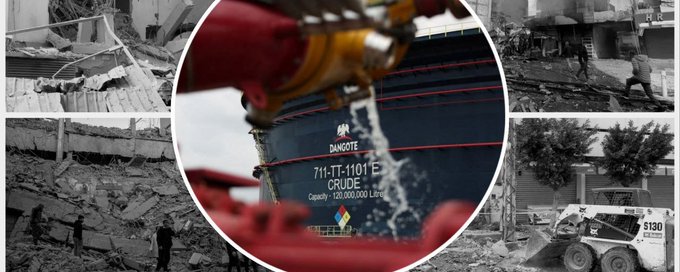
As geopolitical tensions between the United States, Israel, and Iran continue to disrupt global markets, the Risk Management Society of Nigeria (RIMSON) has urged Nigeria’s leaders to adopt stronger proactive risk management strategies to protect the country’s economy from potential shocks in oil prices, security stability, inflation, and foreign exchange volatility.
RIMSON warned that the escalating crisis could create both opportunities and dangers for Nigeria’s economic outlook, depending on how global energy markets and international relations evolve.
The society explained that Nigeria’s position as one of Africa’s largest oil producers makes it highly vulnerable to global energy disruptions. While conflicts in the Middle East could temporarily push oil prices upward due to supply fears, the long-term impact could be negative if global demand slows or recessionary pressures emerge.
Speaking on geopolitical risks, RIMSON President and Governing Board Chairman, Abbas Idriss, said Nigeria must prepare for complex diplomatic and economic challenges arising from the crisis.
“Iran has been involved in supporting certain groups and governments in the region, and a conflict may influence Nigeria’s diplomatic relations and foreign policy, especially regarding its own Muslim population and regional stability,” Idriss said.
He warned that national security concerns could worsen if global tensions intensify. “Nigeria has been grappling with its own security issues, including terrorism and ethnic conflicts. Increased instability in the Middle East may lead to higher security spending, which could divert resources from economic development and infrastructure projects,” he added.
Idriss also highlighted the potential impact on international trade. He explained that disruptions to global shipping routes and supply chains could increase import costs and fuel domestic inflation pressures.
Other News
“As Nigeria relies on imports for certain goods, disruptions could lead to increased costs and inflation domestically,” he said.
The RIMSON leader further noted that remittance inflows could be affected if conflicts disrupt the livelihoods of Nigerians living in the Middle East. “Many Nigerians have family members abroad. If instability affects those regions, remittances, which are a vital part of Nigeria’s economy, could decline, reducing household incomes and increasing poverty risks,” he stated.
On foreign investment, Idriss warned that global instability often increases investor risk aversion. “If investors perceive Nigeria as a risky environment due to global instability, it could lead to reduced foreign direct investment, which is critical for economic development,” he said.
He also raised concerns about humanitarian risks. “Conflicts often trigger humanitarian crises. If tensions spread across the region, Nigeria could face refugee inflows, placing additional pressure on social services and national resources,” he explained.
Idriss warned that global arms proliferation could worsen Nigeria’s security challenges. “There could be proliferation of arms, which will increase insecurity in Nigeria, as happened during the fall of Libya,” he said.
He added that global oil prices could spike significantly depending on the duration of the crisis. “The price of oil is expected to rise to up to $150 per barrel. Market responses are already visible as fuel prices have started adjusting,” he said.
RIMSON urged the Nigerian government to adopt advanced risk management strategies, including risk retention, transfer, and mitigation frameworks to protect the economy.
“This further amplifies our society’s earlier call for a proactive risk management culture that is far more beneficial than a reactionary one,” Idriss said.