Follow Us on Google
In Gombe, resources everywhere factories nowhere
From Abdulrazaq Mungadi, Gombe
When Gombe State was carved out of Bauchi in 1996, optimism was high that the “Jewel in the Savannah” would leverage its natural wealth to become an industrial hub in northern Nigeria. Nearly three decades later, the state embodies a stark contradiction instead.
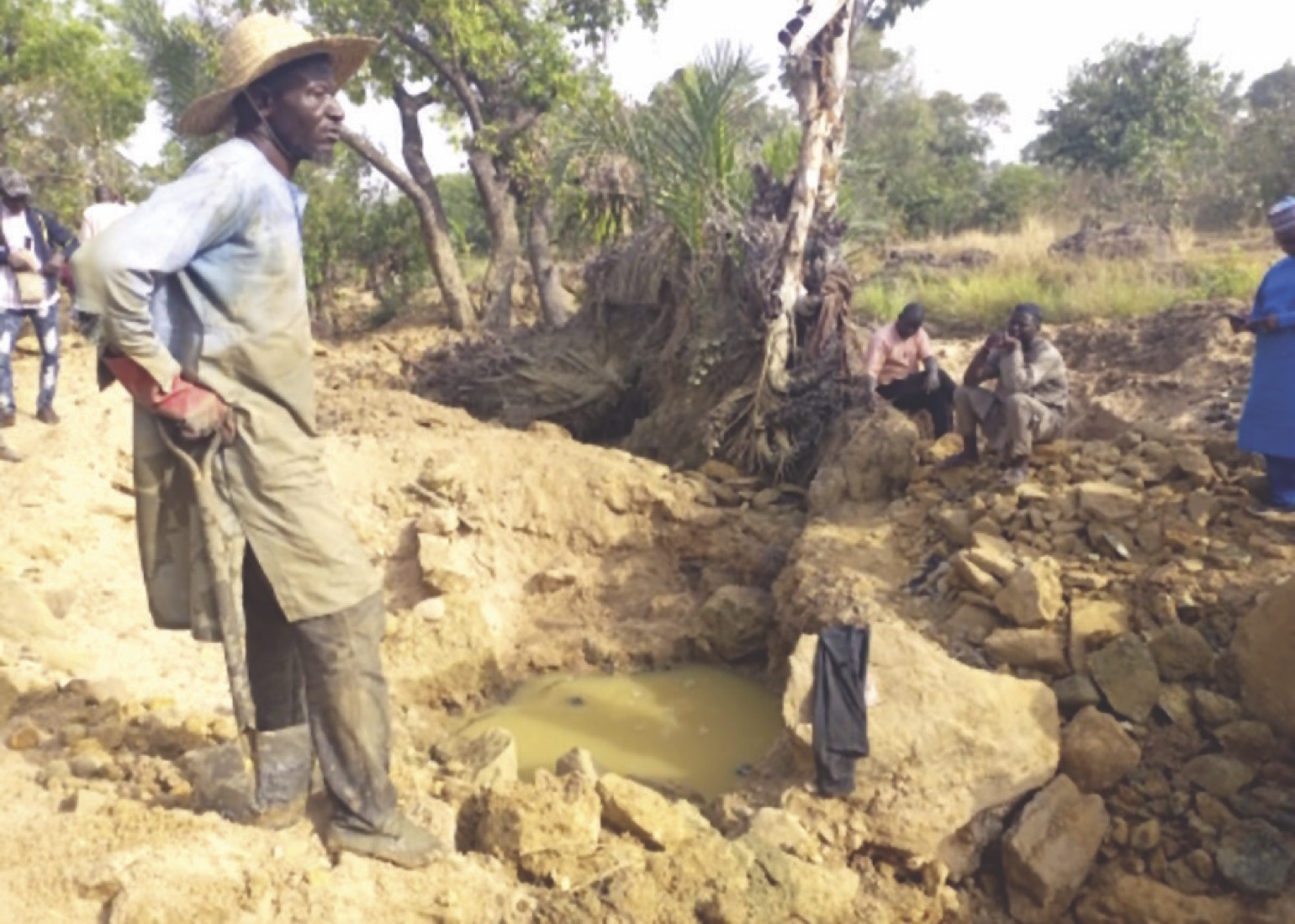
Blessed with a subterranean treasure trove of more than 40 different minerals, including gypsum, limestone, coal and kaolin, the state’s economic potential remains largely locked beneath the soil. While officials highlight progressive steps, critics argue that opportunities have been squandered on short-term politics at the expense of long-term prosperity.
In a candid interview, John Lazarus Yoriyo, former deputy governor of Gombe State, did not mince words. While congratulating the people on the anniversary of the state’s creation, he was blunt about its developmental shortcomings.
“Successive governments have failed in the area of exploiting our God’s given resources to grow. We should not be where we are today. If we had invested in our natural resources, Gombe would be far more developed and less dependent on federal allocation,” Yoriyo told Daily Sun.
He blamed successive administrations for “preferring roads and buildings that can be seen and praised” over sustainable industrial planning. “Even if resource exploitation cannot be achieved in four or eight years, it must begin somewhere,” he added, pointing to the South-South’s oil-driven development as a contrast.
However, the current administration in Gombe says the picture is changing. Sanusi Ahmed Pindiga, Commissioner of Energy and Mineral Resources, insisted that the sector is finally receiving the “serious attention it deserves.”
According to him, the Muhammadu Inuwa Yahaya administration has secured mining licenses from the Federal Government, established a monitoring committee across the 11 LGAs, and issued an Executive Order to curb illegal mining in the state.
“We have succeeded in controlling such activities. Now, any mining company must first report to the ministry. We have the records of all the mining companies operating in Gombe State,” Pindiga told Daily Sun.
Meanwhile, the Director of Mineral Resources, Hamisu Ibrahim, listed commercially viable deposits of limestone, coal, copper, lead, zinc and kaolin, noting active mining in Liji Hills (fluorite, barite) and Maiganga (coal). He argued that projects like the Muhammadu Buhari Industrial Park has provided “a strong enabling environment” for investors and set the pace for commercial exploration.
“Come to Gombe,” Ibrahim urged potential investors. “The state is peaceful, the government is committed, and we have consistently ranked high in the ease of doing business.”
But industry players say translating these assurances into real industrialisation is a steeper climb. Musa Garba, a Gombe-based entrepreneur in construction materials, said many local businesses still import cement, paint and plaster even though the raw materials exist in abundance within the state.
“It doesn’t make sense. Kaolin is here, gypsum is here, limestone is here, yet factories that could turn them into finished goods are not here. Ashaka Cement that is here for over 50 years have not been able to feed the state needs or stop importation of cement. We still buy from Dangote and others in other states, sometimes even from abroad. Until Gombe has more functional processing plants, we will remain consumers, not producers,” he said.
Civil society actors see the problem as one of political will. Ibrahim Yusuf, the team leader of the Advocacy Centre for Development (AC4D), argued that resource exploitation must be tied to community benefits. He said: “Mining is not just about factories and jobs; it is about building schools, hospitals, and ensuring communities don’t suffer environmental degradation. If Gombe is to industrialise, it must do so responsibly, with transparency and accountability,” he told Daily Sun.
“Mining alone is not development. You need infrastructure, electricity, transport, a very skilled manpower, to make industries thrive. If you establish a gypsum factory without stable power or skilled technicians, it will collapse. So the question is not just about minerals, but about an integrated industrial policy,” he added.
Dr. Sani Yakubu Gombe, Head of Department of Adult Education at the Federal College of Education (Technical), Gombe, identified what he described as “deep structural gaps” hindering the state’s mineral resource exploitation.
He said: “In my view, one of the biggest barriers is the policy framework that vests most mineral resource matters in the Federal Government, leaving states like Gombe with very little leverage. Our institutions, both educational and MDAs, are weak when it comes to mineral resource management.
“Added to this is the huge infrastructure deficit in areas where these resources are found. For instance, in Kolmani where oil and gas was recently discovered, basic infrastructure such as roads, potable water, schools, and health facilities are in very poor shape.”
Dr. Yakubu further pointed to environmental and security concerns, gaps in human capital, particularly in technology and governance bottlenecks that make it difficult to adopt Public-Private Partnerships (PPP) in the sector.
To bridge these gaps, he revealed that his team recently developed a model tagged, “Glocalization of the Productive Center in Gombe State.” According to him, the model is designed to reduce the export of raw materials from the state by 70 percent.
“The model has five phases. First, profiling key raw materials such as perishables, cattle, gypsum, grains, and other Waste-to-Wealth items (Bola Jari). Second, creating industrial zones with full infrastructure and allocating them free to potential investors. Third, providing training and interest-free seed funds to potential investors. Fourth, linking the state to global markets through shipping councils and chambers of commerce on a strictly apolitical basis. And finally, government itself should engage in off-taking the finished products and set up free trade zones to connect Gombe directly to the global market,” he explained.
He stressed that without bold reforms, Gombe risks remaining a supplier of raw materials instead of building a diversified industrial base.
Despite government assurances, the central paradox remains: companies are mining kaolin, fluorite, and coal in Gombe, yet only Ashaka Cement that specializes in processing limestone, gypsum, and coal, operates as the lone major factory, while other value-adding industries are conspicuously absent.
As the former deputy governor, Yoriyo put it, “true development is meaningless if it doesn’t improve the lives of people”. For him, Gombe’s journey from being mineral-rich to industry-poor is still an unfinished story, with factories as the missing link in a chain of untapped potential.
Meanwhile, Madugu Cement, a Nigerian company that once announced plans for a five-million-metric-tonne cement factory in Gombe with the full backing of the state governor, has gone silent for nearly five years. Similarly, Aliko Dangote, who during a visit in April 2024 promised to set up a cement plant in the state to serve the North-East and neighboring countries, has yet to make any visible move on the ground.