Follow Us on Google
By Ismail Ademodu
There are moments in the life of a nation when leadership is measured not by the number of speeches delivered but by the willingness to enter difficult spaces, listen to competing voices and attempt to rebuild trust where trust has been badly damaged. The renewed dialogue over the longstanding Ogoni crisis presents one such moment.
The Movement for the Survival of the Ogoni People (MOSOP) believes National Security Adviser Nuhu Ribadu has demonstrated an approach worthy of wider application. MOSOP president Fegalo Nsuke recently described Ribadu’s handling of the Ogoni dialogue as an example of exceptional leadership and argued that the model should be replicated in other conflict-affected parts of Nigeria.
That assessment is significant because the Ogoni question is not an ordinary policy dispute. It is rooted in decades of grievances surrounding oil exploration, environmental degradation, resource benefits, political representation and the relationship between the Nigerian state and communities in the oil-producing Niger Delta.
Oil production in Ogoniland stopped in 1993 following sustained protests. The execution of Ken Saro-Wiwa and eight other Ogoni leaders in 1995 deepened the crisis and transformed it into an international symbol of environmental and human-rights concerns. Years later, a United Nations Environment Programme assessment documented extensive hydrocarbon contamination and called for a comprehensive environmental remediation programme.
Against that history, any attempt at reconciliation inevitably requires more than a government announcement. It requires patience, engagement and a willingness to bring together interests that have spent decades viewing one another with suspicion.
This is where the Ribadu-led process has attracted MOSOP’s attention. The central feature of the approach, as described by MOSOP, is dialogue. Rather than treating the Ogoni question solely as a security problem or an oil-production problem, the process attempts to create a forum in which different stakeholders can engage with the federal government about the future of the region.
That distinction matters. Conflicts that survive for decades rarely disappear because one side is instructed to surrender its position. Sustainable settlements ordinarily require the parties to believe that their concerns have been heard and that the eventual arrangement offers a credible future.
MOSOP’s endorsement therefore appears to be rooted less in a single policy announcement than in its perception that the federal government is taking the political dimensions of the Ogoni crisis seriously.
Ribadu’s involvement has also brought together federal institutions that do not ordinarily operate as a single instrument of reconciliation. His delegation to Rivers State included senior government officials and ministers responsible for areas directly connected to the questions surrounding Ogoniland’s future. Such coordination is important because the problems confronting the region are interconnected.
Security cannot be separated entirely from economic opportunity. Environmental restoration cannot be separated from decisions about oil infrastructure. Employment cannot be separated from the expectations of young people. And reconciliation cannot be separated from the question of whether communities believe government institutions will honour their commitments.
The most important test, however, is whether dialogue can produce tangible improvements in people’s lives.
MOSOP itself has identified employment, healthcare, education, security and social welfare as issues deserving greater attention. This is a useful reminder that peace should not become an end in itself. For communities that have endured prolonged environmental and political disputes, the meaning of peace ultimately lies in what changes in everyday life.
A credible Ogoni settlement would therefore have to be measured not simply by meetings held or statements issued, but by whether the process contributes to environmental recovery, economic opportunity, social stability and greater confidence between communities and government.
There is another reason the Ogoni process deserves careful attention: it demonstrates how complicated reconciliation can become when legitimate interests collide.
Some Ogoni organisations and civil-society groups have raised objections to plans associated with the possible resumption of oil production. Their concerns include environmental protection, transparency and the sequencing of remediation before renewed extraction. Other stakeholders have expressed concerns about participation, employment and contracts connected to the process.
These disagreements do not necessarily invalidate the dialogue. On the contrary, they demonstrate why the dialogue must remain sufficiently broad to accommodate disagreement.
A peace process becomes stronger, rather than weaker, when legitimate objections can be raised without being interpreted automatically as opposition to peace. Transparency, environmental safeguards and inclusive participation are therefore not peripheral demands. They are essential ingredients of public confidence.
This is also where the broader significance of the Ribadu model, as MOSOP sees it, may lie. If the approach is to be replicated elsewhere in Nigeria, replication should not mean copying a fixed formula. Every conflict has its own history, actors and grievances. What could potentially be replicated is the principle of sustained engagement: bringing relevant institutions and stakeholders to the same table, recognising the political roots of conflicts, and seeking negotiated pathways instead of relying exclusively on coercive responses.
Nigeria has no shortage of difficult disputes. Across different regions, communities have experienced conflicts involving land, identity, insecurity, resource control, political exclusion and competition over economic opportunities.
These conflicts cannot all be resolved in exactly the same way.
But there are common lessons. First, dialogue must be continuous rather than ceremonial. Secondly, commitments must be followed by measurable implementation. Thirdly, affected communities must have meaningful opportunities to participate. Fourthly, development must accompany reconciliation. And finally, security must protect the peace process without becoming a substitute for political engagement.
The Ogoni experience also demonstrates why leadership in a reconciliation process is fundamentally about trust. Government officials may have formal authority, but authority alone cannot manufacture confidence. Confidence develops when stakeholders see consistency, transparency and evidence that their concerns are being taken seriously.
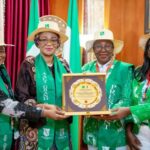
MOSOP’s proposal to recognise Ribadu with an Ogoni National Merit Award and a traditional chieftaincy title reflects the organisation’s appreciation of his role in the current process. Such recognition is ultimately a matter for the Ogoni people and their institutions. The more consequential recognition, however, would be a settlement capable of surviving political changes and delivering concrete benefits to communities.
That is the real standard by which the process should eventually be judged. The Ogoni question has outlived governments, political administrations and generations of activists. No individual should be expected to resolve such a deeply rooted dispute alone. Nor should any current initiative be treated as complete while major stakeholders remain concerned about environmental protection, transparency or participation.
As the Ribadu-led dialogue succeeds in converting decades of confrontation into sustained engagement, while ensuring environmental safeguards, credible participation and meaningful development, it offers Nigeria an important lesson: that reconciliation is possible when the government chooses to engage communities as partners rather than merely as subjects of policy.
• Ademodu writesa from Abuja.