Follow Us on Google
By Maduka Nweke
Lagosians living in government-owned residential estates are angry and understandably so.
What began as a government regulation over solar panel installation in Lagos State-owned estates has spiralled into a fierce public debate over governance, taxation, housing failure and the limits of state control in a city battling deepening economic hardship.
As they call for the regulation to be scrapped, they insist the government is punishing them for escaping darkness.
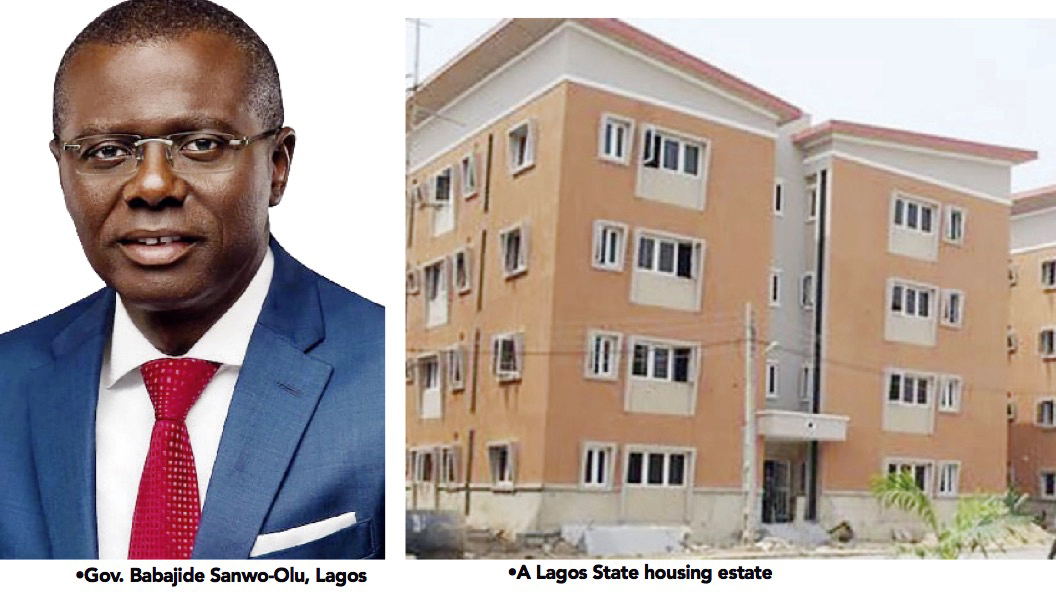
Across several government-owned and government-approved estates in Lagos, anger is simmering among residents who believe the state is gradually commercialising survival itself. The controversy intensified after a viral video showed officials of the Lagos State Ministry of Housing confronting a resident over the installation of solar panels without government approval.
The officials reportedly demanded permits and fees, igniting widespread outrage on social media and among estate residents already burdened by poor electricity supply, rising costs of living and deteriorating infrastructure.
For many Lagosians, the issue goes far beyond solar energy.
To them, it represents another layer in what they describe as a growing system of levies, approvals and charges imposed on citizens who are already forced to provide basic amenities for themselves.
Residents argue that while governments in developed societies subsidise renewable energy adoption, Lagosians are being asked to pay additional fees simply for attempting to escape darkness.
The backlash became so intense that the Lagos state government was compelled to clarify that the regulation applies only to government-owned social housing estates and not to private homeowners with valid Certificates of Occupancy outside such estates. But even that explanation has failed to calm tempers.
Many residents insist the policy is merely a “pilot phase” that could eventually extend to private estates and ordinary homeowners across the state.
For critics, the larger question remains unsettling: why should citizens who already provide their own electricity, water and security also pay the government for installing solar systems powered by sunlight?
“You Have No Right To Sell God’s Energy”
One of the loudest voices against the policy is Mr. Ime Udoma, a retired banker and resident of Millennium Estate along Eko Akete Road in Amuwo-Odofin.
Visibly frustrated by the development, Udoma said the policy crosses both moral and practical lines.
“You see, when people decide to arrogate to themselves the position of God, you begin to fear them,” he said.
“You have no right to sell solar energy provided by God. God’s solar comes from the sun. The sun is the centre of the universe. So if somebody in authority now wants to collect money because I am using sunlight, then it is condemnable in every form.”
According to him, residents are not embracing solar power as a luxury, but as a necessity forced on them by the collapse of public electricity supply.
“People are buying solar because the government has failed to provide stable electricity, which is the minimum any responsible government should provide,” he said.
“We generate water for ourselves. We generate electricity for ourselves. We fix roads around us. Then on top of that, the government still wants to charge us for trying to survive. It is very bad.”
Udoma lamented that Lagosians are increasingly being suffocated by multiple taxes and levies without corresponding public services.
“They have introduced road parking fees. They demand tenement rates. Every day, there is one new levy or another,” he said.
“I don’t mind paying taxes if the government is doing the right thing. But asking people to pay for installing solar energy is criminal. It is like taxing sunlight.”
Fear of a wider clampdown
Although the government insists the policy affects only social housing estates under its control, many residents remain suspicious.
Several respondents who spoke with Daily Sun expressed fears that the state may eventually extend the permit regime to private residential buildings under the guise of safety regulation.
That fear has deepened because many Lagosians believe government policies often begin within controlled environments before expanding to the broader public.
Residents argue that the policy reflects a disturbing trend where every aspect of urban living is increasingly subjected to bureaucratic approvals and revenue collection.
For some, the issue is not even the permit itself, but the distrust surrounding how such powers may be abused.
They fear arbitrary enforcement, extortion and endless bureaucracy.
Many also worry that obtaining approvals for solar installations could become another avenue for corruption, favouritism and delays.
“This is how unnecessary bottlenecks start,” a resident of Lateef Jakande Estate said.
“Today it is permitted for solar panels. Tomorrow it may become another annual fee for maintaining them.”
Government’s position
The Lagos State Ministry of Housing has defended the regulation, insisting that the policy is rooted in safety and structural concerns rather than revenue generation.
According to government officials, the installation of solar systems on shared residential buildings requires oversight because of the additional weight imposed on rooftops and the fire risks associated with poor electrical installations.
Officials also argued that regulations are necessary in estates with shared roofing structures to ensure that one resident does not monopolise available roof space.
The government maintained that the permit process was designed to protect residents and preserve structural integrity within state-owned estates.
But critics say the explanation has failed to convince many residents because the same government has struggled for years to maintain infrastructure within the estates under its supervision.
Several residents questioned how authorities suddenly became deeply concerned about safety standards when many state-owned estates continue to suffer from leaking roofs, poor drainage systems, collapsing infrastructure and inadequate maintenance.
Life inside government estates
Beyond the solar controversy lies a deeper frustration over the state of public housing in Lagos.
Many residents say government-owned estates, originally conceived as affordable housing schemes for low and middle-income earners, have become symbols of neglect, overcrowding and failed urban planning.
Despite being designated as social housing, several estates are now financially out of reach for average workers.
Residents claim many units are acquired by politically connected individuals or wealthy investors who later resell or rent them out at exorbitant prices.
In some estates, residents complain of substandard construction, leaking roofs and poorly designed drainage systems that leave entire neighbourhoods flooded after moderate rainfall.
Others describe living conditions characterised by poor waste management, inadequate road networks and inconsistent water supply.
For many families, the daily struggle has become exhausting.
Mr. Anthony Atueyi, a trader at Trade Fair Market who lives in Lateef Kayode Jakande Estate, said life inside many government estates has become a contradiction.
“Living in a government estate is supposed to be a privilege, but everybody here is suffering,” he said.
“The first necessity of life is water. Yet there is no government water. You either dig a borehole yourself or buy water from private suppliers whose source you don’t even know.”
He added that electricity costs remain painfully high despite erratic supply.
“What we pay for electricity is not equal to what we get,” he lamented.
“At times, it feels like the system is designed to frustrate ordinary people into permanent poverty.”
Floods, decay and demolition fears
Other News
Residents also recounted traumatic experiences linked to flooding and sudden demolition exercises in some government-designated areas.
In many estates, poor drainage systems have turned roads into waterways during heavy rainfall, submerging homes and destroying valuables including electronics, furniture and important documents.
Some residents described entire neighbourhoods becoming inaccessible after downpours.
Others accused government-approved developers of ignoring environmental realities during construction.
In certain communities, fear of demolition hangs heavily over residents, particularly in areas where disputes over land ownership or urban redevelopment persist.
Some residents alleged that demolitions are sometimes carried out despite pending legal challenges or court orders.
The uncertainty has left many families anxious about the safety of their investments and livelihoods.
“There is always fear,” one resident said.
“You build your life somewhere, invest everything there, and then suddenly the government can come with bulldozers.”
Poor security and harassment
Residents also expressed frustration over insecurity and poor estate management.
In some areas, they complained about harassment by hoodlums, illegal commercial motorcycle operators and weak security arrangements despite regular service charges.
Others accused authorities of neglecting maintenance responsibilities while continuously introducing new levies.
A retired police officer, Mr. Fabian Eboh, acknowledged that governments everywhere generate revenue through taxes and regulations, but argued that the real issue is public trust.
“For me, if you look at it from an ideal society, regulation itself is not entirely wrong,” he said.
“But the problem is that people do not see the benefits of the money being collected.”
According to him, residents feel abandoned because essential public services remain inadequate despite the heavy financial burden imposed on citizens.
“My concern is that the income generated does not benefit the people,” he said.
“That is why there is public anger.”
Eboh warned that the worsening economic condition in the country requires governments to exercise caution and sensitivity.
“The masses are already under pressure. So the government should consider public feelings and suspend the policy”, he said.
Taxing survival as new catchphrase
The phrase now echoing across many estates is simple: “taxing survival.”
Residents say they have become responsible for virtually every aspect of urban living while the government continues to impose fresh financial obligations.
They point to poor roads, unstable electricity, inadequate healthcare and unreliable public water supply as evidence that citizens are already carrying responsibilities that should ordinarily belong to the state.
Some residents openly accused public officials of prioritising revenue generation over governance.
“There is so much money the government collects from citizens, yet nobody can clearly explain what it is used for,” Udoma said.
“Are they giving us roads? Are they giving us water? Are they giving us a stable power supply? We provide everything ourselves.”
He also criticised mandatory vehicle roadworthiness payments, arguing that many roads across Lagos are themselves unfit for use.
“They collect roadworthiness money, but are the roads worthy of our cars?” he asked.
Renewable energy under pressure
Energy analysts warn that excessive regulation of solar installations could discourage renewable energy adoption at a time when Nigeria desperately needs alternative energy solutions.
With rising diesel prices, worsening grid instability and increasing electricity tariffs, more Nigerians are turning to solar power to reduce dependence on unreliable public supply.
Industry operators fear that additional permit charges and bureaucratic processes may slow down that transition.
Many residents believe the government should instead incentivise clean energy adoption through subsidies and simplified approval processes.
Critics argue that Lagos, as Nigeria’s commercial nerve centre, should be encouraging innovation and sustainability rather than creating barriers around alternative energy.
Residents also fear that inconsistent policy signals could discourage private investment in renewable energy infrastructure.
Demand for transparency
A major concern among residents is the lack of clear, transparent guidelines regarding the permit process.
Many say they fear arbitrary assessments by officials and inconsistent enforcement across estates.
Some residents complained that government communication on the policy has been confusing, reactive and poorly managed.
Others argued that if safety inspections are genuinely necessary, the government should clearly publish standard procedures, fixed charges and processing timelines to eliminate room for exploitation.
“There should be transparency,” a resident said.
“If this is truly about safety, let people understand the process openly instead of officials appearing suddenly to intimidate residents.”
A larger governance crisis
For many observers, the uproar over solar permit charges reflects a broader crisis of trust between citizens and government.
Across Lagos, frustration is mounting over rising living costs, declining infrastructure and what many perceive as aggressive revenue-driven governance.
Residents say the controversy has become symbolic of a society where citizens increasingly feel abandoned to survive on their own.
They argue that governments cannot continue failing to provide basic amenities while simultaneously charging people for creating private alternatives.
Several respondents insisted that the anger would have been far less severe if residents felt the government was effectively delivering public services.
Instead, many Lagosians believe they are being punished for adapting to systemic failures.
“A hungry child does not need advice before the father knows what to do,” Udoma said.
“The government already knows that Nigerians are suffering. Everybody is crying every day. They hear it on radio, television and everywhere. So what advice do they still need?”
As the debate continues, the controversy has opened wider conversations around housing policy, taxation, urban governance and the future of renewable energy in Nigeria’s commercial capital.
For now, many residents say the issue is no longer merely about solar panels.
It is about dignity, survival and the growing feeling that ordinary citizens are being left alone to bear the crushing weight of a failing system while the government searches for new ways to collect more.