Follow Us on Google

•CBN ramps up FX defence, tightens liquidity
By Chinwendu Obienyi
Despite a $731 million decline in just three weeks, Nigeria’s external reserves remain in a stronger year-on-year (y/y) position, with easing outflows and policy support from the Central Bank of Nigeria (CBN) helping to keep near-term risks in check, though underlying vulnerabilities persist.
The country’s external reserves have come under renewed pressure this month, reversing the modest build-up recorded earlier in the year and raising fresh concerns about the sustainability of external liquidity.
Data from the apex bank show that reserves declined from $49.18 billion on April 1 to $48.45 billion as of April 23, translating to a cumulative drop of $731 million within the first three weeks of the month. This represents an average weekly decline of approximately $233 million.
The latest downturn marks a shift from the upward trajectory seen in January, when reserves rose by about $509 million within the first 22 days, signalling improved inflows at the time. Typically, reserve movements reflect a combination of oil revenue dynamics, foreign exchange (FX) interventions, and the settlement of external obligations.
A closer look at the April trend indicates that the most significant pressure occurred early in the month. Reserves fell sharply from $49.18 billion to $48.81 billion between April 1 and April 10, suggesting stronger outflows during that period. The pace of decline, however, moderated in subsequent weeks.
Between April 13 and April 17, reserves eased slightly from $48.72 billion to $48.62 billion, before slipping marginally from $48.54 billion to $48.45 billion between April 20 and April 23, 2026.
This pattern points to some stabilisation in outflows, although underlying pressures persist. The April decline also follows similar pressure in March, when reserves dropped from over $50.08 billion on March 12 to $49.61 billion by March 23, reinforcing concerns about sustained external liquidity management.
Other News
Despite the recent drawdown, reserve levels remain significantly stronger than in the corresponding period of 2025, when they stood at approximately $37.83 billion. This suggests that, while short-term pressures are evident, the broader external position has improved on a year-on-year basis.
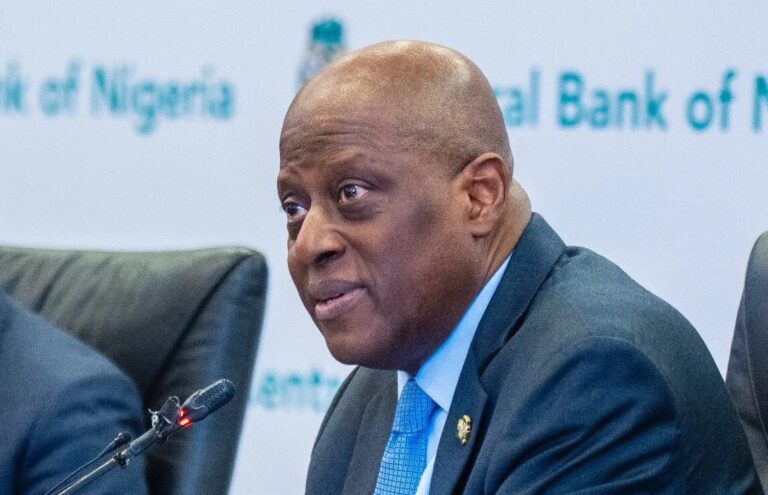
Providing reassurance, CBN Governor, Olayemi Cardoso has downplayed concerns over the recent decline, maintaining an optimistic outlook for the country’s reserve position. As part of its macroeconomic stabilisation and confidence-restoration agenda, the apex bank projects that reserves could reach $51 billion by the end of 2026.
This target forms a key pillar of its medium-term strategy to strengthen balance-of-payments resilience. Commenting on the development, Cordros Research in an emailed note to Daily Sun, said that heightened caution among Foreign Portfolio Investors (FPIs), driven in part by geopolitical tensions such as the ongoing US–Iran conflict, may weigh on inflows.
The research and investment based firm, however, believes that relatively attractive naira yields and a still-supportive external environment are likely to sustain portfolio investment, albeit at a slower pace compared to pre-conflict levels.
“Nonetheless, should demand pressures re-emerge in the FX market, the CBN is expected to step in through targeted interventions to stabilise the currency and manage volatility, drawing on its external reserves buffer”, Cordros Research said.
Historical trends underscore that such fluctuations are not unusual. For instance, in October 2018, reserves fell by $1.1 billion within two weeks, highlighting the episodic nature of short-term pressures.
Overall, while April’s decline signals renewed strain, the moderation in outflows toward the latter part of the month, combined with stronger year-on-year reserve levels and policy support, suggests that risks remain manageable in the near term, though not without vulnerabilities.