Follow Us on Google
From Ndubuisi Orji, Abuja
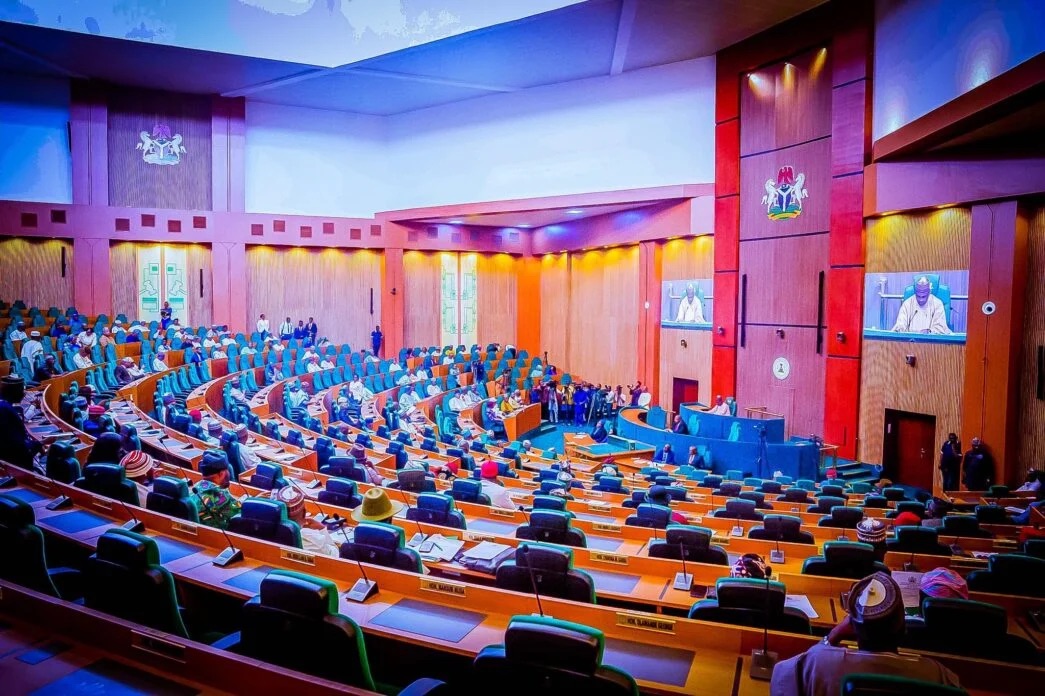
The House of Representatives has charged members to support the Special Seats Bill, so as to ensure it secures two-third majority in the two chambers of the National Assembly in the constitution review exercise.
This followed the adoption of a motion by Jesse Onuakalusi, to pass the special seats bill, as a step towards inclusion in the governance of the country.
The special seats bill, which proposes the creation of six, 37 and 109 seats exclusively for women in the Senate, House of Representatives and state Houses of Assembly, respectively, is one of the proposed legislation being considered by the parliament in the ongoing review of the 1999 Constitution ( as amended).
The special legislative seat was among the proposed legislations rejected by the two chambers of the National Assembly in the last Constitution Review in the Ninth Assembly. However, the bill was reintroduced in the 10th Assembly, with the leadership giving assurances that it would be passed. Hope for the passage of the bill before the 2027 general election has dimmed, as the parliament is yet to vote on the constitution alteration bills.
However, the House mandated its Committees on Constitutional Review, Women Affairs and Electoral Matters to immediately harmonise and fast-track deliberations on the Bill and report back within a defined legislative timeline. It urged all members to vote unequivocally in favour of the Bill at every stage of legislative consideration and called on State Houses of Assembly to demonstrate the same commitment by expediting action on the proposed legislation, when it is passed by the National Assembly and sent to them for concurrence.
The Green chamber further noted that “the passage of the Special Seats for Women Bill is not merely a gender issue but a constitutional, developmental and democratic necessity essential for equitable nation-building.”
Other News
The House, while urging the executive arm to provide political backing for the bill, stated that failure to pass the proposed legislation would perpetuate “systemic exclusion and undermine Nigeria’s obligations under international and regional agreements.”
Onuakalusi, in his lead debate, argued that the passage of the Special Seats Bill would be a historic opportunity to strengthen democracy and deepen inclusion in the country.
According to him, though women constitute about half of the country’s population, they are “grossly underrepresented in elective and appointive positions across all tiers of government, with representation persistently below five percent in elective offices, one of the lowest globally.”
The lawmaker posited that increasing women’s representation in governance would lead to improved outcomes in healthcare, education and other critical sectors, thereby strengthening national cohesion and sustainable development.
He added that “the proposed Special Seats for Women Bill seeks to introduce constitutionally backed affirmative action to boost representation through the creation of additional seats for women in the National Assembly and State Houses of Assembly, as a temporary corrective mechanism.
“Similar models have been successfully implemented in countries such as Kenya – reserves 24 out of 80 seats in the lower house (women make up 60 percent of Parliament, the highest in the world), South Africa – high representation through party quota system, Kenya – provides for 47 women Representatives, Burundi – Constitution mandates a minimum of 30 percent women representation, South Sudan – uses a quota system ensuring at least 35 percent representation for women and Uganda – each district elects a woman representative, leading to significant improvements in women’s political participation and inclusive governance.”