Follow Us on Google
By Adewale Sanyaolu
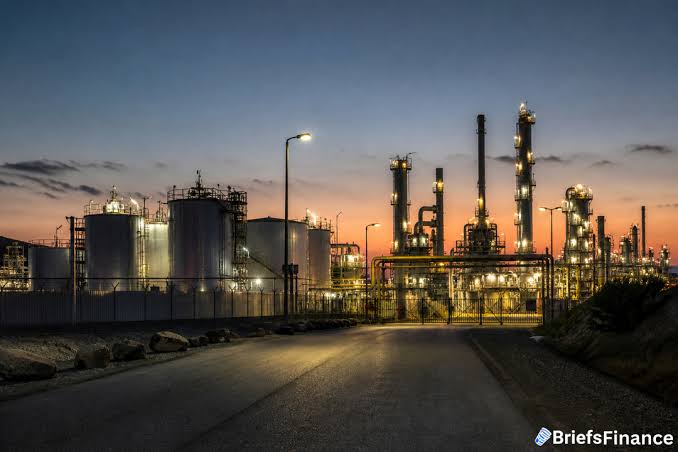
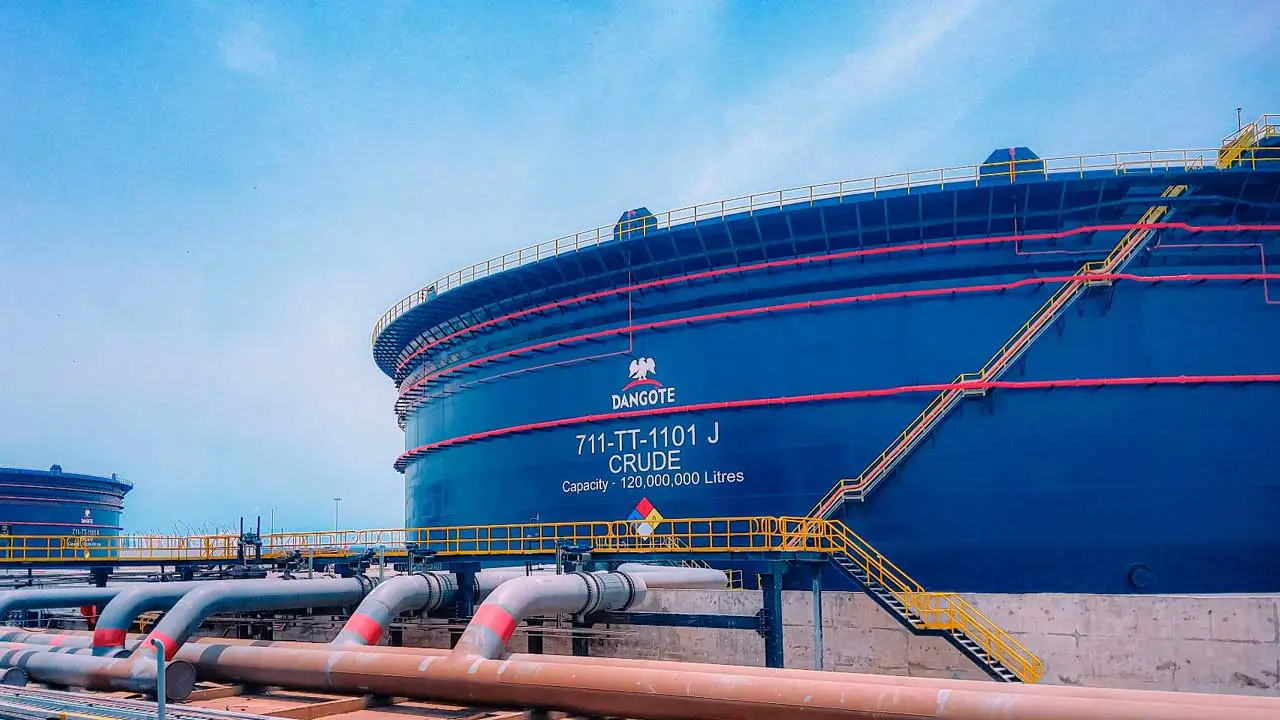
Fresh tensions have erupted in Nigeria’s downstream petroleum sector following a December 2025 market note by S&P Global Commodity Insights, which highlighted temporary maintenance on the Residue Fluid Catalytic Cracking (RFCC) unit at the Dangote Petroleum Refinery.
The report indicated that maintenance works on the refinery’s main gasoline-producing unit kept it offline until late January, temporarily affecting production volumes and product availability.
Though routine in large-scale refining operations, the observation triggered anxiety within domestic supply circles and reignited a broader debate: should Nigeria’s fuel security be anchored predominantly on a single mega-refinery?
Market sensitivity, structural concerns
Industry observers argue that the sensitivity surrounding the report underscores a deeper structural issue, market concentration risk in a post-import dependency era. While Nigeria has long sought to end reliance on imported Premium Motor Spirit (PMS), stakeholders say any operational disruption at a dominant refining asset could expose supply vulnerabilities.
It is this delicate balance between scale efficiency and supply diversification that now sits at the center of renewed hostilities between the Dangote Refinery and petroleum marketers.
Dangote pushes back
Responding to publications referencing the S&P commentary, the Dangote Petroleum Refinery issued a strongly worded clarification, describing the reports as misrepresentations of its operations and of Nigeria’s refining landscape.
According to the company, concerns raised around product imports were misconstrued.
The refinery stressed that it does not import finished PMS into Nigeria, but rather imports feedstocks and blending components, standard inputs in global refining systems.
“These materials, including high-sulphur reformates, low-RON condensates, and high-sulphur cracked gasoline, require further processing before meeting regulated specifications,” the company said.
Dangote explained that merchant refineries worldwide, particularly in Europe and Asia, routinely optimise crude slates and blending strategies to improve operational flexibility and margin efficiency.
Mischaracterising intermediate streams as finished fuel, it warned, distorts technical reality and undermines confidence in Nigeria’s refining progress.
The refinery further stated that the only gasoline supplied into the domestic market is Euro 5-compliant PMS, with each batch undergoing stringent quality assurance procedures.
In a notable escalation, management disclosed that individuals allegedly promoting what it termed a “misleading narrative” had been identified and would be exposed at an appropriate time.
DAPPMAN fires back
However, the Depot and Petroleum Products Marketers Association of Nigeria (DAPPMAN) countered that the S&P commentary highlights a legitimate policy concern.
In a statement titled “Strengthening Nigeria’s Energy Security Through Market Transparency,” the association argued that the episode reinforces the need for diversified supply channels.
“The S&P Global Energy Report has clearly shown that Nigeria’s energy security cannot rest on a single supply source irrespective of scale,” DAPPMAN stated.
The marketers acknowledged that maintenance activities are expected in complex refining systems, but maintained that temporary output adjustments demonstrate why complementary import flows remain essential.
They cited vessel-tracking data showing continued arrivals of refined products and blending components at various terminals nationwide, noting that such inflows are consistent with global refining ramp-up phases.
DAPPMAN insisted that domestic production and international inflows should be viewed as complementary rather than contradictory, especially given Nigeria’s daily PMS consumption estimated at over 66 million litres.
Other News
The association also referenced discrepancies between publicly stated production figures and data published by the Nigerian Midstream and Downstream Petroleum Regulatory Authority (NMDPRA), calling for regular, transparent reporting aligned with international best practices.
“Accurate and reconciled data is critical for marketers to plan logistics, manage inventory, and maintain uninterrupted supply,” the statement noted.
What the S&P commentary means
Analysts say the December note by S&P Global Commodity Insights did not question the refinery’s viability, but merely reported operational adjustments common in complex refining systems.
RFCC units are central to gasoline yield optimisation. When offline, even temporarily, gasoline output naturally moderates.
However, in a market transitioning from heavy import dependence to domestic production dominance, such technical notes can carry outsized policy and commercial implications.
The reaction reflects Nigeria’s broader energy transition phase, moving from import reliance toward refining self-sufficiency while attempting to maintain competitive market structures.
Market dominance debate reignited
At the core of the renewed clash is a fundamental policy question:
Should Nigeria’s downstream market evolve into a refinery-led distribution structure, or maintain a marketer-driven import-distribution hybrid model?
For Dangote, scale provides efficiency, quality improvement, and foreign exchange savings.
For marketers, diversification ensures resilience, competition, and price stability.
Energy economists note that both positions reflect legitimate commercial interests.
Large integrated refineries benefit from volume certainty and domestic market share. Marketers, meanwhile, depend on open access and multiple sourcing options to optimise pricing and logistics.
Energy security vs market structure
Nigeria’s refining revival was intended to reduce exposure to volatile global supply chains. Yet, the S&P-triggered episode reveals that domestic concentration risk remains a policy consideration.
Globally, mature energy markets typically balance: Large domestic refining hubs, independent import capacity, strategic storage reserves and
transparent production reporting.
Whether Nigeria achieves that equilibrium will determine if the current friction evolves into structural reform, or prolonged rivalry.
For now, the dust has yet to settle.
What is clear, however, is that the conversation has shifted from whether Nigeria can refine its own fuel to how the refined market should be structured in a post-import era.
And in that debate, even routine maintenance at a major refinery can ignite a national policy conversation.