Follow Us on Google
By Maduka Nweke
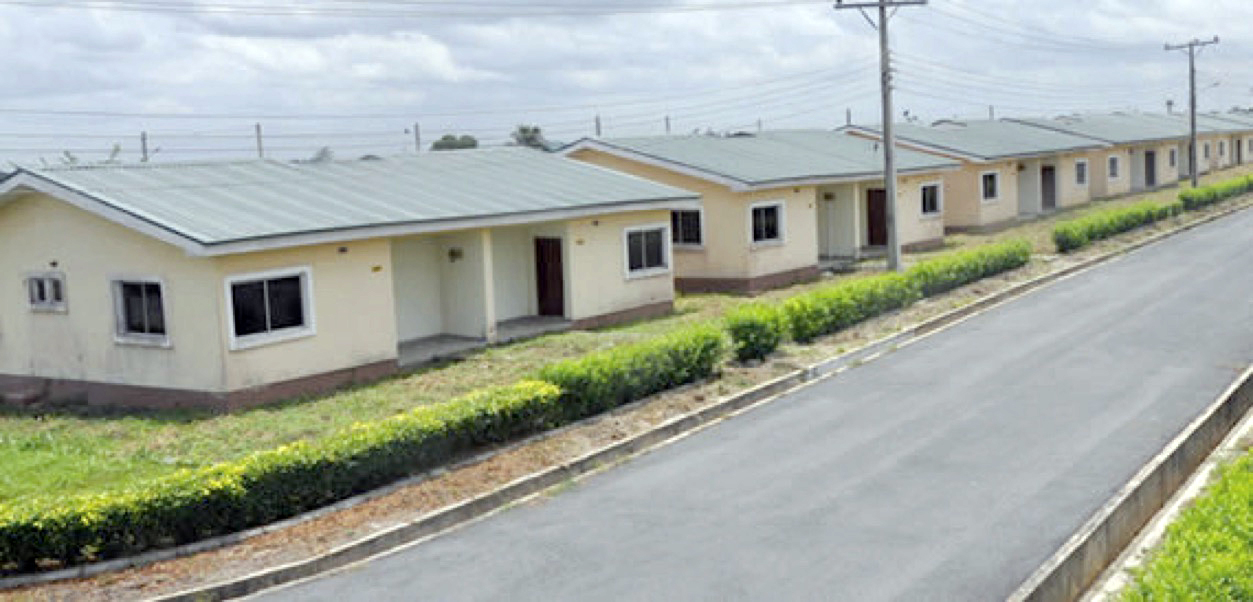
For millions of Nigerians struggling to survive the crushing effects of inflation, stagnant wages and a weak economy, finding a roof over their heads has become one of the biggest financial battles of modern life.
They are trapped between a mean tag team of aggressive landlords and shylock property agents whose escalating rents and multiple charges are swallowing incomes and pushing households deeper into poverty. From Lagos to Enugu and Abuja, the quest for decent shelter has become a financial nightmare, forcing many families to sacrifice savings, education, healthcare and even basic comfort just to keep a roof over their heads.
For low-income earners, artisans, civil servants, traders and young professionals, the burden of accommodation costs has become so overwhelming that many now spend a substantial portion of their earnings simply to secure shelter.
What makes the situation even more troubling is that the actual rent is often only one part of the financial burden. Property agents, legal fees, agreement charges, caution deposits and various unofficial charges have combined to create a housing ecosystem that many Nigerians describe as exploitative.
The result is a growing housing crisis that is forcing families to relocate farther from their workplaces, live in overcrowded conditions, abandon savings plans and, in some cases, slide deeper into poverty.
Rising anger over housing costs
The frustration among tenants is becoming increasingly visible.
Recently, residents in Enugu State took to the streets to protest the rising cost of accommodation and the multiple charges imposed during rental transactions. Carrying placards and chanting slogans, they appealed to government authorities to intervene and protect citizens from what they described as excessive rent increases and exploitative practices by landlords and property agents.
Their complaints mirror those of tenants across Nigeria.
From Lagos to Abuja, Port Harcourt, Enugu, Awka and other growing cities, rent prices have risen dramatically over the past few years. Apartments that rented for modest amounts only a few years ago now attract figures beyond the reach of average wage earners.
For many Nigerians, the search for affordable housing has become an endless struggle.
Some workers now sleep at friends’ homes after social gatherings because returning to distant suburbs is difficult and expensive. Others spend several hours commuting daily because they can no longer afford accommodation near their places of work.
The housing challenge has become a major contributor to declining living standards.
Nigeria’s worsening economic conditions have significantly affected the real estate sector.
Inflation has increased the cost of virtually everything associated with housing. Cement, roofing sheets, tiles, electrical fittings, plumbing materials and labour costs have all witnessed sharp increases. Developers pass these costs to buyers and tenants, while landlords adjust rents upward to preserve the value of their investments.
According to property experts, rent reviews have become more frequent and more aggressive than in previous years.
Chudi Ubosi, Principal Partner at Ubosi + Eleh Estate Surveyors and Valuers, noted that landlords commonly review rents upward, but disputes arise when tenants view the increases as excessive or unfair.
He explained that many landlords now impose rent increases ranging from 60 per cent to as much as 120 per cent, especially in commercial centres such as Lagos, Abuja and Port Harcourt where housing demand far exceeds available supply.
According to him, some landlords are encouraged by property agents to review rents upward whenever government policies trigger broader economic adjustments, including increases in fuel prices or salary reviews.
The consequence is a vicious cycle in which every economic shock eventually finds its way into the housing market.
As transportation costs rise, construction costs rise. As construction costs rise, developers increase property prices. As property prices increase, landlords raise rents. Ultimately, tenants bear the burden.
Housing deficit fuels the crisis
At the centre of the problem is Nigeria’s massive housing deficit.
Experts estimate that the country faces a shortage of millions of housing units. While urban populations continue to grow rapidly, housing construction has failed to keep pace with demand.
Every year thousands of people migrate to major cities in search of employment and better opportunities. However, the supply of affordable accommodation remains insufficient.
This imbalance creates a seller’s market.
With more prospective tenants competing for limited housing units, landlords possess considerable bargaining power. They can increase rents with little fear of prolonged vacancies because demand remains strong.
In neighbourhoods experiencing rapid development or infrastructure improvements, rental values often rise even faster.
As a result, accommodation that was previously affordable to middle-income households is gradually becoming inaccessible.
Agents under increasing scrutiny
While landlords often receive the bulk of public criticism, property agents have increasingly come under scrutiny for their role in escalating housing costs.
Many tenants complain that agent commissions and related charges frequently exceed government-approved rates.
In some cases, prospective tenants are required to pay agency fees, legal fees, inspection fees, caution deposits and service charges before receiving keys to an apartment.
Collectively, these charges can amount to several hundreds of thousands of naira.
For a tenant seeking accommodation worth N1 million annually, the total upfront payment may exceed N1.4 million or even N1.5 million once all ancillary charges are included.
Critics argue that these fees place an unreasonable burden on citizens already grappling with rising food prices, transportation costs and utility bills.
Prospective tenants often find themselves borrowing money, liquidating savings or taking loans merely to secure accommodation.
The financial pressure does not end after moving in. Many households continue to struggle with recurring costs associated with electricity, water supply, waste disposal and transportation.
Government policies and impact
Many stakeholders believe government actions also contribute indirectly to rising rents.
Whenever fuel prices increase, transportation costs rise. Construction materials become more expensive to move across the country. Developers face higher operational expenses, while landlords encounter rising maintenance costs.
Mrs Monica Efe Osaghae, Managing Director of Efe Enterprises Limited, explained that several factors influence landlords’ decisions to increase rents.
According to her, property location remains one of the strongest determinants of rental value. Houses located near schools, hospitals, transportation networks, commercial centres and recreational facilities generally attract higher rents.
She added that landlords who invest in renovations and upgrades often seek to recover those costs through rent increases.
Improved security systems, upgraded kitchens, modern bathrooms and enhanced facilities can justify higher rental charges.
Furthermore, increasing property taxes, land-use charges, utility costs and maintenance expenses continue to put pressure on property owners.
Many landlords argue that without periodic rent reviews, maintaining their investments would become unsustainable.
The human cost of high rent
Beyond economic statistics lies a deeper social problem.
High housing costs affect family stability, health, education and overall quality of life.
Parents struggling to pay rent often reduce spending on nutrition, healthcare and children’s education. Savings intended for future investments or emergencies are diverted toward accommodation expenses.
Other News
Young professionals postpone marriage because they cannot afford suitable housing. Families move frequently in search of cheaper accommodation, disrupting children’s schooling and social relationships.
Mental health experts also warn that prolonged financial stress contributes to anxiety, depression and reduced productivity.
For many Nigerians, rent has become the single largest annual expense.
The situation is particularly severe in Lagos and Abuja, where annual rents for one-bedroom and two-bedroom apartments in certain locations range from N1 million to N4 million or more.
For workers earning modest salaries, such amounts consume a disproportionate share of household income.
Nexus between housing pressure and crime
Some observers argue that rising accommodation costs have broader social consequences.
As households become financially strained, the temptation to engage in illegal activities may increase among vulnerable individuals desperate to meet housing obligations.
While poverty alone does not cause crime, economic hardship can contribute to conditions that increase social instability.
Communities with high housing insecurity often experience rising tensions, family conflicts and reduced social cohesion.
The inability to access decent accommodation also widens inequality, creating stark contrasts between affluent neighbourhoods and struggling communities.
Searching for survival strategies
Faced with mounting housing pressures, many Nigerians are adopting creative coping mechanisms.
One increasingly common strategy is co-living.
Friends, colleagues and relatives now share apartments to split rent and utility costs. What was once viewed as a temporary arrangement has become a long-term survival strategy for many urban residents.
Others have relocated to distant suburbs where rents are relatively lower.
Workers employed in Abuja increasingly reside in Suleja and surrounding communities. In Lagos, many have moved to Agbado, Ikorodu, Epe and other peripheral areas.
Although these locations offer cheaper housing, residents often endure long commuting hours and increased transportation costs.
Some prospective tenants now search for accommodation independently, relying on social media platforms, community networks and direct referrals to avoid excessive agent fees.
Understanding tenant rights
Many tenants remain unaware that they possess legal protections.
Although tenancy laws vary across states, they generally establish procedures governing rent increases, eviction notices and landlord-tenant relationships.
Legal experts emphasise that landlords cannot simply impose arbitrary increases without following established procedures.
In Lagos State, for instance, tenancy regulations outline specific requirements regarding notices and dispute resolution processes.
Tenants who believe they are being subjected to unlawful practices may seek legal advice or pursue remedies through appropriate channels.
However, enforcement remains a challenge.
Many tenants avoid legal action because of costs, delays and fear of losing their accommodation.
Consequently, landlords and agents often retain significant leverage during disputes.
Soludo’s warning sparks debate
The housing debate recently gained renewed attention following comments by Anambra State Governor Chukwuma Charles Soludo.
The governor warned landlords and property agents against arbitrary rent increases and excessive charges imposed on tenants.
He stressed that laws exist to regulate rental transactions and indicated that violators could face consequences.
The governor’s remarks resonated with many tenants who have long complained about exploitation within the housing market.
However, the comments also triggered debate among property professionals and stakeholders.
Some questioned whether stronger government intervention could effectively address the problem without tackling underlying economic realities.
Tenant advocate, Choko Ani, argued that the issue extends beyond individual landlords and agents.
According to him, broader questions must be addressed regarding whether governments should regulate housing markets more aggressively and whether tenancy laws can provide sufficient protection for renters. Property manager Chigozie Michael Nwabuko offered a different perspective.
He argued that rising land-use charges, taxes and regulatory costs imposed by governments contribute significantly to higher rents.
According to him, many landlords are responding to financial pressures created by government policies.
He maintained that meaningful housing reform must address both tenant protection and the broader economic conditions affecting property ownership.
Search for lasting solutions
Experts agree that there is no single solution to Nigeria’s housing crisis.
Addressing the problem will require coordinated action involving government, developers, financial institutions, landlords and tenants.
Increasing housing supply remains critical.
Governments at federal and state levels must encourage affordable housing development through incentives, improved infrastructure and easier access to land.
Mortgage financing must also become more accessible to enable more Nigerians to transition from renting to homeownership.
Stronger regulation of agency practices could help eliminate exploitative charges and improve transparency within the rental market.
Consumer education is equally important. Tenants need greater awareness of their rights and obligations to reduce vulnerability to abuse.
Ultimately, the housing crisis reflects deeper structural challenges within Nigeria’s economy.
As inflation persists and incomes struggle to keep pace with living costs, accommodation will remain a major source of financial hardship for millions of citizens.
For many families, the dream of escaping poverty becomes increasingly difficult when a substantial portion of their earnings is devoted simply to keeping a roof over their heads.
Until housing becomes more affordable and accessible, countless Nigerians will continue to navigate a rental market that many believe is pushing them further into economic distress rather than providing the security and stability that a home is supposed to offer.