Follow Us on Google
Achilleus-Chud Uchegbu
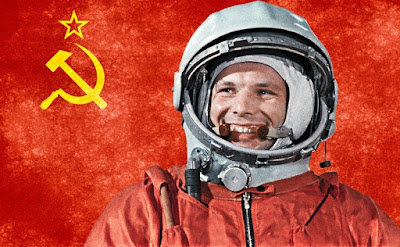
Not many remember Yuri Alekseyevich Gagarin. But Russia does. The space world does, and all who are involved in studies and operations about space travel and technology remember him today as the first man to leave planet Earth and orbit space. He did so on April 12, 1961. This was 65 years ago, at a time when the world was still thinking about possibilities outside Earth, Yuri dreamt no longer of the Earth, but of possibilities that exist beyond it. He not only dreamt, but he also acted on his vision and at the age of 27, powered his Vostok 1 spacecraft into orbit to open the gateway to space exploration. In Yuri, Russia gave the world a new feeling about the infinite possibilities of the human mind as the young Yuri, the son of a carpenter and a dairy farmer from the village of Klushino, became the first human being in history to travel across the sky at nearly 28,000 kilometres per hour, and gaze down at the blue marble of Earth from 327 kilometres above it. He achieved this feat in just 108 minutes.
Born on March 9, 1934, in Klushino, a village near Gzhatsk in the Smolensk region of what was then the Soviet Union, Yuri’s childhood was not one of privilege. His father, Aleksei, was a carpenter and brick worker, while his mother, Anna, worked on a farm. The family lived in a log house and grew much of their own food. However, life changed for the family when they lost their home to Nazi soldiers. Determined to live, the family moved into a makeshift dugout in the garden and lived there for about two years. Little Yuri also watched as two of his siblings were taken for forced labour in Germany. But he was determined to live and to make an impact.
Growing up with hardship probably shaped him. This is primarily because the Soviet space programme was, at its foundations, built on people who knew what it meant to endure. These included children who had been toughened by famine, war and occupation and still found something worth smiling about. Yuri was to become the face of that generation. He was resilient, technically curious, quietly optimistic, and deeply loyal to the idea that human effort could overcome circumstance.
He began his education in engineering and metalworking, training as a foundry technician before his passion for flying overcame him. He joined an aeroclub in Saratov to learn how to fly light aircraft. He was successful. This newly acquired skill opened the way for him to join the Orenburg Higher Air Force Pilot School, where he graduated with distinction in 1957. Interestingly, 1957 was the same year the Soviet Union launched Sputnik, the world’s first artificial satellite, into orbit. If that coincidence felt like fate, Yuri embraced it and grew with it.
The future opened for Yuri in 1960 when the Soviet space agency started recruiting candidates for its cosmonaut programme, code-named Vostok. Out of the more than 3,000 Air Force pilots who applied and were considered, only 20 scaled the hurdle. Yuri Gagarin was one of them. Fate had prepared him for his role in humanity.
It was said that what distinguished him from his peers was not merely physical fitness or his technical brilliance alone but a combination of psychological steadiness, natural charisma, and what those who trained and evaluated him consistently described as an unusual capacity for calm in extreme situations. He was, by multiple accounts, incapable of panic. He was also small at about five feet two inches, which mattered enormously in the cramped confines of the Vostok capsule.
“He is simple, likeable, and deep,” Sergei Korolev, the chief designer of the Soviet space programme, said of him. The comment was seen as a perfect summary of a young man who had no grandiosity about him, no sharp ideological edges, and when placed in front of the world, or in front of the cameras, or in front of the open hatch of a rocket, something essential and radiant came off him – his smiles.
He was also brave. The Vostok programme had an uncertain safety record. Soviet engineers privately estimated the odds of mission success at somewhere between 50 and 75 per cent. The ejection seat system, the re-entry procedure, and the parachute landing system each carried genuine risk of catastrophic failure. Yuri was aware of all those. Yet, he ventured to confront those risks. And for this, he wrote a farewell letter to his wife, Valentina, before the mission, with instructions that it was to be opened only if he did not return. He was to embark on the most challenging 108 minutes of his life. They were 108 minutes that etched his name in the annals of world history. Within those 108 minutes, Yuri changed the story of space exploration.
So, at 9:07 a.m. Moscow time on April 12, 1961, Vostok 1 launched from the Baikonur Cosmodrome. As the rocket ignited, Gagarin said: “Poyekhali”, meaning “Let’s go.” Just that word and no other speech. At that moment, it was just a 27-year-old ready to move. And he moved. Poyekhali became the declaration that changed global understanding of space travel. Yuri Gagarin was behind it.
He completed one full orbit of the Earth in 108 minutes, reaching a maximum altitude of 327 kilometres. During the flight, he reported on what he saw with the systematic thoroughness of a trained test pilot. These include cloud formations, the curvature of the Earth, and the colours of the atmosphere. But he also said, with a simplicity that cut through every political and ideological overlay the mission carried: “The Earth is blue. How wonderful. It is amazing.” In that single sentence, delivered at the edge of space, he collapsed the distance between the cosmos and ordinary human feeling. He did not describe a geopolitical asset. He described something beautiful. And in doing so, he democratised space.
However, Yuri’s exploit happened within a political context. And that was huge. This was at a time when the Cold War was at full pitch. The Soviet Union had beaten the United States into space with Sputnik in 1957, and again, with Yuri’s flight, it had beaten the US. More concerning was that it did it again, this time with a human being. The triumph was seized upon by Moscow as proof of scientific superiority. Soviet leader Nikita Khrushchev embraced Yuri publicly and further showcased him across the Soviet Union and then across the world, deploying him as the living embodiment of Soviet ambition. Yuri became a national symbol of Russian scientific nationalism. The Americans responded by accelerating their own space programme. President John F. Kennedy announced the goal of landing a man on the Moon before the decade was out. The fact remains that without Yuri’s flight, the Moon landings of 1969 by the US may not have happened as they did. Russia’s orbit of space through Yuri Gagarin became the catalyst. It was an audacious Soviet action that forced the pace of the entire space age and changed the understanding of space exploration. Russia started it!
The meaning of Yuri’s space mission was profound. As of 1961, no one knew exactly what would happen to a human body in the vacuum of space. Questions were asked about how the mind would function under the psychological strain of weightlessness and isolation. Would the cardiovascular system cope? Would radiation levels in low Earth orbit prove immediately lethal? The scientists had theories. They also had animal test data because the Soviet Union had sent dogs into orbit, most famously Laika in 1957, and later Belka and Strelka, who returned alive. But a dog cannot report back on what it is experiencing. A dog cannot communicate whether its vision is distorted, whether its sense of orientation has collapsed, whether it feels terror or peace. Yuri could. And he did. His meticulous in-flight reporting provided the first human physiological and psychological data set from orbital spaceflight. He confirmed that a human being could not only survive in space but also function, eat, observe, think clearly, and operate controls. This was not a given. It was a discovery.
The mission was Russia’s most audacious exploit of science precisely because it staked an irreplaceable human life on a set of calculations that could not be fully verified in advance. It was a nation betting its best young test pilot on the correctness of its engineering, its physics, its medicine, and its intuition about what a human being was capable of enduring. That the bet paid off does not diminish the enormity of the gamble. It amplifies it.
What Yuri and Russia brought to space exploration was something that no rocket design or trajectory calculation could supply. This is the human face. Yuri represented a set of values such as curiosity, courage, collective duty, and an almost childlike sense of wonder that elevated the enterprise of space travel above geopolitics and national prestige into something more universal. Yuri became, throughout his post-flight life, an advocate for space exploration as a shared human endeavour. He trained other cosmonauts, advocated safety improvements in spacecraft design, and worked to ensure that what he had done would not be the end of something but the beginning. Sadly, Yuri passed on March 27, 1968, at the age of 34, when the MiG-15 training jet he was piloting crashed near Kirzhach. The cause was never definitively established. The man who had survived the frontier of space was taken by the more ordinary dangers of aviation.
But his legacy lives. More than six decades after Vostok 1, Yuri remains the figure at the origin point of everything humanity has done in space, including the International Space Station, the Mars rovers, the Hubble photographs, and the James Webb images of galaxies thirteen billion light-years distant. All of these are connected to Yuri’s declaration, “Let’s go.” Yuri did not just open up the possibilities of space technology. He opened up the possibility of the understanding that when you look back at Earth from above, what you see is not borders or ideologies or the thousand divisions that consume humanity, but a single, irreplaceable, blue thing hanging in the dark.