Follow Us on Google
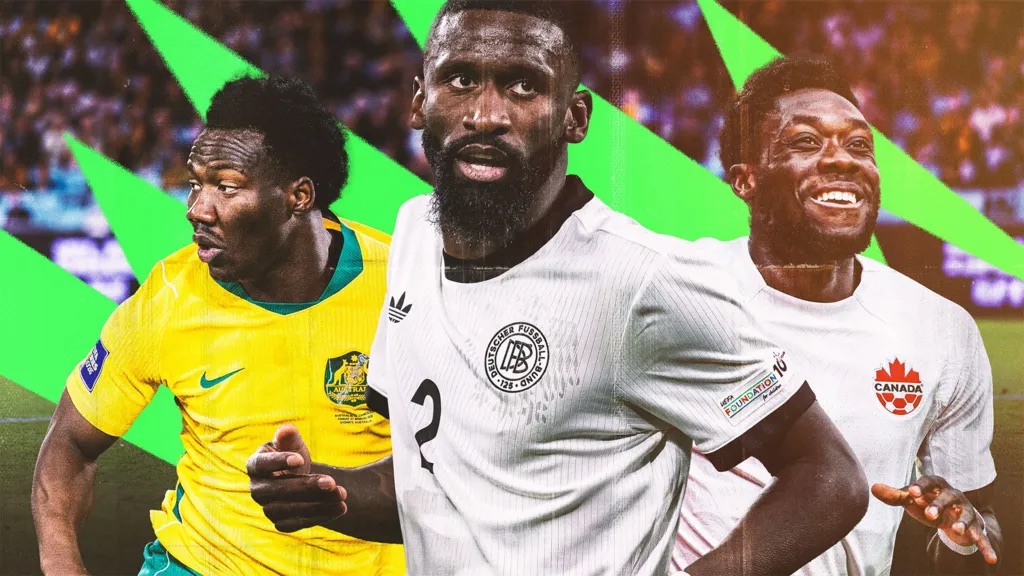
When Antonio Rudiger entered the fray as a substitute during Germany’s World Cup opener – a 7-1 victory over Curacao at the Houston Stadium – he knew his large extended family would be watching on proudly.
But things could have been very different if the Real Madrid defender’s parents had not managed to flee Sierra Leone’s decade-long civil war for a new life in Europe.
“There was only the decision to get out of there,” Rudiger told BBC Sport Africa.
“I spoke many times with my brother about it, and he told me the stories of what he saw there and what a march they made from Kono (the family’s home district in the far east of Sierra Leone) to the capital city to find a bit of safety.”
The distance between Kono and the capital Freetown is approximately 210 miles (340km) and the journey proved perilous, with Rudiger’s uncle taking extreme action to prevent his nieces and nephews being swept up by rebels and turned into one of the thousands of child soldiers forced into battle during the conflict.
“[He] hid them in a bag of rice and then went back to get them and then to continue the journey. And sometimes they had to lay low, pretending they [were] dead to not get shot or to not get abducted.”
Rudiger, the youngest of six siblings, was born in Berlin after his family were accepted by Germany as refugees, while other relatives began new lives in other places such as the UK and the US.
The 33-year-old remembers growing up in one of Germany’s refugee centres.
“We had our room, then a family next to us had their room, so we were all together.
“It influenced me a lot because nothing is given in life. You have to work for things, you have to sacrifice a lot to get where you sometimes get your goal.”
In a tournament in which diaspora players and fans have already made their mark, the two-time Champions League winner says now is “the right time to raise a voice” in support of refugees – and he is not alone.
Alphonso Davies, captain of co-hosts Canada, spent his early years in a Ghanaian refugee camp after his parents fled Liberia, which like Sierra Leone was devastated by civil war during the 1990s and early 2000s.
“Canada means a lot to me,” the Bayern Munich full-back told the United Nations Refugee Agency (UNHCR), which has put together a symbolic “game-changing team” of refugee players to show “what is possible when young people displaced by war and persecution find safety, opportunity and welcome”.
Davies listed “going to school for the first time, being able to play the sport that I love and being able to make friends” among his memories of his adoptive country. “They welcomed us in with open arms.”
“They gave me the opportunity to be who I am and to be what I want to be in life.”
Changing global narrative around refugees?
Among the other players putting their name to the UNHCR campaign are Rudiger’s Real team-mate Eduardo Camavinga, whose parents left Angola for France, Nigeria winger Victor Moses, whose parents resettled in the UK, former Bosnia goalkeeper Asmir Begovic – who like Rudiger was welcomed by Germany after escaping war in the Balkans when he was four years old – and striker Ali Al-Hamadi, whose family fled Iraq after his father was jailed by Saddam Hussein’s regime.
Australia is also represented by a trio of forwards in the national team: Watford’s Nestory Irankunda, Norwich’s Mohamed Toure and Awer Mabil, who plays for Castellon in Spain’s second tier.
Irankunda, 20, made headlines when his strike in the 2-0 win over Turkey made him the Socceroos’ youngest World Cup goalscorer.
All three were either born or grew up in African refugee camps but are now getting the chance to impress on football’s biggest stage.
Australia’s professional footballers’ association is so proud of the squad’s multicultural makeup that it made a video with every player listing their place of birth or family heritage to showcase the benefits of immigration.
“Children and youth are among the most vulnerable during displacement from war, violence and persecution. Some are separated from their families, affected by trauma, and some suffer abuse,” said Barham Salih, high commissioner for refugees with the UN, which estimates that there are 48.8 million displaced children around the world.
But while players with backgrounds as refugees will be cheered at the World Cup, some of those involved in the UN campaign have concerns about changing global perceptions.
“The narrative goes a bit more blaming the refugees,” said Rudiger, who believes empathy for the plight of those escaping conflict has diminished.
“Obviously, you have always the good and the bad. This is life, we all are not perfect. But the thing is, if one person does bad, are all bad?
“You cannot smear it on everyone, because that’s not fair. Because you have people who come here, they really want to change their life, they’re doing good, they’re trying to learn. They learn the language, they go to school, they achieve something in life.”