Follow Us on Google
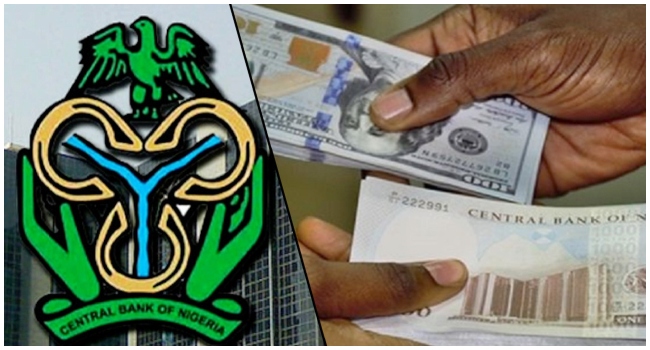
Nigeria’s foreign exchange reserves have climbed above $55 billion, while non-oil exports have reportedly overtaken crude oil exports for the first time, signalling a shift in the country’s foreign exchange earnings.
The development comes amid increased domestic refining, efforts to improve dollar liquidity and renewed moves by the Federal Government and the Central Bank of Nigeria (CBN) to strengthen economic coordination.
The changing export pattern is a key development for an economy that has depended heavily on crude oil for export earnings and government revenue.
For decades, crude oil dominated Nigeria’s export earnings.
However, rising exports of refined petroleum products, natural gas, urea and other non-crude commodities are reshaping the country’s trade profile.
Data from the National Bureau of Statistics (NBS) showed that non-crude exports stood at N14.11 trillion in the second quarter of 2026, surpassing crude oil exports valued at N12.91 trillion.
The figures point to the growing contribution of non-crude products to Nigeria’s export earnings, although petroleum-related products remain a major component of the increase.
The expansion of domestic refining capacity, particularly the Dangote Refinery, has strengthened Nigeria’s ability to process crude oil locally and potentially export refined products.
Other News
Previously, Nigeria exported crude oil while spending substantial foreign exchange on importing refined petroleum products. Increased domestic refining could help reduce import dependence and create additional export opportunities.
Despite the reported growth, questions remain about the sustainability of the trend and the extent to which agriculture, manufacturing and other non-oil sectors are contributing to the expansion.
Meanwhile, the rise in foreign reserves to more than $55 billion provides the CBN with additional foreign exchange buffers to meet international obligations and respond to pressures in the currency market.
The improvement comes as the government intensifies efforts to attract investment, strengthen external liquidity and improve confidence in the Nigerian economy.
The Federal Government and the CBN have also moved to improve coordination between fiscal and monetary policies through a memorandum of understanding signed on September 18.
The agreement is designed to promote closer cooperation on inflation, economic growth, government financing, liquidity management and foreign exchange conditions.
The authorities are also seeking to improve economic data sharing and strengthen policies aimed at addressing rising production, food, energy and logistics costs.
While stronger reserves and higher exports could improve Nigeria’s external position, sustaining the gains will require continued growth in production, export diversification and measures that support businesses operating in the non-oil economy.