Follow Us on Google

Adewale Sanyaolu
The recent outburst by the Executive Secretary of the Nigeria Content Development and Monitoring Board (NDCMB), Mr. Simbi Wabote, that about 16 million Nigerians are unemployed is mind bugling.
Quoting statistics from the National Bureau of Statistics (NBS), Wabote noted that the number of unemployed people in the country could equal the total population of about three African countries, including Sierra Leone, Togo and Liberia put together.
He revealed that Nigerian tertiary institutions churn out about 500,000 graduates yearly without relevant jobs for them. He pointed out that Local Content policy could be used to address unemployment in the country, but regretted that Nigeria was the only country that produces crude oil, and imports petroleum products.
But to reverse the trend, NCDMB some International Oil Companies and their indigenous counterparts operating in both the upstream and downstream sectors of the oil and gas industry, including Dangote refinery appear not to be happy with the development have taken practical steps to reverse the ugly trend.
It was for this reason and many more that the Dangote Petroleum Refinery has decided to take the bull by the horn in an attempt to reduce youth unemployment through its series of capacity building initiative.
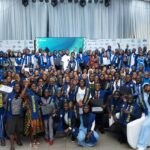
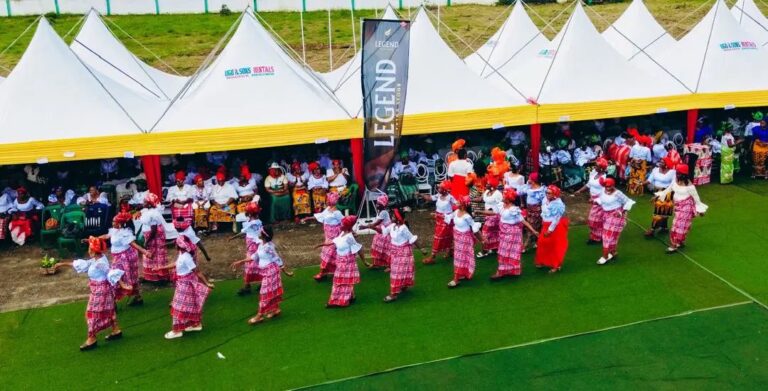
Last week,the ancient town of Ibeju/Lekki was agog for the graduation and close out/graduation ceremony for 200 youths of its host community trained under its skill acquisition programme. Prior to that, the company had equally trained and graduated 150 engineers in different field of engineering.
For NCDMB, the Board recently graduated 50 youths in the Smart Electrical Engineering Training organized by it with 60 per cent of the participants securing employment placements.For the IOCS, the situation is not any different as Shell has in place the Technical or Commercial Functions area of the Shell Graduate Programme, where graduates receive unparalleled formal training that will enhance their career.
The Dangote intervention
Group Executive Director (GED), Strategy, Capital Projects and Portfolio Development for Dangote, Mr. Edwin Devakumar, explained that the skill acquisition programme for the 200 Ibeju/Lekki youths, was a six months intensive programme designed to empower and create job opportunities for 200 youths.
He explained that the programme which was organised by Dangote Petroleum Refinery and facilitated by the National Directorate of Employment (NDE) remained Dangote’s contribution towards addressing the challenge of youth unemployment.
The skill acquisition programme, according to him cuts across a wide range of vocational skills which included; plumbing, furniture and carpentry, bricklaying, welding, iron bending, auto mechanic and electrical works. The GED told the graduands to put the skill acquired during their training to good use in a bid to better their lots and that of their families. “With the tools given to you today, you should be good ambassadors of this great community. So many graduates outside there are still searching for jobs, but yours is different because you have been trained.
We are ready to give you our maximum support to ensure you are employed in our operations, as our host communities remain our priority
These skill given to you today, can take you to various places and attract better opportunities if managed effectively,” he said.
Addressing the graduands, Lagos State Governor, Mr. Babajide Sanwo-Olu, said the State will facilitate the employment of the graduands into other companies operating within the Lekki Free Trade Zone.
Represented by the Managing Director of Lekki Worldwide Investment Limited, Dr. Tunde Sodade, said the Governor was passionate about creating job opportunities for the youths through skilled vocational training.He lauded Dangote group for the initiative, while urging the newly graduated youth to be good ambassadors to the states and their community. “We will facilitate the employment of all of you that graduated today by ensuring that companies operating within the FTZ corridor absorb you because we believe that what you learnt will be useful for the development of the zone. I urge you all to be good examples to others and always demonstrate better character and integrity in what you do,” Sanwo-Olu said. Some of the graduands who spoke to Daily Sun expressed satisfaction in the quality of training during the their six month stint, promising to be good ambassadors of the Dangote petroleum refinery.
In 2018, Dangote concluded a training programme for 150 young Nigerian engineers in refinery operations in preparation for the take-off of its Lagos refinery and petrochemical plant.
The company’s Director of Human Capital Management and Project Support, Mohan Kumar, said while presenting 22 engineers of the set who just returned from Mumbai, India.
He said the training programme was a continuum as more engineers would be trained to work effectively in the fertilizer plant being built by the company.
The engineers, according to him, were trained at Bharat Petroleum Corporation Limited in India in the management of the operations of the refinery, adding that the engineers had acquired fundamental practical knowledge in refinery operations with a strong bias for the Dangote refinery spec.
“The engineers are recruited and trained to witness the building of the refinery from scratch. They spent two months in classroom training and three months on the job training, that is on different operating refineries in India.
The 22 engineers were trained by experts who had over 45 years experience in refinery operations, and the training became imperative due to the commitment of the Dangote Group to promote local content by developing indigenous capacity.
The engineers are expected to also transfer the skills acquired to other Nigerians when the refinery takes off. The 22 engineers arrived from Bharat Petroleum Corporation, Mumbai in India, where the last set of 150 employees trained in various areas of petroleum and petrochemical refining.’’
Kumar hinted that another set of 600 engineers would be sent for training before the end of April as the refinery initiative remained a very critical project for the Dangote Group, targeting 780 Kilo Tonnes Per Annum of polypropylene, 500 KTPA of polyethylene, with the fertiliser project targeted producing three million tonnes of urea per annum.
The shell approach
The Shell Graduate Programme is to give remarkable candidates the business knowledge and training they will need to become a future leader.
From the start, they will embark on a comprehensive onboarding Programme that systematically exposes them to all areas of the organisation. ‘‘Depending on your chosen path, you’ll participate in a two- to five-year development programme. This will include two or three rotations that combine on-the-job learning with formal training opportunities. You’ll be given stimulating, hands-on roles, and have the opportunity to familiarise yourself with our company values. On top of a competitive starting salary and other outstanding benefits, you will have the ability to deepen your knowledge through structured learning and contributing to groundbreaking projects.
All the while, you’ll be supported by a direct supervisor to provide guidance and constructive feedback, as well as an excellent mentorship programme,’’ a note on the Shell website explained.
NCDMB trainees The Nigerian content Development and Monitoring Board (NCDMB) recently said sixty per cent of the participants in the Smart Electrical Engineering Training organized by the Board have secured employment placements.
According to Wabote, four of the 50 engineers secured international placements with BIC Electric and now work in Europe, while other successful participants got employments in Nigeria with AOS Orwell, Daystar Power Group, Eauxwell, Jubaili Bros and PNN amongst others.
The six-month classroom and on the job training was conducted at the Lagos Energy Academy (LEA) by AOS Orwell, an oil and gas servicing company on behalf of the NCDMB.
The second batch of 50 engineers commenced their training in September at the same location. The beneficiaries,like all other trainees of NCDMB were selected from the Nigerian Oil and Gas Industry Joint Qualification System (NOGICJQS) and underwent qualifying tests and interviews.
Wabote while commending AOS Orwell for the success recorded with the Smart Electrical Engineering Training described it as a validation of the Board’s new model for human capacity building, which emphasizes the delivery of trainings with a line of sight to employment opportunities.
He stated that the Board has now adopted a 60-20-20 model for human capital development, whereby 60 percent of the training spend and efforts gets devoted to programmes that guarantee jobs for the participants.
”Before we give a training contract to any company, the firm must undertake that 60 percent of the people they would train must secure employments.”
He added that 20 percent of the Board’s trainings would be designed to improve the skills of persons already employed while the remaining 20 percentwill cater for general and non-certificated trainings.
According to him, the Board’s new capacity building model would contribute to meeting the targets set in the Nigerian Content 10-year roadmap and achieving the drive of President Muhammadu Buhari’s administration to create employment for young persons from the activities of the oil and gas industry and ancillary sectors. Wabote regretted that several organizations within and outside the oil and gas industry expend huge resources and train thousands of youths, without defined strategies to get the beneficiaries engaged or employed afterwards.
He challenged other organizations to take a cue from the Board’s training model, adding that”we are willing to work with other oil and gas service providers with a well thought out training programmes in fulfillment of our mandate.”
He also congratulated the participants ,noting that 50 of them graduated without a single drop-out and reports of their performance showed that they passed their tests and now have international certification from Siemens.
He charged the young engineers to utilize any opportunity they get in life and to continue to improve, acquirenew knowledge and remain confident.
The Executive Secretary also challenged the incoming participants to surpass the enviable record set by the first batch andto look beyond the collection of stipends to focus more on the acquisition of practical skills under this programme.
He added that “the focus area of this training on smart electrical engineering is also an area very important to the industrialization of our country Nigeria. As the nation moves towards the realization of provision of reliable power supply, it is people like you that will be required to sustain the sector. You should therefore see this training as very relevant as the skills will continually be in high demand.”
The General Manager Lagos Energy Academy (LEA), Mr. Leke Adegbola, noted that the 6-month training was conducted in collaboration with Siemens and other international power companies. In addition to the engineering modules, the participants were also trained in values and social responsibility and coached to be in employability state. A total of 960 training hours was recorded in the programme, he said.
•