Follow Us on Google
•Despite N60tn shared in 38 months, citizens still battle hunger, poverty, lack of jobs •Why more money for states, LGs has little impact on Nigerians –Economists •Devt experts to govs: Stop building airports, flyovers, focus on small businesses, cheaper food, security, healthcare, mass transport
By Adanna Nnamani, Oluseye Ojo and Ngozi Nwoke
The Federal Government, 36 states and 774 local government councils shared approximately ₦60.75trillion from the Federation Account in 38 months between June 2023 and July 2026.
This came as the unprecedented rise in public revenues continues to contrast sharply with the economic pressures confronting millions of Nigerians. The latest disbursement of ₦3.007 trillion for July 2026 was the highest monthly Federation Account distribution recorded in the period under review and the first monthly distribution to exceed the ₦3trillion mark.

The July allocation, approved at the August 2026 meeting of the Federation Account Allocation Committee (FAAC) in Owerri, Imo State, came as gross statutory revenue rose to ₦4.359trillion, up ₦658.087billion, or 17.8 per cent, from ₦3.700trillion in June 2026.
Gross Value Added Tax (VAT) revenue, however, declined marginally by ₦5.778billion, or 0.7 per cent, from ₦799.746 billion in June to ₦793.968 billion in July. The Federal Government received ₦1.146trillion, the 36 states received ₦943.352billion, while the 774 local government councils received ₦673.649billion.
Oil-producing states also received ₦243.478billion as 13 per cent derivation revenue. The July revenue gains, according to available record, were driven by stronger collections from Petroleum Profit Tax, Hydrocarbon Tax, Companies Income Tax, Capital Gains Tax, Stamp Duty Tax, petroleum royalties, mineral royalties, excise duty and gas-flaring penalties.
The gains were partly offset by declines in VAT, import duty, Common External Tariff levies, rental of gas-flared fees and miscellaneous oil revenue.
38 months of rising allocations
In June 2023, the three tiers of government shared ₦932.60 billion from the Federation Account. The amount rose to ₦907.05 billion in July, ₦1.004 trillion in August and ₦1.100 trillion in September. It subsequently fell to ₦903.48 billion in October and ₦906.95 billion in November, before rising to ₦1.089 trillion in December 2023.
In January 2024, FAAC distributed ₦1.127 trillion, followed by ₦1.150 trillion in February, ₦1.153 trillion in March, ₦1.123 trillion in April, ₦1.298 trillion in May and ₦1.143 trillion in June. The allocation stood at ₦1.358 trillion in July 2024, ₦1.204 trillion in August, ₦1.299 trillion in September and ₦1.412 trillion in October. It climbed sharply to ₦1.727 trillion in November, before falling to ₦1.425 trillion in December 2024. In January 2025, the three tiers shared ₦1.703 trillion, followed by ₦1.678 trillion in February, ₦1.579 trillion in March, ₦1.681 trillion in April and ₦1.660 trillion in May. The allocation then rose to ₦1.818 trillion in June and crossed the ₦2 trillion threshold in July 2025, when ₦2.001 trillion was distributed.
In August 2025, FAAC distributed ₦2.225 trillion, up from ₦2.001 trillion in July. The August allocation comprised ₦810.047 billion for the Federal Government, ₦709.831 billion for states, ₦522.228 billion for local governments and ₦183.012 billion as 13 per cent derivation to oil-producing states.
The allocation subsequently stood at ₦2.103 trillion in September 2025, ₦2.095 trillion in October, ₦1.929 trillion in November and ₦1.969 trillion in December. In January 2026, FAAC distributed ₦2.000 trillion, followed by ₦1.894 trillion in February, ₦2.036 trillion in March and ₦2.257 trillion in April. The allocation rose to ₦2.300 trillion in May and further to ₦2.551 trillion in June. The upward trend culminated in July 2026, when FAAC distributed a record ₦3.007 trillion. The Federal Government received ₦1.146 trillion, states received ₦943.352 billion, local governments received ₦673.649 billion, while oil-producing states received ₦243.478 billion as 13 per cent derivation.
Overall, the monthly allocations rose from ₦932.60 billion in June 2023 to ₦3.007 trillion in July 2026, representing an increase of more than ₦2 trillion in the monthly amount shared among the three tiers of government over the period. The distributable revenue comprised ₦1.478 trillion statutory revenue, ₦672.903 billion VAT, ₦32.338 billion Electronic Money Transfer Levy (EMTL) and ₦41.284 billion exchange difference, totalling ₦2.225 trillion.
The ₦3.635 trillion represented the gross Federation revenue before deductions for collection costs, transfers, interventions and refunds, making it important to distinguish it from the ₦2.225 trillion actually distributed.
More money, more pressure?
The massive increase in Federation Account allocations has nevertheless raised questions about whether the additional resources available to governments are translating into tangible improvements in the lives of Nigerians.
The revenue surge has occurred against the backdrop of persistent inflationary pressures, high food and transportation costs, unemployment, inadequate infrastructure, insecurity and declining household purchasing power.
But investigation revealed that the FAAC figures alone cannot establish how individual governments spent the money or conclusively prove that citizens have not benefited from the increased allocations.
As gathered, the sheer scale of the resources raised a fundamental accountability question, including whether Nigerians are receiving value commensurate with the enormous revenues flowing to the three tiers of government.
Stakeholders stated that the question is particularly pertinent at the local government level, where councils are closest to the people and are expected to provide basic services, such as rural roads, primary healthcare, water, sanitation and other grassroots infrastructure.
Local governments received approximately ₦14.745 trillion during the 38-month period.
States, meanwhile, received more than ₦20 trillion, giving state governments substantial resources to fund education, healthcare, infrastructure, security, job creation and other development programmes. The Federal Government’s share also exceeded ₦21 trillion during the period.
An additional 13 per cent derivation fund, totalling about N4.473 trillion in 38 months, puts the total figure at about N60.75 trillion in 38 months.
FAAC seeks stronger revenue management
At the August 2026 FAAC meeting in Owerri, attention was also drawn to the need to convert improved revenue into sustainable development and stronger fiscal positions. The committee urged governments to use the period of stronger revenue to improve internally generated revenue, strengthen and commercialise public assets, expand economic activity, attract private capital, invest in human capital and improve transparency in public finance.
States were also encouraged to develop comprehensive asset registers, verify payrolls and publish audited accounts promptly.
FAAC stressed the need to diversify government revenue beyond crude oil and improve the collection and remittance of revenues by Ministries, Departments and Agencies.
The committee also highlighted changes introduced by the Nigeria Tax Act 2025, which took effect on January 1, 2026.
Under the new framework, the states’ share of VAT revenue increased from 50 per cent to 55 per cent, while the Federal Government’s share declined from 15 per cent to 10 per cent. Thirty per cent of the VAT revenue allocated to states and local governments is distributed according to consumption. For Nigerians facing rising living costs, the record ₦3.007 trillion July 2026 allocation may be impressive on paper. The more consequential question is whether the unprecedented flow of public revenue will eventually be reflected in better roads, schools, hospitals, security, jobs and basic services for ordinary citizens.
More revenue, higher costs: Experts speak
Indeed, economic and development experts have asserted that despite sharing more than N60 trillion by the three tiers of government through the Federation Account Allocation Committee (FAAC) since June 2023, millions of Nigerians are still grappling with poverty, rising food prices and worsening cost of living, have said.
The experts attributed the disconnect between increased government revenue and the living conditions of citizens to inflation, naira depreciation, poor public financial management, insecurity, high transportation and electricity costs, as well as inadequate investment in productive sectors of the economy.
An Economist and lecturer at the University of Lagos, Prof. Femi Saibu, said the huge increase in FAAC allocations had not translated into improved welfare because much of the increase was nominal rather than real.
Saibu explained that the removal of fuel subsidy and the devaluation of the naira had increased the naira value of oil and customs revenues, thereby boosting the amount shared among the three tiers of government.
However, he said the same policies also triggered higher fuel, transportation and other living costs, eroding the purchasing power of citizens.
According to him, the World Bank’s April 2026 assessment put Nigeria’s poverty rate at 63 per cent, representing about 140 million people. He said the situation was further worsened by the fact that a large proportion of additional revenue at the state and local government levels was spent on salaries and overheads rather than capital projects and targeted social protection.
“Since May 2023, the federation has shared over N60 trillion through FAAC to the three tiers, a huge jump driven mainly by fuel subsidy removal and naira devaluation.
“The paradox is easily explained: the increase is nominal, not real. Subsidy-removal windfalls arrived alongside the very inflation and currency depreciation that eroded household purchasing power, so citizens experienced the pain before they saw the gain,” Saibu said.
Saibu urged the Federal Government, states and local governments to move away from merely spending more money to ensuring that public expenditure was visible, traceable and directly beneficial to citizens.
He called for quarterly publication of capital expenditure at ward level, minimum capital-to-recurrent expenditure ratios and stronger accountability at the local government level.
Saibu also advocated the use of a significant portion of subsidy savings for targeted cash transfers, health insurance and school feeding programmes, with independent monitoring to prevent abuse. On the challenge facing micro, small and medium enterprises (MSMEs), he said government must expand credit guarantee and development finance schemes to enable businesses to access affordable loans.
He also called for movable-asset and invoice-based lending, harmonisation of multiple taxes and levies, and greater investment in off-grid and embedded electricity solutions.
Other News
Another economist, Dr. Aliyu Ilias, said the fact that government was sharing more money did not automatically translate to an improvement in the living standards of Nigerians, stressing that the funds must be strategically deployed to areas that directly affect the people.
According to him, while the country previously shared less than N1 trillion monthly, FAAC allocations had now risen to more than N2 trillion monthly, with some states openly acknowledging that they were receiving significantly higher allocations. He, however, questioned how the increased allocations were translating into improved welfare for ordinary Nigerians.
He said governments must clearly define what each allocation was meant to achieve, noting that the Federal Government should provide strategic direction to states on how increased revenues should be deployed.
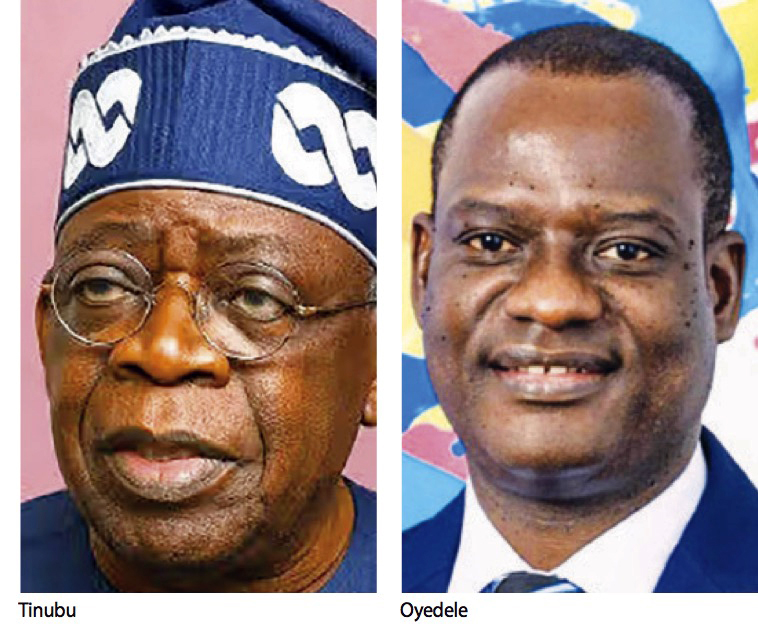
Ilias specifically called on President Bola Tinubu to develop an economic strategy that would guide states receiving increased allocations to dedicate specific percentages of their revenues to agriculture, social investment and other productive sectors.
He warned that without such direction, increased government revenues could be spent on projects that have little direct impact on citizens.
Ilias said some governments were more interested in projects that were highly visible, such as bridges and other infrastructure, without sufficiently considering whether such projects were improving the economic wellbeing of citizens.
He therefore urged the Federal Government and states to prioritise agriculture, human capital development and infrastructure capable of creating economic opportunities and putting more money in the pockets of Nigerians.
On MSMEs, he said small businesses had suffered significantly from the difficult operating environment, stressing that access to capital, lower energy costs and reduced logistics expenses were critical to their survival and growth.
He said government must create an enabling environment that would allow small businesses to access affordable financing while reducing the cost of energy and transportation.
Ilias also urged government to address domestic challenges that were worsening the cost of living, particularly insecurity and poor food production. He said while Nigeria might not be able to control external economic shocks, government could tackle problems within its control, especially by ensuring that farmers had access to their farms.
Ilias expressed concern over the latest inflation figures, describing the simultaneous decline in headline inflation and increase in food inflation as a paradox that should worry policymakers.
The economist said food inflation accounted for about 42 per cent of the inflation basket, meaning that a fall in headline inflation did not necessarily mean that Nigerians were paying less for goods and services.
According to him, prices are still rising, only at a slower rate, while the cost of food continues to put pressure on household incomes. He called for urgent measures to boost food production, including incentives for farmers, support for dry-season farming and the creation of funding schemes similar to the Anchor Borrowers’ Programme. Ilias said monetary policy alone could not resolve the food inflation crisis, stressing that fiscal measures were equally required to address supply-side challenges.
“The fact remains that churning out more money does not translate to a better life for Nigerians, except it is being churned out or given out strategically.”
He said government must take urgent steps to make food more affordable, warning that Nigerians now spend more than 70 per cent of their income on food. “How do Nigerians get to solve other remaining ones like rent, school fees and other ones?” he asked.
Meanwhile, the Executive Chairman of the Foundation for Economic Research and Training (FERT), Prof. Akpan Ekpo, identified inadequate electricity supply as one of the biggest obstacles to economic growth, job creation and lower prices.
Ekpo said Nigeria could not achieve meaningful economic development while businesses remained dependent on generators and expensive alternative sources of power. He argued that improved electricity supply would lower production costs, boost industrial output and help moderate inflation.
Ekpo also identified insecurity as another major threat to economic development, stressing that farmers and businesses could not operate effectively without peace and stability. The experts therefore called for sustained investment in power, security, agriculture, roads, healthcare and education, as well as a shift in government spending from recurrent expenditure to productive capital projects.
They also advocated stronger transparency in the management of FAAC allocations, targeted social protection programmes, affordable credit for MSMEs and reduction of multiple taxation as well as regulatory charges.
Other recommendations included; better storage and rural infrastructure, support for local production of agricultural inputs, and measures to reduce transportation and logistics costs.
They stressed that improving electricity supply, particularly for industries and businesses, would reduce production costs and help moderate inflation, while fiscal and monetary discipline would be needed to prevent another surge in the general price level.
The experts maintained that unless the huge revenues accruing to the three tiers of government were converted into productive investments and services that directly improve citizens’ lives, higher FAAC allocations would continue to coexist with worsening poverty and hardship.
Chief Executive Officer, the Centre for the Promotion of Private Enterprise (CPPE), Muda Yusuf urged the federal and state governments to shift focus from macroeconomic stabilisation to inclusive growth, saying stronger government revenues must now translate into better welfare for households, businesses and jobs.
He said that Nigeria’s economic reforms have significantly strengthened government revenues and improved key elements of macroeconomic stability. While acknowledging that part of the revenue increase reflects inflation and exchange-rate effects, Yusuf noted the improvement remains substantial even in real terms.
“The critical challenge now is transmission: converting stronger public finances and macroeconomic stability into improved household welfare, stronger businesses, and more jobs,” he said.
According to him, the challenge reflects the substantial adjustment costs of the reforms. Exchange-rate unification and petrol-subsidy removal, he explained, corrected major fiscal and market distortions but also generated significant inflationary pressures through higher energy, transportation, and imported-input costs.
“The resulting erosion of purchasing power explains why the improvement in macroeconomic indicators has yet to be fully felt by many households,” Yusuf said.
He said the policy priority should increasingly move from stabilisation to productivity and inclusive growth. At the federal level, he called for better alignment of fiscal, monetary, tax, tariff and trade policies to reduce production costs, support SMEs, improve access to finance and strengthen sectors with significant employment and domestic value-addition potential.
Moderating inflation, he added, will require greater attention to supply-side constraints, particularly food production, energy costs, logistics, and insecurity, rather than excessive reliance on monetary tightening.
Yusuf said the responsibility is even more compelling at the sub-national level, where states have benefited substantially from higher statutory allocations and therefore have greater fiscal capacity to improve citizens’ welfare.
“The key issue is the quality and composition of expenditure. State budgets should give greater priority to rural and urban roads, agriculture and food security, primary healthcare, education, mass transportation, water supply, affordable housing, security, and support for small businesses.” He described these interventions as having high social and economic multipliers because they reduce household costs, improve productivity, stimulate local economies, and expand employment opportunities.
The CPPE boss also called for stronger scrutiny of prestige expenditure, noting that airports, state-owned airlines, monumental secretariats, convention centres, and luxury official vehicles may have justification in specific circumstances, but their opportunity costs must be rigorously assessed against investments in basic infrastructure and essential services.
“Higher revenue does not automatically translate into better development outcomes; expenditure quality ultimately determines the welfare impact,” he said.
Yusuf identified insecurity as particularly consequential because it undermines agricultural production, displaces communities, disrupts livelihoods, increases food prices, and deepens poverty. Climate-related shocks, he said, compound these pressures. He urged federal and state governments to deploy part of their improved fiscal resources towards security, agricultural productivity, rural infrastructure, irrigation, and climate resilience.
“The reforms have created a stronger platform for macroeconomic stability and investment confidence. But stability is ultimately a means to an end. Its success should be measured by its capacity to stimulate investment, increase output, create jobs, strengthen purchasing power, and reduce poverty.” He concluded that Nigeria has made progress in correcting major macroeconomic distortions and that the next phase must focus on translating reform dividends into shared prosperity — “moving from stronger government revenues to stronger households, stronger businesses, and a more productive economy.”
Gbenga Wilfred, Chief Executive Officer of a food exporting company, called on the federal, state and local governments to change how public funds are spent, saying that transparency and direct support for production will determine whether citizens feel the impact of allocations.
Speaking on the N60 trillion shared by the three tiers of government between June 2023 and July 2026, Wilfred said too much of the money disappears into overheads and contracts before it reaches communities.
He urged local governments to publish monthly breakdowns of receipts and expenditures through channels accessible to ordinary people including WhatsApp and USSD, arguing that public tracking would force accountability.
On MSMEs, Wilfred said businesses need cheaper credit, guaranteed markets and lower operating costs more than grants. He proposed single-window loans of up to five million naira processed within 14 days using BVN, CAC and bank statements, with the Bank of Industry and state SME funds providing guarantees.
He also called for a law mandating that at least 40 per cent of government procurement for food, uniforms and furniture be sourced from businesses within each state. According to him, unreliable power and bad roads remain the biggest drain on small businesses, and governments should prioritise dedicated industrial power lines and road repairs to markets.
To address food prices and inflation, Wilfred said governments should release land for large-scale mechanised farming with irrigation, subsidise farm inputs instead of finished food, and build cold rooms in major markets to reduce post-harvest losses. He also decried multiple taxation at state borders, saying a single truck moving goods across the country pays numerous levies that eventually show up in the price of food.
Chuka Ezeonu, an Economist says the trillions of naira shared by the federal, state and local governments over the last three years has not translated into improved living standards because Nigeria’s fiscal transmission channels remain weak.
Ezeonu argued that allocations must be tied to measurable outcomes such as school attendance, primary healthcare visits and rural road construction, with states and local governments that fail to show results receiving reduced funding the following month. He also pushed for full financial autonomy for local governments, noting that joint accounts have starved them of resources despite their proximity to citizens. For immediate relief, he recommended scaling a digital cash transfer programme to reach the poorest 15 million households quarterly using BVN and NIN data, describing it as more sustainable than ad-hoc palliatives.
The economist said the sector continues to struggle with expensive credit, power and market access. He suggested expanding credit guarantee schemes so commercial banks can lend with government absorbing part of the default risk, and for states to co-fund SME clusters equipped with power, water and security.
He added that a two-year tax holiday and free CAC registration for businesses under N50m turnover would encourage formalization and expand the tax base over time.
To bring down food prices and slow inflation, Ezeonu said monetary policy must remain tight while government tackles structural problems. He listed insecurity on farms as the primary driver of food costs and called for urgent action to protect farmers.
He also stressed investment in silos, cold chain facilities and feeder roads to cut post-harvest losses estimated at 40 per cent. On trade, he advised prioritising foreign exchange for fertiliser, tractors and seeds rather than finished food imports, and harmonising all state and local levies into one digital payment to eliminate multiple taxation.