Follow Us on Google
By Adamu Muhammed
For too long, Southern Kaduna has worn the scars of neglect , bad roads, inadequate infrastructure, and feelings of exclusion from the development map of Kaduna State. The Jaba–Kwoi Township Road, a once-vibrant artery linking the agrarian communities of Southern Kaduna to the Abuja highway, had deteriorated into a nightmare for commuters. Farmers watched helplessly as produce rotted on farms because transportation costs were unsustainable. Parents worried about children trekking long distances to schools through unsafe paths. Access to healthcare remained a herculean task, with communities cut off during the rainy season.
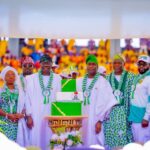
But on September 11, 2025, Governor Uba Sani broke that cycle. Standing at the groundbreaking ceremony of the Jaba–Kwoi Township Road reconstruction, he declared a new beginning for Southern Kaduna, a remarkable feat anchored on equity, justice, and shared prosperity.
“For over 15 years, this local government has not witnessed an intervention of this magnitude, and it gives me great joy that our administration is changing that narrative,” the governor said, his voice resonating with sincerity.
The reconstruction of the Jaba–Kwoi road is more than an infrastructure project. It is a metaphor for Sani’s leadership style and his commitment to bridging Kaduna’s divides, ethnic, religious, and economic. It is about restoring hope, fostering unity, and giving every part of Kaduna State a fair share of development.
Uba Sani has often emphasized that his administration will be guided by fairness, equity, and justice. The Southern Kaduna road project illustrates this philosophy in action.
“This intervention is about connecting farmers to markets, children to schools, and patients to hospitals. It is about reducing poverty, expanding incomes, and strengthening the fabric of our communities,” Sani explained at the ceremony.
These words underline the governor’s approach: development is not about statistics on paper but about real lives. For Southern Kaduna, it means no longer being left out of the infrastructural conversation.
The Jaba–Kwoi Township Road connects Southern Kaduna to the Abuja highway, one of the busiest commercial roads in Nigeria. Fixing this link opens up enormous economic opportunities. Farmers in Jaba, Kwoi, Kagoro, and surrounding towns can now move their yams, ginger, maize, and vegetables more efficiently to Abuja markets. Traders will spend less on transportation, increasing profit margins and reducing food inflation in the region.
For young people, the road means easier mobility and access to jobs outside their immediate communities. For women, it means safer and quicker access to healthcare facilities. For the state as a whole, it means stimulating agriculture, trade, and tourism in Southern Kaduna — an area rich in culture and natural beauty.
Large-scale projects often come with disputes over land ownership and rights-of-way. Sani anticipated this challenge and, in August 2025, secured N3.5 billion for compensation to property owners and service providers across the 23 local government areas.
Commissioner for Works, Ibrahim Ahmed, explained that the allocation was meant to ease tensions and ensure project execution without unnecessary delays. By prioritizing fairness in compensation, the administration once again underscored its belief that development must not impoverish those it seeks to uplift.
For decades, Southern Kaduna has been framed in national discourse mainly through the lens of conflict. Violence and banditry overshadowed the region’s immense potential. Governor Sani is rewriting that narrative.
Under his leadership, security has improved significantly. The governor’s inclusive governance style, emphasizing dialogue and community participation, has helped foster trust among groups historically suspicious of government. The United Kingdom recently commended Kaduna for its improved security, reclassifying the state in its travel advisory, a milestone that opens doors to investment and tourism.
The Jaba–Kwoi project complements these gains by strengthening physical and social infrastructure. Development, after all, is one of the strongest antidotes to insecurity.
Sani’s commitment to Southern Kaduna goes beyond the Jaba–Kwoi road. Several initiatives across key sectors are reshaping the region’s prospects. In the education sector, renovations of dilapidated schools, new classrooms, and teacher training programs are creating an enabling environment for learning. Enrollment rates in several local governments in Southern Kaduna have improved as children return to better-equipped schools.
Primary healthcare centers have equally received equipment upgrades, with improved maternal and child healthcare services reducing preventable deaths. The administration’s investments in emergency health responses have also benefitted remote Southern Kaduna communities.
With more than 10% of the 2025 state budget allocated to agriculture, the highest in recent years — farmers in Southern Kaduna are receiving inputs, training, and support for climate-smart practices. Value-chain development is boosting productivity in crops such as ginger, maize, and sorghum, staples of the region’s economy.
The governor’s deliberate efforts to ensure that appointments, programs, and interventions cut across ethnic and religious lines have boosted confidence in Southern Kaduna. Unlike in the past, communities now feel seen, heard, and valued.
Local leaders in Southern Kaduna have described the road project as transformational. Traditional rulers praised the governor’s sense of justice, noting that the intervention restores dignity to their communities. Civil society groups highlighted the alignment of the project with broader goals of poverty reduction and inclusion. Farmers’ cooperatives have already begun to strategize around improved access to Abuja markets, anticipating increased incomes.
Development experts argue that the intervention is strategic, not just for Southern Kaduna but for Kaduna State as a whole. “When you unlock the agricultural belt of Southern Kaduna, you not only improve food security for Kaduna but also for Nigeria,” said a policy analyst in Zaria.
Governor Uba Sani’s equitable approach reflects his broader philosophy of governance. He has consistently argued that peace and progress in Kaduna can only be sustained if every community, regardless of geography or faith, has a stake in development.
His administration’s emphasis on roads, schools, health facilities, and agriculture in Southern Kaduna is therefore not charity — it is justice. It is about closing historical gaps and laying a foundation for shared prosperity.
As he told the gathering in Jaba: “As we continue to expand road infrastructure across Kaduna, we remain committed to opening new economic corridors, creating jobs, and ensuring shared prosperity for all.”
The groundbreaking of the Jaba–Kwoi Township Road marks more than the start of a construction project; it symbolizes the dawn of a new era. An era where Southern Kaduna is no longer a forgotten footnote but a central part of Kaduna’s development story.
For residents, the road is a tangible sign that promises are being kept. For the governor, it is proof that equitable development is possible when leadership is guided by fairness and justice. For Nigeria, it is a reminder that inclusive governance remains the surest path to stability and progress.
In the words of a local farmer at the ceremony: “For the first time in many years, we feel like part of Kaduna again. This road is more than asphalt; it is dignity restored.”
• Muhammed writes from Abuja