Follow Us on Google
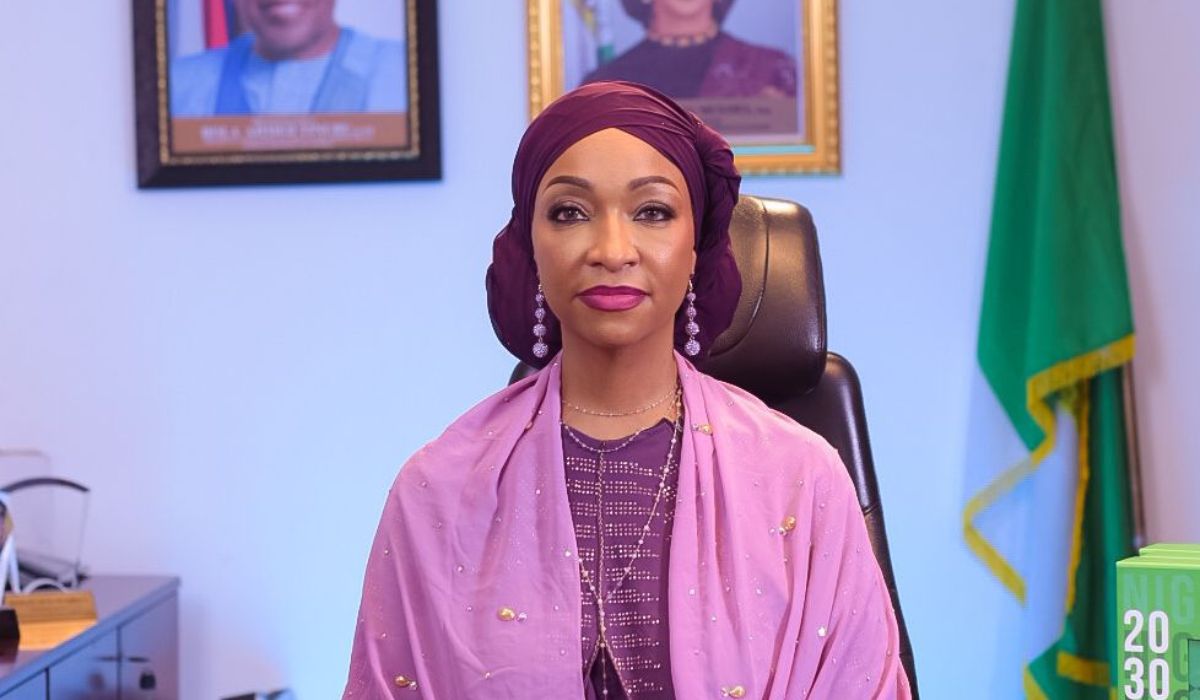
From Aidoghie Paulinus, Abuja
Minister of Arts, Culture and Creative Economy, Hannatu Musawa, on Friday, declared open, “Reclaimed Beauty: A Dialogue Between Continents,” the eighth solo exhibition by celebrated metal sculptor and environmental artist, Dotun Popoola at The Village by Tikera in Abuja.
The exhibition, produced by Tikera Africa in partnership with the Scrap Art Museum, features large-scale sculptures and installations made from discarded metal and repurposed materials.
It spotlights themes of sustainability, transformation and cross‑cultural exchange, while inviting visitors to reconsider notions of waste, value and beauty.
Musawa praised Popoola’s decade‑long practice of turning “what others see as waste” into “compelling works of beauty and cultural significance,” calling the artist a “global cultural ambassador” whose work advances environmental consciousness and places Nigerian creativity on the world stage.
“You have elevated departed materials that have been put to waste into meaning and into something that is culturally significant,” Musawa said at the ceremony.
She added that Popoola’s work has drawn international attention.
“I was in Spain 24 hours ago and people there were talking about your art,” the minister stated.
Musawa framed the exhibition within broader government initiatives to grow Nigeria’s cultural economy and boost the country’s soft power under President Bola Tinubu’s Renewed Hope agenda.
She highlighted a memorandum of understanding between the ministry and Tikera Africa to develop The Village as a creative city in Abuja and pledged that the ministry would work to deliver infrastructure at the site in the coming months.
After touring the exhibition arena with journalists, Musawa said she was overwhelmed and urged Nigerians to visit the show.
She also said the experience was exhilarating by seeing reclaimed materials reimagined as culture and history, which should inspire young people and broaden public appreciation for the creative economy.
“My hope is for as many Nigerians to come and experience the amazing expression of culture, history and creativity that Dotun has shown,” she stated.
Musawa positioned The Village as part of the government’s aim to make Nigeria the cultural hub of Africa.
She urged local and sub-national actors to learn from Popoola’s example and explore how reuse and creative placemaking can support tourism, local enterprise and environmental cleanliness.
On his part, the Founder of Tikera Africa and developer of The Village, Bayo Omoboriowo, said Popoola’s exhibition is “a natural fit” for the site and a demonstration of Tikera’s wider vision of sustainability-driven creative ecosystems.
During his walk‑through with journalists, Omoboriowo reflected on the site’s transformation from bushy and overlooked land into a 32‑hectare creative campus constructed largely from reclaimed airplanes, shipping containers, train components and other salvaged materials.
Other News
“Everything you see here is scrap metal,” Omoboriowo said.
He urged creatives to see constraints as ladders for innovation.
Omoboriowo, a former presidential aide on photography, called Dotun a model of how creativity can move from idea to product and product to industry.
“Dotun exemplifies the energy of turning craft into enterprise. This place is a perfect canvas for people like him, inviting the world to see what we are doing here,” he further said.
Omoboriowo challenged artists and cultural entrepreneurs to open their minds to possibilities and to use local materials and imagination to build sustainable creative businesses.
He described the exhibition as about possibility and what becomes possible when imagination refuses to accept limits.
In his remarks, Popoola spoke emotionally about his eight-year journey working with scrap, describing how early experiments with kickstarters, shock absorbers and car parts evolved into the monumental sculptures on display.
He also shared how travels and cross‑cultural encounters fed his practice, while also recounting a work that began with Native American iconography and was later adapted to celebrate Northern Nigerian identity when the piece returned home.
Asked what he would tell an aspiring artist, Popoola urged audacity, tenacity and hard work.
“Everyone that can add that audacity and tenacity and the ability to work hard, definitely the world would listen,” Popoola said.
Popoola thanked partners, the Federal Government, the National Gallery of Art, the National Council for Arts and Culture (NCAC), Tikera Africa, GT Agency, the Scrap Art Museum and the Scrap Art Foundation for their support in making the show possible in a short time.
He underscored a recurring plea from artists on the panel which was the need for stronger institutions, structured funding and clearer export mechanisms to enable artists to sustain careers and access global markets.
Prior to the tour, a panel brought together, curators, institutional advocates and international partners, including a European Union delegation representative who detailed past collaborations and grant programmes that have helped Nigerian artists participate in international exchanges and markets.
Speakers highlighted persistent policy and procedural barriers that limit art exports and global circulation of Nigerian works, calling out unclear permit structures, customs hurdles and underperforming institutional representation abroad.
The discussion called for foundations and galleries that can professionalize the sector, raise capital, and help artists exhibit and sell on a global scale.
Founder of Nike Art Gallery, Nike Okundaye, while thanking organisers, encouraged more investment in the creative sector.
“If we water it well… there is enough for everybody. There is no excuse for failure,” Okundaye said.