Follow Us on Google

By Vincent Kalu
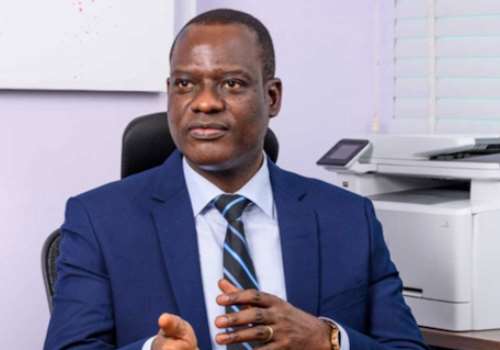
As COVID-19 has buffeted and grounded almost all sectors of the economy the world over, the Managing Director and Chief Executive Officer of Kings Court Realtors, Emeka Okoronkwo, has noted that the real estate sector has not felt the shock of the pandemic.
In an interview with Daily Sun, Okoronkwo, called on government to hasten the formalisation of properties, which he said is the springboard for the nation’s economic development.
Real estate sector in COVID-19 era
First of all, the impact of the pandemic on Nigeria reveals to us how very non-creative the real estate sector has been in addressing the real demands of modern society today. To put it in focus, the pandemic forced people to work from home. A lot of Nigerians’ homes are designed simply to come and sleep through the night and wake and go. It became very obvious that people found it difficult to even accommodate the spaces, which again is a space that professionals like real estate surveyors, who are the custodians of living dynamics of the society occupied in writing briefs and guiding architects on what society needs to be able to build.
If you look at the investment perspective, every other thing lost values, but people who own properties. This is because if you are a landlord, whether there is pandemic, whether there is holiday, so long as people are in that house your rent is running. People who have investments that never lost value are people who have properties that were in economic use, whether companies, individuals etc. Like the wise philosopher in my profession said, “you never lived if while you lived on earth, you never owned a part of those real estate on earth.”
The most reliable investment people make that is not only a hedge against inflation, but strong support in period of crisis like this pandemic, is still real estate. However, I must also point out that there are benefits from the fallout of this pandemic. As it has become obvious in the world, people are going through a journey of hybrid of work now – a situation you can do your work remotely and also school remotely, has thrown in new dynamics. This society, going forward today, will enjoy more family times than the other times. People who used to see their children only in the night may now have up to three days in a week to stay with them. The greatest challenge we are witnessing around the world is that the demand for suburban locations are becoming more in need today; people are now suburbanising to create spaces where environment can accommodate the dynamics of wife, children and people who are going to work remotely. This is the direction to go; this is where we, as real estate surveyors and valuers, must rise to the challenge and to start redesigning our locations and cities and partner with government to present solutions to the demands of human living as we advance.
Effect of rising cost of building materials on housing
To be able to understand the housing challenge, we need to understand it from bottom up, which is actually where we have huge problem in Nigeria. First, real estate is the most expensive investment, which about 97 per cent of the world’s population engages in lifetime. That is why in the Western world, you can find people in mortgage commitment of 20 to 35 years of their lives still paying mortgage. To be able to address the issue, we really need to ask ourselves some fundamental question: Is Nigeria a mixed economy or a capitalist society? I will consider it a journey of a simpleton to imagine that you run a capitalist society to a mixed economy like ours.
People are not being absorbed into the formal property system, where your assets can incrementally enable you access capital to be able to fire up other commitments in the society – to develop skills, businesses, to trade, etc, which is done all over the world. You can’t find government completely ignoring this very vital engine room of a capitalist society and shopping around blindly on how to solve a problem that the solution only lies in unearthing the potential that are latent all over in the dead assets that are around the country. Nigeria today, as recent studies show, is the only country that claims to be driving towards modernity, yet with less than 18 per cent of formal property setting in our system. Lagos is the only state in Nigeria that enjoys the highest number of formal properties. Formal properties are those you can actually use to transact as an individual and also use it to borrow money and the bank recognises you. Everybody in Nigeria, if you are an aborigine, you own an asset; those assets anywhere in the world should be able to give you credit. The banks are supposed to be advancing this cause, but I don’t know why they don’t identify the potential of it. As valuers, it is our role to be able to build a platform upon which the society can advance its economic potential and move forward. Except we’re able to track it, every time government intervention comes to solving societal problem with housing, you find out that it is for the rich, the poor will still end up as tenants. Look at the government estates, how many are owner-occupied? If you go there, it is about 15 per cent owner-occupied, the other others are on rental back to the same people that have access to the credit.
Other News
So, solving the main problem that will enable people rise and build up through the economic threshold of the city is the real hardwork that only practitioners in the real estate industry know how to organise. Government should look this direction because we have a lot to offer in the advancement of the society.
Dearth of mortgage institutions in Nigeria
The formal property system, which is the bedrock of mortgage, is hardwork. Unfortunately, the only people who can do it are valuers who understand how these things are done. We are the midwives that birth out very intricate process of developing society to be able to derive value from their real assets. It took America over 150 years to be able to formalise; it requires a lot of hardwork, which is why we are not doing it. The benefit of getting it done is legion. First, it brings everybody into formal recognition. Secondly, it enhances the capacity of the society to be able to grow economically and do business. Look around and see how much dead assets exist everywhere, which in other countries of the world would enable the owners of those assets to be able to incrementally add to their ability to contribute to the society.
The level of taxation and the level of output that every state has today are directly proportionate to the amount of property that is in the formal system that they can unearth. The banks should do a lot much better than staying in the silo and just having a very narrow set of a few big industrialists and a few big recognised names. There are many people who know a lot of what to do but they can’t raise credit because they have assets that are dead. Those assets cannot generate anything. This should be the driving point of our governors today. Governments in Nigeria should make estate surveyors and valuers their economic advisers in every state. The earlier we start a journey into formalising our property system, the earlier we are able to expand opportunities to our teeming population and unleash the potential that the society has to be able to grow.
Why formalising property in Nigeria is political
There are different reasons it may seem to be that way. Governance is about the ability to do the massive good for the massive number of people, not the narrow number of people. The day governments recognise what they stand to gain by unleashing this potential on people, the more they would look for more capacity to expand the ability for society to really make use of what is already theirs. We are talking about assets that are theirs already, but have not been formalised for you to do a meaningful business with it. Example, there is no family in Nigeria that doesn’t have dead assets; they cannot do anything with them because they are not formalised. When you are able to formalise, you empower them to come to the formal sector. One of our professionals calls it the noblest triumph – man’s ability to be able to transact business against his own assets in his own rights and within his own conditions that you agree to buy at this rate and I agree to sell at this rate or to borrow at this rate. That ability, unfortunately, is only government that can provide the springboard so that we can have a uniform means of judgment. A lot of people have assets but they are dying of hunger, they can’t send their children to school because the assets that they have cannot be sold because they are not formalised. The informal sector is too expensive; the poor pay so much more than the rich in Nigeria and that is why you have dynasties of poverty around.
My suggestion as valuer is that every state in Nigeria, including the federal government must make an estate surveyor and valuer an economic adviser, whose special mandate is to aggressively pursue the growth and expansion of the formal property system in their states and the banks should open their eyes and see that the opportunities they are missing are legion, as their capacities are still too little compared to the potentials of the city. Imagine if in the next two years you have five million more people with the ability to do formal business in Nigeria, look at the impact on the bottom line both on the banks and the small businesses, economic growth and the opportunity. There are so many people you can bring into the country to partner with you, but you have assets that are not legally recognised, so, they cannot get into meaningful engagement with you, they walk away.
Fate of dead assets littering Lagos landscape The intellectual space that estate surveyors and valuers are supposed to contribute to the administration of our spatial environment has been vacated; there is nobody at the space today. If you ask an average Nigerians of the work of an estate surveyor and valuer, he thinks it is to rent one or three-bedroom house and all that. Nobody is thinking through at that level.
In my journey during graduate school in Harvard, we were already looking at what to do with parking spaces as a project in New York City; looking forward to a time when there will be electric cars that the need for parking spaces in the city centres, in the homes will be reduced by almost 70 per cent. They were already thinking forward on what to do with those spaces. That is the space valuers occupy in the society, to offer this direction, offer this advice because every concrete you put together as a real estate is cost and capital, and anytime it is not yielding money somebody is losing money. So to have those assets in that place and they are not in use today just show you how abandoned the intellectual space for the contribution of real estate and valuers in Nigeria has become and how the owners of those spaces are not even soliciting advice on what to do.