Follow Us on Google
By Damiete Braide
When the Quramo Festival of Words (QFest) 2025 opened on Friday, October 3, the excitement was palpable. The annual celebration of literary creativity, storytelling, and artistic excellence began with a tribute to five emerging writers whose works had been longlisted for the prestigious Quramo Writers’ Prize (QWP). The atmosphere inside the venue was charged with anticipation as readers, writers, and culture enthusiasts gathered to witness another chapter in the evolution of African writing.
The festival’s first major highlight was the introduction of the five shortlisted authors and their manuscripts during a lively panel session moderated by culture manager, Mr. Segun Aribisala. The writers spoke passionately about their creative journeys, their entries, and their expectations for the competition. The longlisted manuscripts included Black Bird by Chioma Jane Okeagu, Kaku by Esther Eniola Oyeleye, Moon Child by Abisola Junaid, Son of the Harem by Harry Onyeogo, and What Binds, What Breaks by Hubaidat Oyinkansola Ishola.
Each of these writers represented a unique voice in contemporary African storytelling. From exploring identity and trauma to navigating themes of belonging, tradition, and resilience, their works reflected the vibrant diversity of perspectives shaping modern Nigerian and African literature
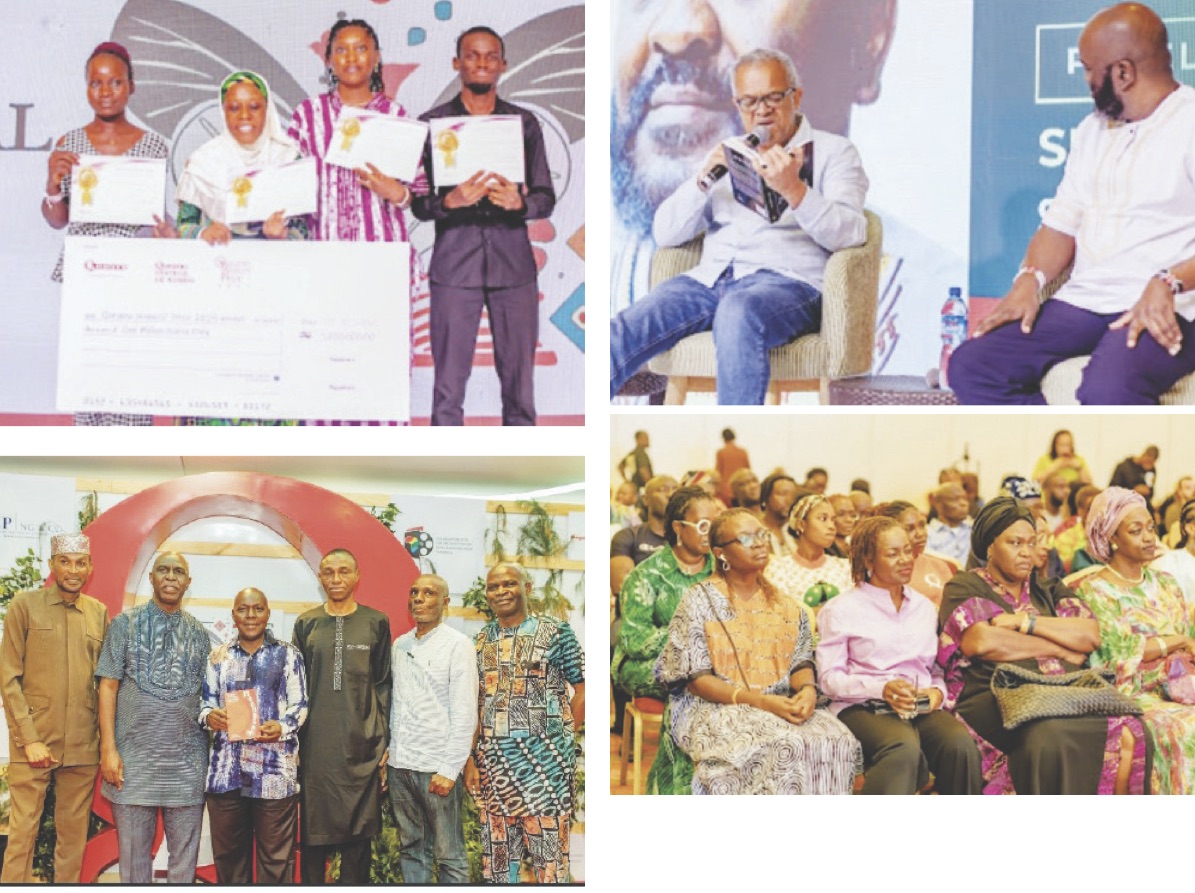
As the session ended, the hall was silent with anticipation. The moment everyone had been waiting for arrived, the announcement of the winners of the Quramo Writers’ Prize 2025. QFest Convener, Mrs. Gbemi Shasore, alongside her team, took the stage to announce the results. Third place went to Black Bird by Chioma Jane Okeagu, while Moon Child by Abisola Junaid secured the second position. Then came the big moment: What Binds, What Breaks by Hubaidat Oyinkansola Ishola was declared the winner of the Quramo Writers’ Prize, earning her the grand prize of ₦1 million and a publishing deal with Quramo Publishing.
The audience erupted in cheers as Ishola, visibly emotional, stepped forward to receive her award. On hand to present the prize were two members of the judging panel, Mrs. Aduke Gomez, writer, culture promoter, and head of jury, and Mr. Anote Ajeluorou, journalist and author. The third judge, Wase Aguele-Konu, was unavoidably absent. Ishola’s parents, beaming with pride, joined her on stage to share in her triumph.
The winning manuscript, What Binds, What Breaks, was praised for its emotional depth, linguistic precision, and ability to navigate complex human relationships with empathy and grace. The judges noted that Ishola’s voice stood out for its clarity, originality, and command of storytelling craft.
The Quramo Writers’ Prize has, over the years, established itself as one of Nigeria’s most consistent and credible literary awards dedicated to emerging voices. It is not merely about competition but about creating a sustainable platform for talented writers to find their footing in the publishing ecosystem.
The 2023 winning manuscript, Dear Zimi by Chizeterem Chijoke, had already demonstrated the global reach of Quramo’s impact. The book represented Quramo Publishing at the CANEX Book Factory Prize for Publishing in Africa in Algiers, Algeria, where it competed for the $20,000 prize. Although it narrowly lost to South Africa’s Karavan Press for its book In Silence My Heart Speaks by Thobeka Yose, the nomination itself was a testament to the growing influence of Quramo’s literary vision.
Speaking during the event, Chijoke expressed her gratitude to Quramo and its founder, Mrs. Shasore, for believing in her work and giving it a platform to reach new readers. She also revealed that she was currently working on a new novel exploring the challenges of distant marriages and their impact on family well-being, a theme that promises to resonate deeply with readers.
As the curtains drew on QFest 2025, the enthusiasm in the air was unmistakable. Young writers, poets, and creative thinkers left the festival feeling inspired and energized, eagerly awaiting the 2026 edition with hopes of showcasing their work on such a prestigious platform.
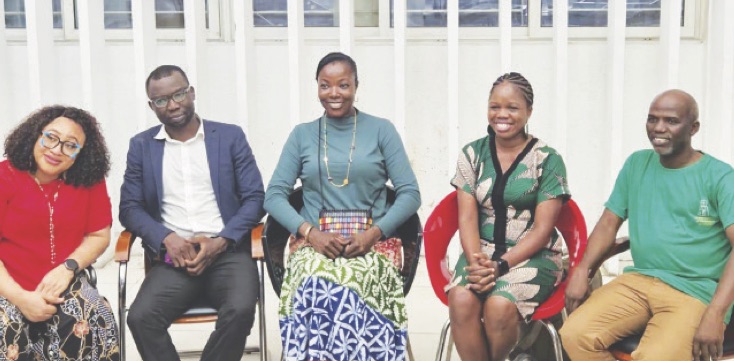
One of the day’s most engaging sessions was the panel titled “Cultivating Tomorrow’s Readers and Leaving Legacies that Last”, moderated by Shope Martins. The discussion explored how children’s literature can shape identity, preserve culture, and promote inclusivity, especially for children living with disabilities.
Author and journalist Henry Akubuiro emphasized the moral responsibility of writers to give voice to marginalized communities. “As writers, we must tell untold stories,” he said. “Children with disabilities are often invisible in our narratives. Many are forced into begging, unaware of the creativity within them. In my work, I strive to create characters who embody artistry and vision, characters who remind society that disability does not diminish humanity.”
Another panelist, Ndidi Chiazor, lamented the gradual erosion of Nigerian culture in children’s lives due to modern distractions such as technology and foreign entertainment. “When I was young,” she recalled, “we sat under the moonlight after dinner, listening to our grandmothers tell folklores. Today, many adults can’t even remember a single folktale from their culture. What then are we passing to our children?”
Chiazor stressed the importance of embedding indigenous culture and language into contemporary children’s literature. “Our children know about America but can’t name the 36 states of Nigeria,” she said. “They can describe Times Square but not Tinapa. We must preserve our stories before they vanish completely.”
For Jesutofunmi Fekoya, the lack of visibility for Nigerian children’s literature was another challenge. “You don’t have to live abroad to write stories that matter,” she said. “We can create magical realism that reflects our environment — stories that allow children to escape into fantasy while still seeing themselves in the pages.” Her call for more locally grounded storytelling received warm applause.
The second major panel of the day, moderated by Anote Ajeluorou, explored the theme “The Place of Anthologies and Short Stories in a Literary Ecosystem.” The discussion examined the enduring relevance of short fiction and anthologies in a publishing climate that often favors novels.
Renowned columnist and novelist Sam Omatseye opened the discussion by highlighting the technical difficulty of writing short stories. “A short story demands precision,” he said. “It’s about condensing meaning into limited words while maintaining emotional intensity. It’s far harder to write a short story than a long novel.”
Terh Agbedeh noted the decline in literary prizes and reading culture, arguing that many people undervalue literature because they see no tangible reward in it. “Writing builds in the mind,” he said. “In a country like ours, if you put something in a book, you’ve practically hidden it from people. The first problem is that people don’t read.”
Henry Akubuiro expanded on the importance of anthologies in preserving literary voices and chronicling social evolution. Citing examples such as Poems of Black Africa edited by Wole Soyinka in 1975 and Africa 39 by the Rainbow Book Club, he emphasized how anthologies introduce emerging writers to the world. “Anthologies capture the pulse of a generation,” he said. “They show the socio-political stance of society and amplify voices that might otherwise remain unheard.”
He urged young writers to submit their works to anthologies, stressing that they provide valuable exposure and community. “Find someone willing to publish your stories or poems,” he advised. “That’s how you get noticed beyond your immediate environment.”
For Okechukwu, another panelist, anthologies go beyond literary entertainment. “They deepen understanding,” he said. “Reading short stories teaches you to look beyond the surface, to discover hidden truths about life, society, and human nature.”
By the end of the day, the Quramo Festival of Words had not only honored its winners but also reignited vital conversations about storytelling, readership, and cultural preservation. The event reaffirmed Quramo’s commitment to nurturing the next generation of African writers and amplifying diverse voices that reflect the continent’s realities and dreams.
For young creatives in attendance, the message was clear: the future belongs to those who dare to tell their stories , authentically, courageously, and without apology. Whether through children’s books, anthologies, or full-length novels, the power of the written word continues to bind and break boundaries in equal measure.
As QFest 2025 drew to a close, one could feel the quiet hum of determination in the crowd. Writers, readers, and dreamers alike left with the conviction that literature remains one of the most powerful tools for transformation, a bridge between what binds and what breaks the human spirit.